
Colombian Ex-Paramilitary Leader Sentenced for Crimes Against Indigenous Communities
In This Article
HIGHLIGHTS
- Salvatore Mancuso, former AUC leader, was sentenced to 40 years in prison for crimes against Indigenous communities in La Guajira.
- Mancuso's sentence could be reduced to eight years if he collaborates with transitional justice efforts.
- The AUC, a right-wing paramilitary group, was involved in drug trafficking and targeted Indigenous groups during Colombia's armed conflict.
- Mancuso was extradited to the US in 2008 for drug trafficking and returned to Colombia in 2024 after serving a 15-year sentence.
- Colombia's government, led by President Gustavo Petro, has engaged in peace talks with armed groups, including the Gulf Clan.
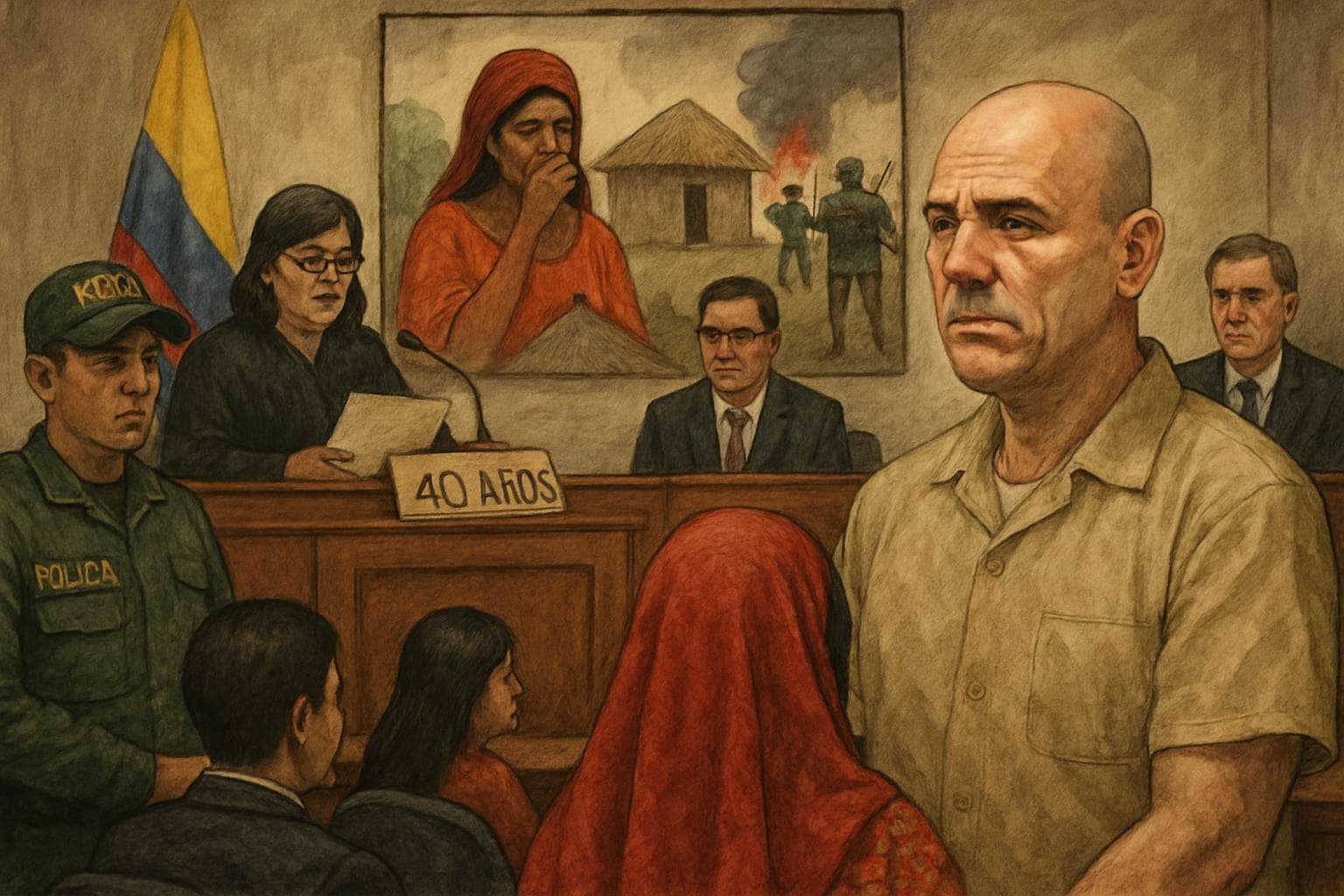
Salvatore Mancuso, a former leader of Colombia's notorious paramilitary group, the United Self-Defence Forces of Colombia (AUC), has been sentenced to 40 years in prison by a special tribunal for his role in crimes against Indigenous communities in La Guajira province. The tribunal found Mancuso responsible for 117 crimes, including murders and forced disappearances, committed between 2002 and 2006 during Colombia's prolonged armed conflict.
Crimes Against Indigenous Groups
Under Mancuso's command, the AUC targeted Indigenous communities, particularly the Wayuu group, amid the chaos of Colombia's internal conflict. The AUC, initially formed to protect landowners from Marxist guerrillas, became heavily involved in drug trafficking and was known for its brutal tactics, including the displacement of Indigenous people from their lands. The tribunal documented these atrocities, highlighting the severe impact on Indigenous populations caught between warring factions.
Legal Proceedings and Sentencing
Mancuso, who also holds Italian citizenship, was extradited to the United States in 2008 on drug trafficking charges. After serving a 15-year sentence, he was deported back to Colombia in 2024. The tribunal's ruling allows for a potential reduction of his sentence to eight years if Mancuso participates in transitional justice efforts, including truth and reparation activities for victims of the AUC's violence.
Colombia's Ongoing Peace Efforts
Colombia's decades-long conflict, which claimed over 450,000 lives between 1985 and 2018, has seen numerous peace negotiations. The government, under President Gustavo Petro, continues to engage in talks with various armed groups, including the Gulf Clan, a successor to the AUC. Mancuso's designation as a "peace facilitator" by President Petro underscores the ongoing efforts to mediate and resolve conflicts with remaining paramilitary factions.
WHAT THIS MIGHT MEAN
The sentencing of Salvatore Mancuso marks a significant step in Colombia's pursuit of justice for crimes committed during its armed conflict. If Mancuso cooperates with transitional justice initiatives, it could provide valuable insights into the collaboration between paramilitary groups and Colombia's political and business elites. This cooperation may also facilitate further peace negotiations with remaining armed groups, potentially leading to a more stable and peaceful Colombia.
However, the presence of successor groups like the Gulf Clan poses ongoing challenges to peace and security. The Colombian government's engagement in peace talks with these groups will be crucial in addressing the root causes of violence and ensuring long-term stability in the region. As Colombia navigates this complex landscape, the international community's support and monitoring will be vital in sustaining progress towards peace.
Related Articles
Cuba Faces Widespread Blackout Amid Deepening Fuel Crisis
El Mencho's Death Sparks Violent Unrest Across Mexico
Venezuelan Political Prisoners Seek Amnesty Amidst Hopes for Democratic Transition
China Sets Lowest GDP Growth Target in Decades Amid Economic Challenges

UK Faces Dilemmas Amid Iran Conflict and China Spying Allegations

Google Faces Legal Battle Over AI Chatbot's Alleged Role in Tragic Death
Colombian Ex-Paramilitary Leader Sentenced for Crimes Against Indigenous Communities
In This Article
HIGHLIGHTS
- Salvatore Mancuso, former AUC leader, was sentenced to 40 years in prison for crimes against Indigenous communities in La Guajira.
- Mancuso's sentence could be reduced to eight years if he collaborates with transitional justice efforts.
- The AUC, a right-wing paramilitary group, was involved in drug trafficking and targeted Indigenous groups during Colombia's armed conflict.
- Mancuso was extradited to the US in 2008 for drug trafficking and returned to Colombia in 2024 after serving a 15-year sentence.
- Colombia's government, led by President Gustavo Petro, has engaged in peace talks with armed groups, including the Gulf Clan.
Salvatore Mancuso, a former leader of Colombia's notorious paramilitary group, the United Self-Defence Forces of Colombia (AUC), has been sentenced to 40 years in prison by a special tribunal for his role in crimes against Indigenous communities in La Guajira province. The tribunal found Mancuso responsible for 117 crimes, including murders and forced disappearances, committed between 2002 and 2006 during Colombia's prolonged armed conflict.
Crimes Against Indigenous Groups
Under Mancuso's command, the AUC targeted Indigenous communities, particularly the Wayuu group, amid the chaos of Colombia's internal conflict. The AUC, initially formed to protect landowners from Marxist guerrillas, became heavily involved in drug trafficking and was known for its brutal tactics, including the displacement of Indigenous people from their lands. The tribunal documented these atrocities, highlighting the severe impact on Indigenous populations caught between warring factions.
Legal Proceedings and Sentencing
Mancuso, who also holds Italian citizenship, was extradited to the United States in 2008 on drug trafficking charges. After serving a 15-year sentence, he was deported back to Colombia in 2024. The tribunal's ruling allows for a potential reduction of his sentence to eight years if Mancuso participates in transitional justice efforts, including truth and reparation activities for victims of the AUC's violence.
Colombia's Ongoing Peace Efforts
Colombia's decades-long conflict, which claimed over 450,000 lives between 1985 and 2018, has seen numerous peace negotiations. The government, under President Gustavo Petro, continues to engage in talks with various armed groups, including the Gulf Clan, a successor to the AUC. Mancuso's designation as a "peace facilitator" by President Petro underscores the ongoing efforts to mediate and resolve conflicts with remaining paramilitary factions.
WHAT THIS MIGHT MEAN
The sentencing of Salvatore Mancuso marks a significant step in Colombia's pursuit of justice for crimes committed during its armed conflict. If Mancuso cooperates with transitional justice initiatives, it could provide valuable insights into the collaboration between paramilitary groups and Colombia's political and business elites. This cooperation may also facilitate further peace negotiations with remaining armed groups, potentially leading to a more stable and peaceful Colombia.
However, the presence of successor groups like the Gulf Clan poses ongoing challenges to peace and security. The Colombian government's engagement in peace talks with these groups will be crucial in addressing the root causes of violence and ensuring long-term stability in the region. As Colombia navigates this complex landscape, the international community's support and monitoring will be vital in sustaining progress towards peace.
Related Articles
Cuba Faces Widespread Blackout Amid Deepening Fuel Crisis
El Mencho's Death Sparks Violent Unrest Across Mexico
Venezuelan Political Prisoners Seek Amnesty Amidst Hopes for Democratic Transition
China Sets Lowest GDP Growth Target in Decades Amid Economic Challenges
UK Faces Dilemmas Amid Iran Conflict and China Spying Allegations
Google Faces Legal Battle Over AI Chatbot's Alleged Role in Tragic Death