
COP30 Climate Talks: Incremental Progress Amidst Fossil Fuel Deadlock
In This Article
HIGHLIGHTS
- COP30 climate talks in Brazil faced a deadlock over fossil fuels, with a draft deal lacking mention of coal, oil, and gas.
- A voluntary agreement was reached to discuss a roadmap for phasing out fossil fuels, despite opposition from oil-producing nations.
- Developing countries secured a commitment for $120 billion annually by 2035 to adapt to climate impacts, short of their 2030 target.
- The US did not send a delegation, and the final agreement excluded a deforestation roadmap, disappointing environmental advocates.
- The talks concluded with mixed reactions, highlighting incremental progress but failing to meet the urgent demands of the climate crisis.
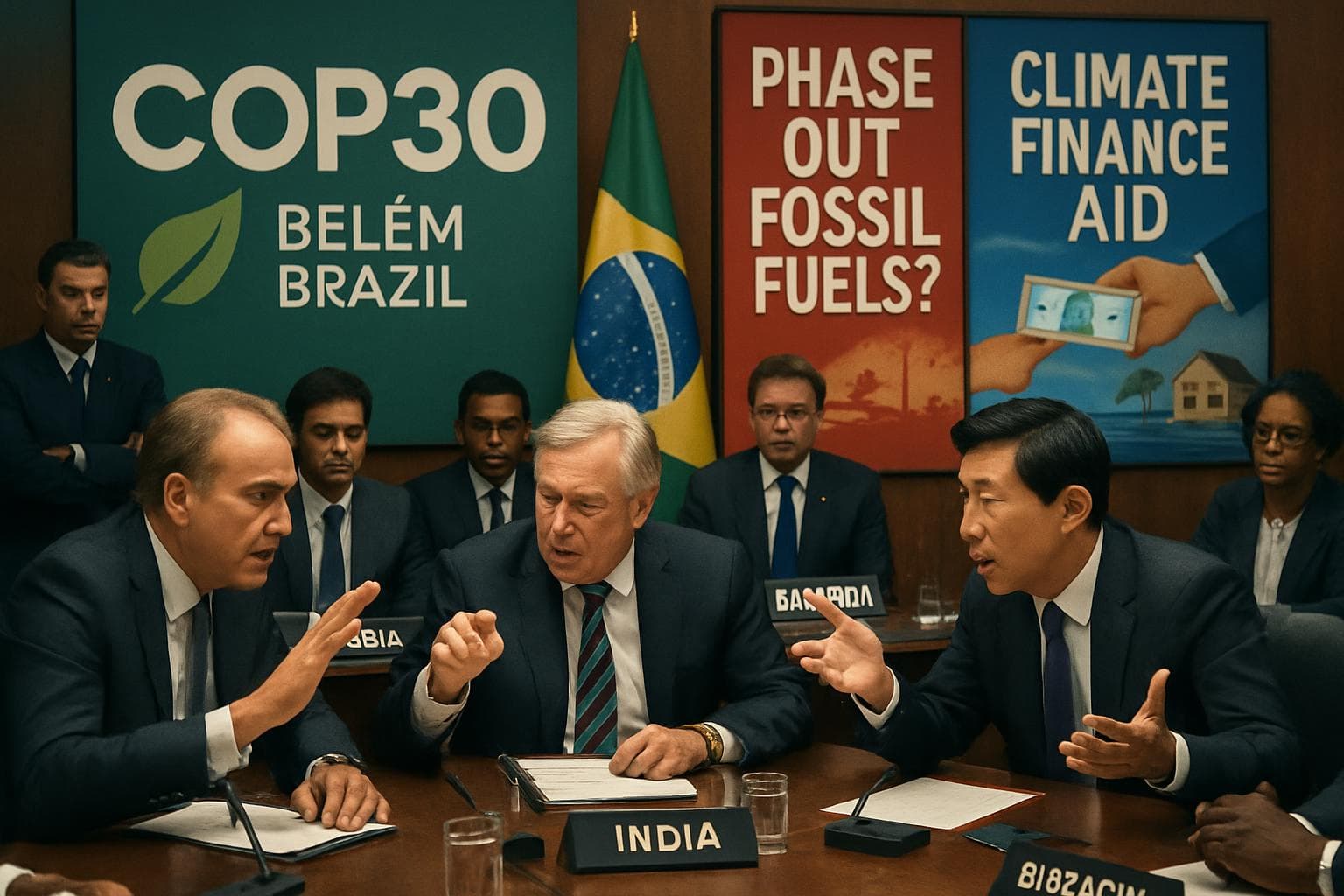
The COP30 climate talks in Belém, Brazil, concluded with a fragile agreement to initiate discussions on phasing out fossil fuels, marking a small step towards addressing global warming. The negotiations, which extended into the early hours of Saturday, were marred by a standoff between a coalition of over 80 countries and a bloc led by Saudi Arabia and Russia, who resisted efforts to include a clear roadmap for reducing reliance on coal, oil, and gas.
Fossil Fuel Phase-Out Stalemate
Host nation Brazil, under President Luiz Inácio Lula da Silva, aimed to secure a decisive plan for transitioning away from fossil fuels, a move supported by countries like the UK. However, the draft agreement released on Friday morning omitted any mention of fossil fuels, a point of contention for many nations. Oil-producing countries argued for the right to exploit their reserves, emphasizing emission reductions through technology like carbon capture instead.
Financial Support for Developing Nations
A significant outcome of the talks was the commitment to triple financial support for developing countries, reaching $120 billion annually by 2035. This funding aims to help these nations adapt to the severe impacts of climate change, although it falls short of the 2030 deadline they had sought. The agreement also excluded a roadmap for halting deforestation, a setback for environmental advocates at this "rainforest COP."
Mixed Reactions and Future Implications
The final agreement, reached without US participation, drew mixed reactions. Jennifer Morgan, a former German climate envoy, acknowledged the progress but emphasized the need for more decisive action. Mohamed Adow of Power Shift Africa criticized developed countries for not aligning their emission reduction plans with scientific recommendations, highlighting the ongoing challenges in global climate negotiations.
WHAT THIS MIGHT MEAN
The outcome of COP30 underscores the complexities of global climate negotiations, where competing national interests often hinder decisive action. The voluntary agreement to discuss a fossil fuel phase-out roadmap is a step forward, but its success will depend on overcoming resistance from oil-producing nations. The financial commitments to developing countries, while significant, may not suffice to address the urgent needs posed by climate change impacts.
Looking ahead, the absence of a deforestation agreement could have long-term implications for biodiversity and carbon sequestration efforts. As countries prepare for future climate talks, the pressure to deliver concrete actions aligned with scientific recommendations will intensify. The evolving geopolitical landscape and the urgency of the climate crisis will continue to shape the global response to climate change.
Images from the Web

Related Articles

Canada and Australia Forge Strategic Partnership Amid Global Uncertainty

Tech Giants Pledge to Cover AI Data Center Energy Costs Amid Rising Electricity Concerns
Middle East Conflict Drives UK Energy Prices to New Highs

UK Reinforces Military Presence in Cyprus Amid Middle East Tensions

UK-Iran Tensions: Starmer Defends Cautious Approach Amid Trump Criticism

Diplomatic Tensions Rise as Trump Criticizes Starmer's Iran Policy
COP30 Climate Talks: Incremental Progress Amidst Fossil Fuel Deadlock
In This Article
 Daniel Rivera| Published
 HIGHLIGHTS
- COP30 climate talks in Brazil faced a deadlock over fossil fuels, with a draft deal lacking mention of coal, oil, and gas.
- A voluntary agreement was reached to discuss a roadmap for phasing out fossil fuels, despite opposition from oil-producing nations.
- Developing countries secured a commitment for $120 billion annually by 2035 to adapt to climate impacts, short of their 2030 target.
- The US did not send a delegation, and the final agreement excluded a deforestation roadmap, disappointing environmental advocates.
- The talks concluded with mixed reactions, highlighting incremental progress but failing to meet the urgent demands of the climate crisis.
The COP30 climate talks in Belém, Brazil, concluded with a fragile agreement to initiate discussions on phasing out fossil fuels, marking a small step towards addressing global warming. The negotiations, which extended into the early hours of Saturday, were marred by a standoff between a coalition of over 80 countries and a bloc led by Saudi Arabia and Russia, who resisted efforts to include a clear roadmap for reducing reliance on coal, oil, and gas.
Fossil Fuel Phase-Out Stalemate
Host nation Brazil, under President Luiz Inácio Lula da Silva, aimed to secure a decisive plan for transitioning away from fossil fuels, a move supported by countries like the UK. However, the draft agreement released on Friday morning omitted any mention of fossil fuels, a point of contention for many nations. Oil-producing countries argued for the right to exploit their reserves, emphasizing emission reductions through technology like carbon capture instead.
Financial Support for Developing Nations
A significant outcome of the talks was the commitment to triple financial support for developing countries, reaching $120 billion annually by 2035. This funding aims to help these nations adapt to the severe impacts of climate change, although it falls short of the 2030 deadline they had sought. The agreement also excluded a roadmap for halting deforestation, a setback for environmental advocates at this "rainforest COP."
Mixed Reactions and Future Implications
The final agreement, reached without US participation, drew mixed reactions. Jennifer Morgan, a former German climate envoy, acknowledged the progress but emphasized the need for more decisive action. Mohamed Adow of Power Shift Africa criticized developed countries for not aligning their emission reduction plans with scientific recommendations, highlighting the ongoing challenges in global climate negotiations.
WHAT THIS MIGHT MEAN
The outcome of COP30 underscores the complexities of global climate negotiations, where competing national interests often hinder decisive action. The voluntary agreement to discuss a fossil fuel phase-out roadmap is a step forward, but its success will depend on overcoming resistance from oil-producing nations. The financial commitments to developing countries, while significant, may not suffice to address the urgent needs posed by climate change impacts.
Looking ahead, the absence of a deforestation agreement could have long-term implications for biodiversity and carbon sequestration efforts. As countries prepare for future climate talks, the pressure to deliver concrete actions aligned with scientific recommendations will intensify. The evolving geopolitical landscape and the urgency of the climate crisis will continue to shape the global response to climate change.
Images from the Web
Related Articles
Canada and Australia Forge Strategic Partnership Amid Global Uncertainty
Tech Giants Pledge to Cover AI Data Center Energy Costs Amid Rising Electricity Concerns
Middle East Conflict Drives UK Energy Prices to New Highs
UK Reinforces Military Presence in Cyprus Amid Middle East Tensions
UK-Iran Tensions: Starmer Defends Cautious Approach Amid Trump Criticism
Diplomatic Tensions Rise as Trump Criticizes Starmer's Iran Policy