
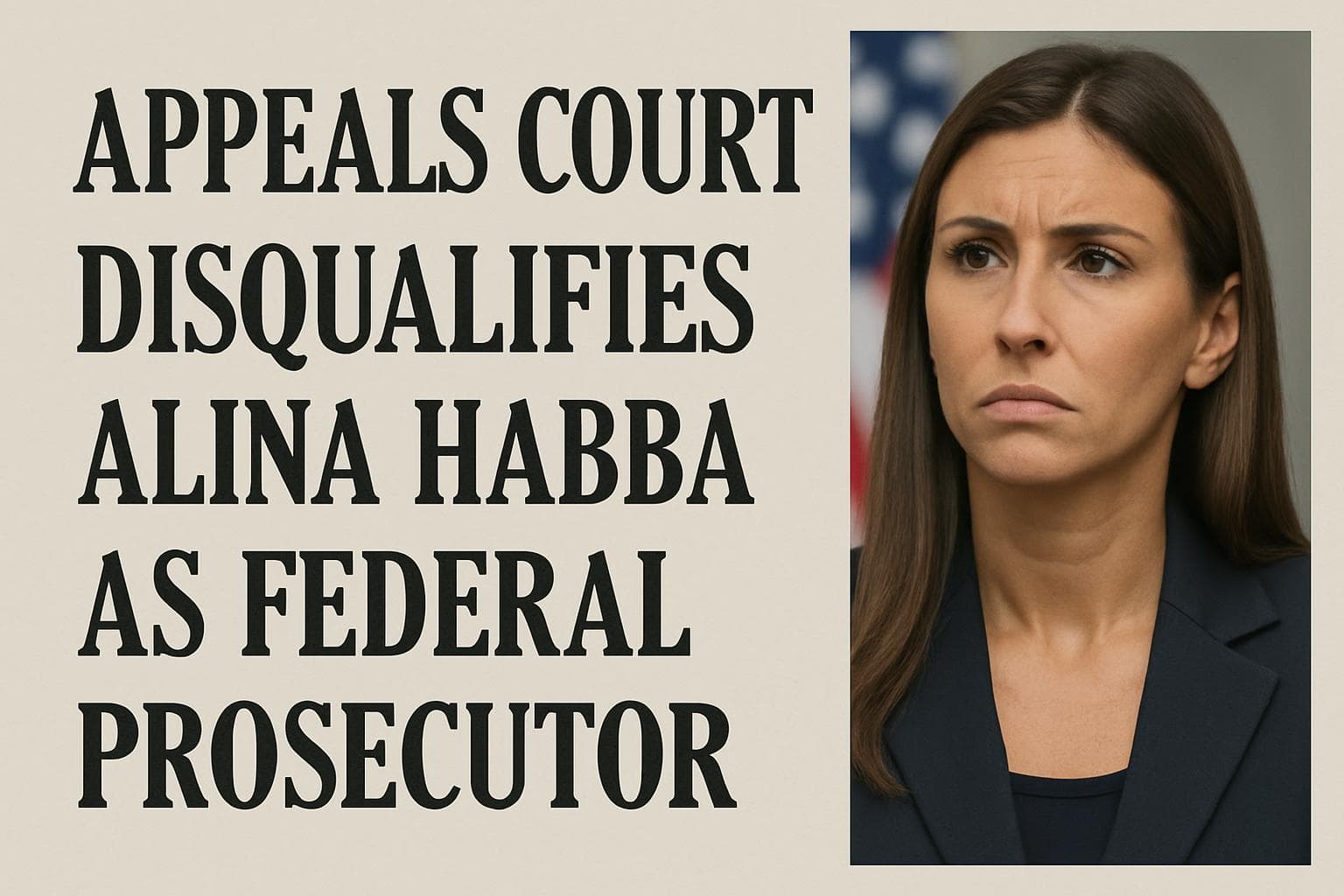
Appeals Court Disqualifies Trump's Former Lawyer Alina Habba as New Jersey Prosecutor
In This Article
HIGHLIGHTS
- An appeals court disqualified Alina Habba, a former Trump lawyer, from serving as New Jersey's top federal prosecutor, citing a violation of the Federal Vacancies Reform Act.
- The court's decision may impact numerous criminal cases in New Jersey, as Habba's appointment bypassed Senate confirmation.
- The ruling follows similar legal challenges against other Trump-appointed prosecutors, highlighting ongoing issues with interim appointments.
- The Trump administration's efforts to retain Habba in the role faced criticism for circumventing legal and political processes.
- The decision underscores the judiciary's role in maintaining checks on executive appointments, as noted by the judges involved.
In a significant legal development, a US appeals court has disqualified Alina Habba, a former personal lawyer to Donald Trump, from her role as New Jersey's top federal prosecutor. The court found that her appointment violated the Federal Vacancies Reform Act, a decision that could affect numerous criminal cases in the state.
Legal Context and Court Ruling
The ruling, delivered by a panel from the Third US Circuit Court of Appeals, upheld a lower court's decision that Habba's appointment bypassed the necessary Senate confirmation. The court's opinion, penned by Judge Michael Fisher, highlighted the Trump administration's challenges in securing its preferred candidates for key legal positions. "The citizens of New Jersey and the loyal employees in the US attorney’s office deserve some clarity and stability," the judges noted in their 32-page opinion.
Implications for New Jersey and Beyond
Habba's disqualification is part of a broader pattern of legal challenges against Trump-appointed prosecutors. Recently, similar rulings have emerged, such as the dismissal of cases against former FBI Director James Comey and New York Attorney General Letitia James, due to unlawful appointments. These cases underscore the judiciary's critical role in ensuring that executive appointments adhere to statutory and constitutional requirements.
Background and Reaction
Alina Habba, who joined Trump's legal team in 2021, was appointed as acting US attorney for New Jersey without Senate approval, a move that sparked legal challenges from defendants in federal cases. In response to the court's decision, Habba expressed her commitment to fighting for other candidates denied Senate hearings. Meanwhile, the Department of Justice has yet to comment on the ruling.
WHAT THIS MIGHT MEAN
The disqualification of Alina Habba as New Jersey's top federal prosecutor may prompt the Department of Justice to seek a new appointee who can secure Senate confirmation, ensuring compliance with federal statutes. This case highlights the ongoing tension between the executive branch's appointment powers and the judiciary's role in upholding legal standards. As similar challenges continue to arise, the Trump administration's approach to interim appointments may face increased scrutiny, potentially influencing future judicial and legislative actions. Legal experts suggest that these developments could lead to more stringent oversight of federal appointments, reinforcing the importance of adhering to established confirmation processes.
Related Articles
Congress Subpoenas Attorney General Bondi in Epstein Investigation
Senate Blocks Resolution to Limit Trump's Military Actions in Iran
Spain's Sánchez Stands Firm Against Trump's Trade Threat Over Iran Stance

US-Iran Tensions Escalate Amid Renewed Nuclear Talks and Protests

Greenland Politely Declines Trump's Hospital Ship Offer Amid Healthcare Debate

UK-Iran Tensions: Starmer Defends Cautious Approach Amid Trump Criticism
Appeals Court Disqualifies Trump's Former Lawyer Alina Habba as New Jersey Prosecutor
In This Article
 Ethan Brooks| Published
 HIGHLIGHTS
- An appeals court disqualified Alina Habba, a former Trump lawyer, from serving as New Jersey's top federal prosecutor, citing a violation of the Federal Vacancies Reform Act.
- The court's decision may impact numerous criminal cases in New Jersey, as Habba's appointment bypassed Senate confirmation.
- The ruling follows similar legal challenges against other Trump-appointed prosecutors, highlighting ongoing issues with interim appointments.
- The Trump administration's efforts to retain Habba in the role faced criticism for circumventing legal and political processes.
- The decision underscores the judiciary's role in maintaining checks on executive appointments, as noted by the judges involved.
In a significant legal development, a US appeals court has disqualified Alina Habba, a former personal lawyer to Donald Trump, from her role as New Jersey's top federal prosecutor. The court found that her appointment violated the Federal Vacancies Reform Act, a decision that could affect numerous criminal cases in the state.
Legal Context and Court Ruling
The ruling, delivered by a panel from the Third US Circuit Court of Appeals, upheld a lower court's decision that Habba's appointment bypassed the necessary Senate confirmation. The court's opinion, penned by Judge Michael Fisher, highlighted the Trump administration's challenges in securing its preferred candidates for key legal positions. "The citizens of New Jersey and the loyal employees in the US attorney’s office deserve some clarity and stability," the judges noted in their 32-page opinion.
Implications for New Jersey and Beyond
Habba's disqualification is part of a broader pattern of legal challenges against Trump-appointed prosecutors. Recently, similar rulings have emerged, such as the dismissal of cases against former FBI Director James Comey and New York Attorney General Letitia James, due to unlawful appointments. These cases underscore the judiciary's critical role in ensuring that executive appointments adhere to statutory and constitutional requirements.
Background and Reaction
Alina Habba, who joined Trump's legal team in 2021, was appointed as acting US attorney for New Jersey without Senate approval, a move that sparked legal challenges from defendants in federal cases. In response to the court's decision, Habba expressed her commitment to fighting for other candidates denied Senate hearings. Meanwhile, the Department of Justice has yet to comment on the ruling.
WHAT THIS MIGHT MEAN
The disqualification of Alina Habba as New Jersey's top federal prosecutor may prompt the Department of Justice to seek a new appointee who can secure Senate confirmation, ensuring compliance with federal statutes. This case highlights the ongoing tension between the executive branch's appointment powers and the judiciary's role in upholding legal standards. As similar challenges continue to arise, the Trump administration's approach to interim appointments may face increased scrutiny, potentially influencing future judicial and legislative actions. Legal experts suggest that these developments could lead to more stringent oversight of federal appointments, reinforcing the importance of adhering to established confirmation processes.
Related Articles
Congress Subpoenas Attorney General Bondi in Epstein Investigation
Senate Blocks Resolution to Limit Trump's Military Actions in Iran
Spain's Sánchez Stands Firm Against Trump's Trade Threat Over Iran Stance
US-Iran Tensions Escalate Amid Renewed Nuclear Talks and Protests
Greenland Politely Declines Trump's Hospital Ship Offer Amid Healthcare Debate
UK-Iran Tensions: Starmer Defends Cautious Approach Amid Trump Criticism