
Court Overturns Trump's Ban on Wind Energy Permits, Citing Legal Violations
In This Article
HIGHLIGHTS
- A US court has ruled President Trump's ban on new wind energy permits as "unlawful" and "arbitrary and capricious".
- The ruling follows a lawsuit by 17 states and a clean energy group, challenging the halt on projects like Empire Wind 1.
- Judge Patti Saris vacated the executive order, citing a lack of reasoned explanation for the policy change.
- New York Attorney General Letitia James and Massachusetts Attorney General Andrea Joy Campbell hailed the decision as a victory for renewable energy.
- The ruling is seen as symbolic, with experts noting potential delays in permit reviews despite the court's decision.
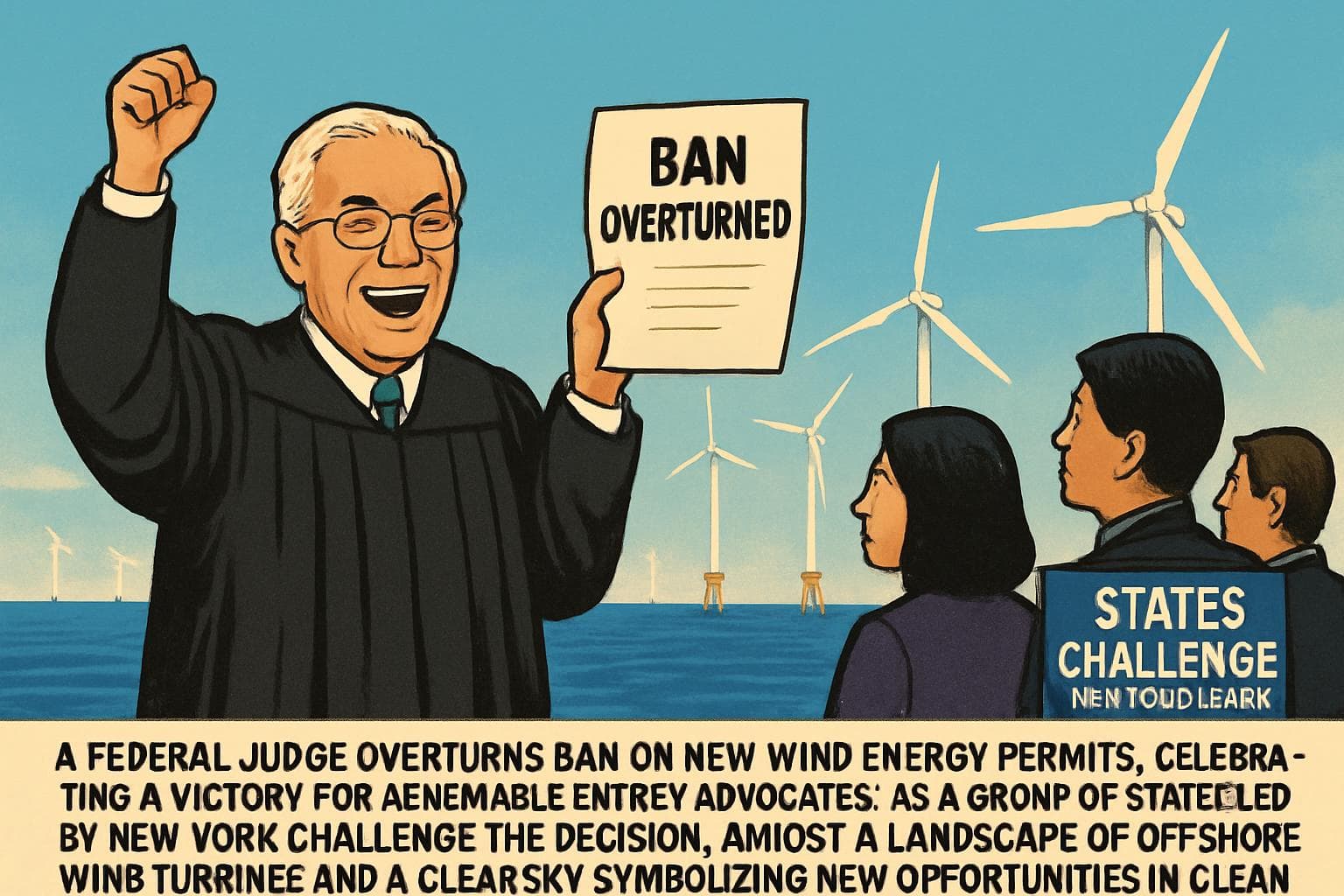
A federal court has struck down former President Donald Trump's executive order that halted the issuance of new wind energy permits, declaring the move "unlawful" and lacking legal justification. The decision, delivered by Judge Patti Saris of the Massachusetts district court, marks a significant victory for renewable energy advocates and a coalition of 17 states led by New York Attorney General Letitia James.
Legal Battle Over Wind Energy
The executive order, signed in January, had effectively frozen federal approval of both offshore and onshore wind projects, disrupting plans for numerous initiatives across the United States. Among the affected projects was the Empire Wind 1, a major offshore wind farm off the coast of New York, intended to power 500,000 homes. The states, along with a New York-based clean energy group, filed a lawsuit in response, arguing that the halt jeopardized economic and environmental goals.
Judge Saris ruled that the Trump administration's order was "arbitrary and capricious," criticizing federal agencies for failing to provide a reasoned explanation for the policy shift. She emphasized that agencies could not indefinitely delay permit reviews without a clear timeline or justification.
Reactions and Implications
The ruling was celebrated by state officials and environmental advocates. "We won our lawsuit and stopped the Trump administration from blocking an array of new wind energy projects," Letitia James stated, highlighting the decision's importance in combating the climate crisis. Massachusetts Attorney General Andrea Joy Campbell echoed these sentiments, noting the protection of significant investments in offshore wind.
Despite the court's decision, industry experts like Timothy Fox of ClearView Energy Partners caution that the ruling may not immediately revitalize the wind energy sector. "It's more symbolic than substantive," Fox remarked, suggesting that permit applications could still face bureaucratic hurdles.
Political Context and Future Prospects
The Trump administration's preference for fossil fuels over renewable energy has been a contentious issue, with Trump often criticizing wind energy. His executive order was part of a broader agenda to bolster fossil fuel production, contrasting sharply with the Biden administration's focus on clean energy initiatives.
WHAT THIS MIGHT MEAN
The court's decision to vacate Trump's wind energy ban could pave the way for renewed momentum in the renewable energy sector, particularly offshore wind projects. However, the potential for prolonged permit reviews remains a concern, potentially delaying the realization of economic and environmental benefits.
Politically, the ruling underscores the ongoing tension between federal energy policies and state-led clean energy initiatives. As states continue to invest in renewable energy infrastructure, the federal government's stance will play a crucial role in shaping the future energy landscape. Experts suggest that the decision could encourage further legal challenges to policies perceived as hindering renewable energy development, reinforcing the importance of clear and consistent regulatory frameworks.
Related Articles
Senate Blocks Resolution to Limit Trump's Military Actions in Iran

Spain's Sánchez Stands Firm Against Trump's Trade Threat Over Iran Stance

Iran Postpones Khamenei Funeral Amid Escalating US-Israeli Strikes
Congress Subpoenas Attorney General Bondi in Epstein Investigation

Cuba Faces Widespread Blackout Amid Deepening Fuel Crisis

UK Faces Dilemmas Amid Iran Conflict and China Spying Allegations
Court Overturns Trump's Ban on Wind Energy Permits, Citing Legal Violations
In This Article
 Ethan Brooks| Published
 HIGHLIGHTS
- A US court has ruled President Trump's ban on new wind energy permits as "unlawful" and "arbitrary and capricious".
- The ruling follows a lawsuit by 17 states and a clean energy group, challenging the halt on projects like Empire Wind 1.
- Judge Patti Saris vacated the executive order, citing a lack of reasoned explanation for the policy change.
- New York Attorney General Letitia James and Massachusetts Attorney General Andrea Joy Campbell hailed the decision as a victory for renewable energy.
- The ruling is seen as symbolic, with experts noting potential delays in permit reviews despite the court's decision.
A federal court has struck down former President Donald Trump's executive order that halted the issuance of new wind energy permits, declaring the move "unlawful" and lacking legal justification. The decision, delivered by Judge Patti Saris of the Massachusetts district court, marks a significant victory for renewable energy advocates and a coalition of 17 states led by New York Attorney General Letitia James.
Legal Battle Over Wind Energy
The executive order, signed in January, had effectively frozen federal approval of both offshore and onshore wind projects, disrupting plans for numerous initiatives across the United States. Among the affected projects was the Empire Wind 1, a major offshore wind farm off the coast of New York, intended to power 500,000 homes. The states, along with a New York-based clean energy group, filed a lawsuit in response, arguing that the halt jeopardized economic and environmental goals.
Judge Saris ruled that the Trump administration's order was "arbitrary and capricious," criticizing federal agencies for failing to provide a reasoned explanation for the policy shift. She emphasized that agencies could not indefinitely delay permit reviews without a clear timeline or justification.
Reactions and Implications
The ruling was celebrated by state officials and environmental advocates. "We won our lawsuit and stopped the Trump administration from blocking an array of new wind energy projects," Letitia James stated, highlighting the decision's importance in combating the climate crisis. Massachusetts Attorney General Andrea Joy Campbell echoed these sentiments, noting the protection of significant investments in offshore wind.
Despite the court's decision, industry experts like Timothy Fox of ClearView Energy Partners caution that the ruling may not immediately revitalize the wind energy sector. "It's more symbolic than substantive," Fox remarked, suggesting that permit applications could still face bureaucratic hurdles.
Political Context and Future Prospects
The Trump administration's preference for fossil fuels over renewable energy has been a contentious issue, with Trump often criticizing wind energy. His executive order was part of a broader agenda to bolster fossil fuel production, contrasting sharply with the Biden administration's focus on clean energy initiatives.
WHAT THIS MIGHT MEAN
The court's decision to vacate Trump's wind energy ban could pave the way for renewed momentum in the renewable energy sector, particularly offshore wind projects. However, the potential for prolonged permit reviews remains a concern, potentially delaying the realization of economic and environmental benefits.
Politically, the ruling underscores the ongoing tension between federal energy policies and state-led clean energy initiatives. As states continue to invest in renewable energy infrastructure, the federal government's stance will play a crucial role in shaping the future energy landscape. Experts suggest that the decision could encourage further legal challenges to policies perceived as hindering renewable energy development, reinforcing the importance of clear and consistent regulatory frameworks.
Related Articles
Senate Blocks Resolution to Limit Trump's Military Actions in Iran
Spain's Sánchez Stands Firm Against Trump's Trade Threat Over Iran Stance
Iran Postpones Khamenei Funeral Amid Escalating US-Israeli Strikes
Congress Subpoenas Attorney General Bondi in Epstein Investigation
Cuba Faces Widespread Blackout Amid Deepening Fuel Crisis
UK Faces Dilemmas Amid Iran Conflict and China Spying Allegations