
Wildfire Forces Mass Evacuations on Greek Island of Crete Amidst European Heatwave
In This Article
HIGHLIGHTS
- Over 1,500 people have been evacuated from Crete due to a rapidly spreading wildfire, exacerbated by strong winds.
- The fire, which started near Ierapetra, has threatened homes, tourist accommodations, and critical infrastructure.
- Emergency services, including 155 firefighters and aerial support, are actively combating the blaze.
- Similar wildfires are occurring across Europe, with significant evacuations in Turkey and reports of fires in Germany and Spain.
- Authorities have issued emergency alerts and closed roads, urging residents to avoid non-essential travel due to hazardous conditions.
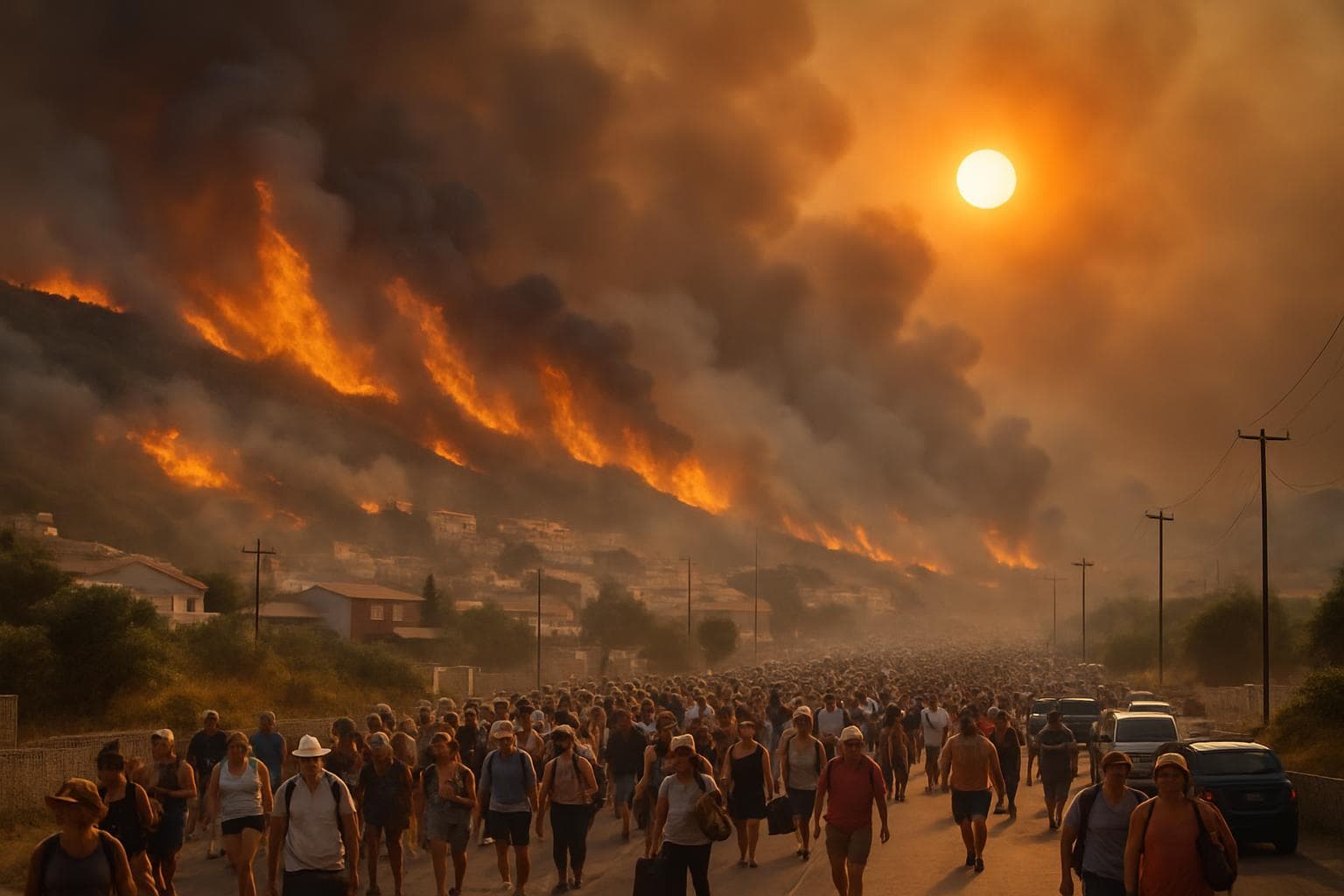
A fierce wildfire on the Greek island of Crete has led to the evacuation of over 1,500 people as emergency services battle to contain the blaze. The fire erupted on Wednesday afternoon near Ierapetra, driven by gale-force winds and dry conditions, and has since spread rapidly, threatening homes, tourist accommodations, and vital infrastructure, including a fuel station.
Evacuation and Emergency Response
Authorities have ordered the evacuation of hotels, rental properties, and homes in the Ferma municipality, with approximately 1,500 individuals relocated to Ierapetra. Around 200 evacuees are currently sheltered in the town's indoor sports arena. The fire front, now extending over 6 kilometers, has engulfed the area in thick smoke, reducing visibility and prompting road closures.
The firefighting effort has been significantly bolstered, with 155 firefighters, eight specialized foot teams, and 38 fire engines on the ground. Aerial support includes helicopters conducting water drops, while additional forces are en route from other regions. Emergency alerts have been issued, instructing evacuations from affected areas such as Achlia, Ferma, and Agia Fotia.
Wider European Context
The Crete wildfire is part of a broader pattern of extreme weather conditions affecting Europe. In Turkey, wildfires near Izmir have prompted the evacuation of over 50,000 people, with strong winds complicating firefighting efforts. Similar incidents have been reported in Germany and Spain, as the continent braces for continued high temperatures and challenging fire conditions.
Local Impact and Health Concerns
In Crete, the fire has caused power outages and destroyed properties in Agia Fotia, with at least four elderly individuals hospitalized due to smoke inhalation. Health authorities have placed all hospitals on alert as a precaution. The ongoing heatwave and strong winds are expected to persist, posing further challenges to containment efforts.
WHAT THIS MIGHT MEAN
As the wildfire season intensifies, Greece and other European nations may face increased pressure on emergency services and infrastructure. The ongoing heatwave exacerbates fire risks, necessitating coordinated international efforts to manage resources and support affected regions. Experts warn that climate change could lead to more frequent and severe wildfires, urging governments to enhance preparedness and resilience strategies. The immediate focus remains on safeguarding lives and property, but long-term solutions will be crucial in mitigating future risks.
Related Articles

British Steel Secures Major Turkish Rail Contract, Reviving Scunthorpe Operations

Rubio Reaffirms US Commitment to Europe Amid Criticisms at Munich Conference
German Chancellor Warns of Eroding Global Order at Munich Security Conference

Spain's Sánchez Stands Firm Against Trump's Trade Threat Over Iran Stance

Trump's Board of Peace Pledges $7 Billion for Gaza Amidst International Skepticism

NHS Faces Joint Surgery Delays Amid Bone Cement Shortage
Wildfire Forces Mass Evacuations on Greek Island of Crete Amidst European Heatwave
In This Article
 Leila Hassan| Published
 HIGHLIGHTS
- Over 1,500 people have been evacuated from Crete due to a rapidly spreading wildfire, exacerbated by strong winds.
- The fire, which started near Ierapetra, has threatened homes, tourist accommodations, and critical infrastructure.
- Emergency services, including 155 firefighters and aerial support, are actively combating the blaze.
- Similar wildfires are occurring across Europe, with significant evacuations in Turkey and reports of fires in Germany and Spain.
- Authorities have issued emergency alerts and closed roads, urging residents to avoid non-essential travel due to hazardous conditions.
A fierce wildfire on the Greek island of Crete has led to the evacuation of over 1,500 people as emergency services battle to contain the blaze. The fire erupted on Wednesday afternoon near Ierapetra, driven by gale-force winds and dry conditions, and has since spread rapidly, threatening homes, tourist accommodations, and vital infrastructure, including a fuel station.
Evacuation and Emergency Response
Authorities have ordered the evacuation of hotels, rental properties, and homes in the Ferma municipality, with approximately 1,500 individuals relocated to Ierapetra. Around 200 evacuees are currently sheltered in the town's indoor sports arena. The fire front, now extending over 6 kilometers, has engulfed the area in thick smoke, reducing visibility and prompting road closures.
The firefighting effort has been significantly bolstered, with 155 firefighters, eight specialized foot teams, and 38 fire engines on the ground. Aerial support includes helicopters conducting water drops, while additional forces are en route from other regions. Emergency alerts have been issued, instructing evacuations from affected areas such as Achlia, Ferma, and Agia Fotia.
Wider European Context
The Crete wildfire is part of a broader pattern of extreme weather conditions affecting Europe. In Turkey, wildfires near Izmir have prompted the evacuation of over 50,000 people, with strong winds complicating firefighting efforts. Similar incidents have been reported in Germany and Spain, as the continent braces for continued high temperatures and challenging fire conditions.
Local Impact and Health Concerns
In Crete, the fire has caused power outages and destroyed properties in Agia Fotia, with at least four elderly individuals hospitalized due to smoke inhalation. Health authorities have placed all hospitals on alert as a precaution. The ongoing heatwave and strong winds are expected to persist, posing further challenges to containment efforts.
WHAT THIS MIGHT MEAN
As the wildfire season intensifies, Greece and other European nations may face increased pressure on emergency services and infrastructure. The ongoing heatwave exacerbates fire risks, necessitating coordinated international efforts to manage resources and support affected regions. Experts warn that climate change could lead to more frequent and severe wildfires, urging governments to enhance preparedness and resilience strategies. The immediate focus remains on safeguarding lives and property, but long-term solutions will be crucial in mitigating future risks.
Related Articles
British Steel Secures Major Turkish Rail Contract, Reviving Scunthorpe Operations
Rubio Reaffirms US Commitment to Europe Amid Criticisms at Munich Conference
German Chancellor Warns of Eroding Global Order at Munich Security Conference
Spain's Sánchez Stands Firm Against Trump's Trade Threat Over Iran Stance
Trump's Board of Peace Pledges $7 Billion for Gaza Amidst International Skepticism
NHS Faces Joint Surgery Delays Amid Bone Cement Shortage