
Dalai Lama Confirms Succession Plan, Ensuring Continuation of Tibetan Buddhist Institution
In This Article
HIGHLIGHTS
- The Dalai Lama confirmed the continuation of the Tibetan Buddhist institution after his death, ending speculation about its future.
- A successor will be chosen following traditional practices, with the Dalai Lama's office consulting religious leaders.
- The Dalai Lama insists his successor will be born outside China, a stance that has angered Beijing.
- Celebrations for the Dalai Lama's 90th birthday are underway, attended by over 7,000 guests, including Indian ministers and actor Richard Gere.
- The Dalai Lama remains a unifying figure for Tibetans, with concerns about the impact of his eventual passing on the Tibetan movement.
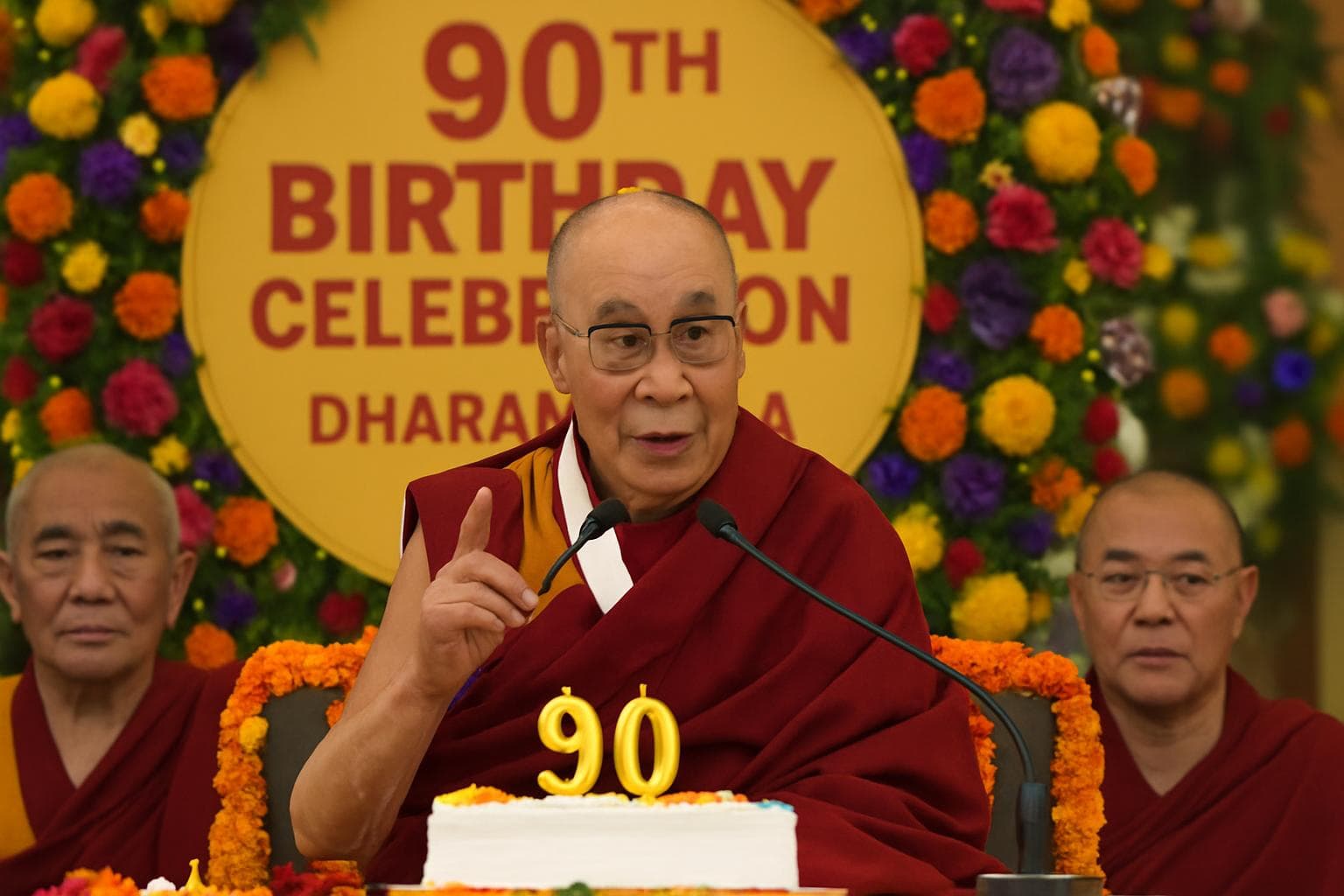
The Dalai Lama has announced that the centuries-old Tibetan Buddhist institution will continue after his death, putting an end to years of speculation about its future. Speaking in a video message at a gathering of religious leaders in Dharamshala, the exiled Tibetan spiritual leader affirmed that a successor would be chosen in accordance with traditional practices. This decision comes as the Dalai Lama celebrates his 90th birthday, a milestone marked by celebrations attended by over 7,000 guests, including Indian ministers and Hollywood actor Richard Gere.
The Dalai Lama, who fled Tibet in 1959 following a failed uprising against Chinese rule, has been living in exile in India. He has long been a symbol of resistance against Beijing's control over Tibet. In his announcement, he emphasized that the selection of his successor would involve consultations with heads of Tibetan Buddhist traditions and other religious leaders, firmly stating that no external authority, including China, has the right to interfere in this process.
The Dalai Lama's insistence that his successor will be born outside China has been a point of contention with Beijing, which regards him as a separatist. Despite advocating for a "middle way" approach that seeks genuine self-rule within China, the Dalai Lama's stance on reincarnation remains a thorn in Beijing's side. The Chinese government maintains that it alone has the authority to recognize the reincarnation of the Dalai Lama, a claim rejected by most Tibetan Buddhists both in Tibet and in exile.
Youdon Aukatsang, a member of the Tibetan parliament-in-exile, highlighted the Dalai Lama's role as a unifying force for the Tibetan movement. She expressed concerns about the potential impact of his eventual passing on the community, emphasizing the importance of recognizing a successor to maintain the momentum of the Tibetan struggle. "The Dalai Lama institution is very important for the Tibetan struggle. It's also a symbol of Tibetan identity and a beacon of our spiritual refuge," she said.
WHAT THIS MIGHT MEAN
The Dalai Lama's announcement of a clear succession plan is likely to have significant implications for both the Tibetan community and China-Tibet relations. By ensuring the continuation of the institution, the Dalai Lama aims to preserve Tibetan cultural and spiritual identity, potentially strengthening the resolve of Tibetans in their quest for autonomy. However, Beijing's insistence on controlling the reincarnation process could lead to further tensions, as China may attempt to appoint its own candidate as the next Dalai Lama.
Experts suggest that the international community's response will be crucial in shaping the future of Tibet. Increased diplomatic support for the Tibetan government-in-exile and recognition of the Dalai Lama's chosen successor could bolster the Tibetan cause. Meanwhile, the Dalai Lama's enduring influence as a spiritual leader and advocate for peace will continue to inspire Tibetans and supporters worldwide, even as the search for his successor unfolds.
Related Articles

US Supreme Court Ruling Sparks Trade Uncertainty in Asia and Beyond
China Sets Lowest GDP Growth Target in Decades Amid Economic Challenges

UK Faces Dilemmas Amid Iran Conflict and China Spying Allegations
Trump's New Tariff Strategy Sparks Global Trade Uncertainty
India's AI Impact Summit Faces Logistical Hurdles Amid Global AI Discussions

Labour MP's Husband Arrested in UK-China Espionage Probe
Dalai Lama Confirms Succession Plan, Ensuring Continuation of Tibetan Buddhist Institution
In This Article
HIGHLIGHTS
- The Dalai Lama confirmed the continuation of the Tibetan Buddhist institution after his death, ending speculation about its future.
- A successor will be chosen following traditional practices, with the Dalai Lama's office consulting religious leaders.
- The Dalai Lama insists his successor will be born outside China, a stance that has angered Beijing.
- Celebrations for the Dalai Lama's 90th birthday are underway, attended by over 7,000 guests, including Indian ministers and actor Richard Gere.
- The Dalai Lama remains a unifying figure for Tibetans, with concerns about the impact of his eventual passing on the Tibetan movement.
The Dalai Lama has announced that the centuries-old Tibetan Buddhist institution will continue after his death, putting an end to years of speculation about its future. Speaking in a video message at a gathering of religious leaders in Dharamshala, the exiled Tibetan spiritual leader affirmed that a successor would be chosen in accordance with traditional practices. This decision comes as the Dalai Lama celebrates his 90th birthday, a milestone marked by celebrations attended by over 7,000 guests, including Indian ministers and Hollywood actor Richard Gere.
The Dalai Lama, who fled Tibet in 1959 following a failed uprising against Chinese rule, has been living in exile in India. He has long been a symbol of resistance against Beijing's control over Tibet. In his announcement, he emphasized that the selection of his successor would involve consultations with heads of Tibetan Buddhist traditions and other religious leaders, firmly stating that no external authority, including China, has the right to interfere in this process.
The Dalai Lama's insistence that his successor will be born outside China has been a point of contention with Beijing, which regards him as a separatist. Despite advocating for a "middle way" approach that seeks genuine self-rule within China, the Dalai Lama's stance on reincarnation remains a thorn in Beijing's side. The Chinese government maintains that it alone has the authority to recognize the reincarnation of the Dalai Lama, a claim rejected by most Tibetan Buddhists both in Tibet and in exile.
Youdon Aukatsang, a member of the Tibetan parliament-in-exile, highlighted the Dalai Lama's role as a unifying force for the Tibetan movement. She expressed concerns about the potential impact of his eventual passing on the community, emphasizing the importance of recognizing a successor to maintain the momentum of the Tibetan struggle. "The Dalai Lama institution is very important for the Tibetan struggle. It's also a symbol of Tibetan identity and a beacon of our spiritual refuge," she said.
WHAT THIS MIGHT MEAN
The Dalai Lama's announcement of a clear succession plan is likely to have significant implications for both the Tibetan community and China-Tibet relations. By ensuring the continuation of the institution, the Dalai Lama aims to preserve Tibetan cultural and spiritual identity, potentially strengthening the resolve of Tibetans in their quest for autonomy. However, Beijing's insistence on controlling the reincarnation process could lead to further tensions, as China may attempt to appoint its own candidate as the next Dalai Lama.
Experts suggest that the international community's response will be crucial in shaping the future of Tibet. Increased diplomatic support for the Tibetan government-in-exile and recognition of the Dalai Lama's chosen successor could bolster the Tibetan cause. Meanwhile, the Dalai Lama's enduring influence as a spiritual leader and advocate for peace will continue to inspire Tibetans and supporters worldwide, even as the search for his successor unfolds.
Related Articles
US Supreme Court Ruling Sparks Trade Uncertainty in Asia and Beyond
China Sets Lowest GDP Growth Target in Decades Amid Economic Challenges
UK Faces Dilemmas Amid Iran Conflict and China Spying Allegations
Trump's New Tariff Strategy Sparks Global Trade Uncertainty
India's AI Impact Summit Faces Logistical Hurdles Amid Global AI Discussions
Labour MP's Husband Arrested in UK-China Espionage Probe