
South Korean Prosecutors Demand Death Penalty for Former President Yoon Suk Yeol
In This Article
HIGHLIGHTS
- Prosecutors have requested the death penalty for former South Korean President Yoon Suk Yeol over his failed attempt to impose martial law in December 2024.
- Yoon is accused of leading an insurrection, a charge that carries severe penalties, including the death penalty or life imprisonment.
- The court is expected to deliver its verdict on February 19, with Yoon's trial marking the first insurrection case against a Korean head of state in three decades.
- Prosecutors argue that Yoon's actions were aimed at monopolizing power and fundamentally threatened the constitutional order and public safety.
- Yoon, who was impeached and removed from office in April 2025, denies the charges, claiming his actions were symbolic.
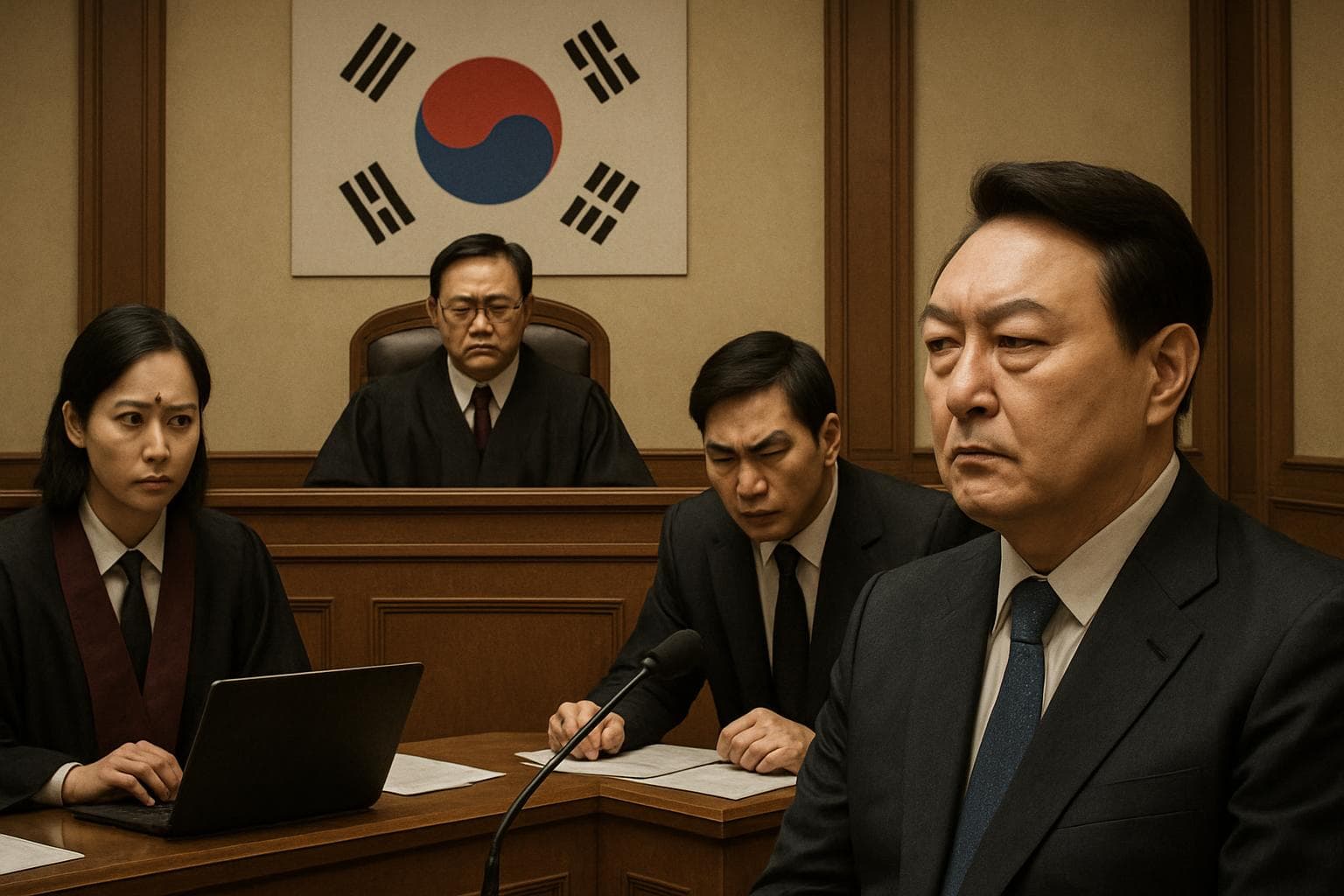
In a landmark trial, South Korean prosecutors have called for the death penalty for former President Yoon Suk Yeol, who stands accused of attempting to impose martial law in December 2024. The trial, which has captivated the nation, is the first insurrection case against a former Korean head of state in three decades.
Allegations of Insurrection
Yoon, who was impeached and removed from office in April 2025, faces charges of leading an insurrection, a grave offense under South Korean law. Prosecutors argue that Yoon's actions were a direct assault on the country's constitutional order and posed a significant threat to public safety. They claim that Yoon's intent was to monopolize power through long-term rule, a move that could have destabilized the nation.
Failed Martial Law Attempt
The crisis unfolded on the night of December 3, 2024, when Yoon allegedly ordered troops to prevent lawmakers from voting to lift his martial law declaration. The six-hour standoff ended when 190 MPs managed to pass an emergency resolution, forcing Yoon to back down. This dramatic sequence of events led to his impeachment on December 14 and eventual removal from office.
Prosecutors' Arguments
During closing arguments at the Seoul Central District Court, prosecutors described Yoon's actions as a "serious destruction of constitutional order by anti-state forces." They highlighted evidence, including notebooks and mobile phone memos, that suggested plans to torture election officials and disrupt media outlets. Prosecutors emphasized Yoon's lack of remorse and his continued blame on the opposition as aggravating factors.
Legal Context and Historical Precedents
The charges against Yoon echo past insurrection trials, such as those against military dictators Chun Doo-hwan and Roh Tae-woo in 1996. While South Korea has not executed anyone since 1997, the country remains a "de facto abolitionist" state. The court's verdict, expected on February 19, will determine whether the severe penalties sought by prosecutors will be upheld.
WHAT THIS MIGHT MEAN
The outcome of Yoon Suk Yeol's trial could have significant legal and political implications for South Korea. If the court upholds the death penalty, it would mark a dramatic shift in the country's approach to capital punishment, potentially reigniting debates about its abolitionist status. Politically, the verdict could influence public opinion and the stability of the current administration, especially if Yoon's supporters continue to protest. Legal experts suggest that the case may set a precedent for how future insurrection charges are handled, emphasizing the importance of upholding constitutional order in times of political crisis.
Related Articles
South Korea's Former First Lady Sentenced for Bribery Amid Political Turmoil
South Korea's Former President Yoon Sentenced to Five Years Over Martial Law Attempt
South Korea's Former President Yoon Suk Yeol Sentenced to Life for Insurrection
Kim Jong Un's Daughter Poised as North Korea's Future Leader, South Korean Intelligence Suggests

Labour's Push for Closer EU Ties Sparks Debate

Sanae Takaichi's Snap Election Gamble: Will Japan's First Female Prime Minister Secure a Landslide Victory?
South Korean Prosecutors Demand Death Penalty for Former President Yoon Suk Yeol
In This Article
 Sofia Romano| Published
 HIGHLIGHTS
- Prosecutors have requested the death penalty for former South Korean President Yoon Suk Yeol over his failed attempt to impose martial law in December 2024.
- Yoon is accused of leading an insurrection, a charge that carries severe penalties, including the death penalty or life imprisonment.
- The court is expected to deliver its verdict on February 19, with Yoon's trial marking the first insurrection case against a Korean head of state in three decades.
- Prosecutors argue that Yoon's actions were aimed at monopolizing power and fundamentally threatened the constitutional order and public safety.
- Yoon, who was impeached and removed from office in April 2025, denies the charges, claiming his actions were symbolic.
In a landmark trial, South Korean prosecutors have called for the death penalty for former President Yoon Suk Yeol, who stands accused of attempting to impose martial law in December 2024. The trial, which has captivated the nation, is the first insurrection case against a former Korean head of state in three decades.
Allegations of Insurrection
Yoon, who was impeached and removed from office in April 2025, faces charges of leading an insurrection, a grave offense under South Korean law. Prosecutors argue that Yoon's actions were a direct assault on the country's constitutional order and posed a significant threat to public safety. They claim that Yoon's intent was to monopolize power through long-term rule, a move that could have destabilized the nation.
Failed Martial Law Attempt
The crisis unfolded on the night of December 3, 2024, when Yoon allegedly ordered troops to prevent lawmakers from voting to lift his martial law declaration. The six-hour standoff ended when 190 MPs managed to pass an emergency resolution, forcing Yoon to back down. This dramatic sequence of events led to his impeachment on December 14 and eventual removal from office.
Prosecutors' Arguments
During closing arguments at the Seoul Central District Court, prosecutors described Yoon's actions as a "serious destruction of constitutional order by anti-state forces." They highlighted evidence, including notebooks and mobile phone memos, that suggested plans to torture election officials and disrupt media outlets. Prosecutors emphasized Yoon's lack of remorse and his continued blame on the opposition as aggravating factors.
Legal Context and Historical Precedents
The charges against Yoon echo past insurrection trials, such as those against military dictators Chun Doo-hwan and Roh Tae-woo in 1996. While South Korea has not executed anyone since 1997, the country remains a "de facto abolitionist" state. The court's verdict, expected on February 19, will determine whether the severe penalties sought by prosecutors will be upheld.
WHAT THIS MIGHT MEAN
The outcome of Yoon Suk Yeol's trial could have significant legal and political implications for South Korea. If the court upholds the death penalty, it would mark a dramatic shift in the country's approach to capital punishment, potentially reigniting debates about its abolitionist status. Politically, the verdict could influence public opinion and the stability of the current administration, especially if Yoon's supporters continue to protest. Legal experts suggest that the case may set a precedent for how future insurrection charges are handled, emphasizing the importance of upholding constitutional order in times of political crisis.
Related Articles
South Korea's Former First Lady Sentenced for Bribery Amid Political Turmoil
South Korea's Former President Yoon Sentenced to Five Years Over Martial Law Attempt
South Korea's Former President Yoon Suk Yeol Sentenced to Life for Insurrection
Kim Jong Un's Daughter Poised as North Korea's Future Leader, South Korean Intelligence Suggests
Labour's Push for Closer EU Ties Sparks Debate
Sanae Takaichi's Snap Election Gamble: Will Japan's First Female Prime Minister Secure a Landslide Victory?