
Dell Family's $6.25 Billion Donation to Fund Trump Accounts for Children's Future
In This Article
HIGHLIGHTS
- Michael and Susan Dell pledged $6.25 billion to fund Trump-branded investment accounts for 25 million American children under 10.
- The accounts, part of a tax and spending bill, will launch in 2026, with $1,000 from the government for children born between 2025 and 2028.
- Eligible children, living in areas with median incomes below $150,000, will receive $250 from the Dells.
- The initiative aims to encourage financial literacy and savings, with funds invested in low-cost index funds.
- Critics question the impact on child poverty, given cuts to social programs in the same legislation.
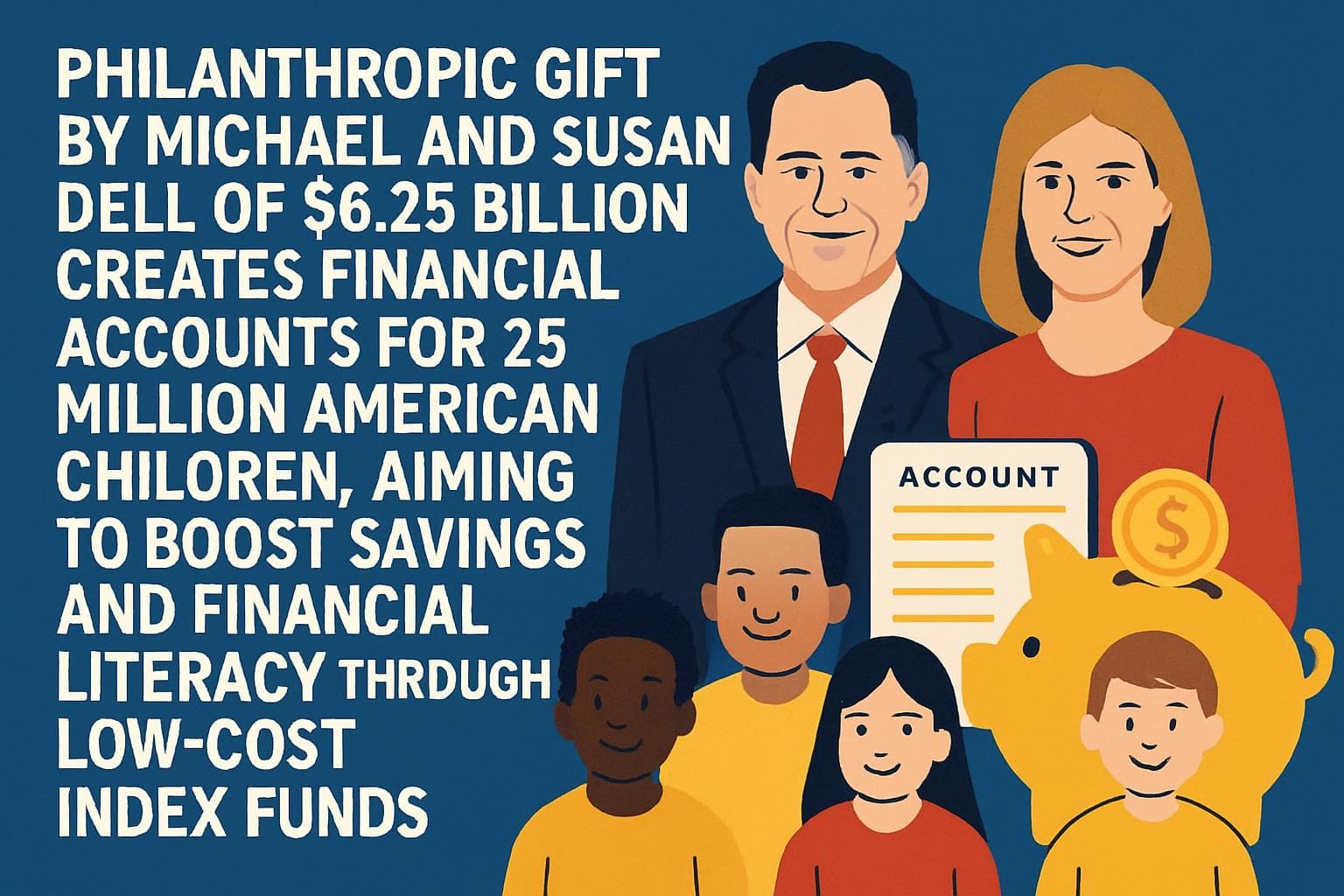
In a historic philanthropic gesture, tech billionaire Michael Dell and his wife, Susan, have announced a $6.25 billion donation to establish investment accounts for 25 million American children under the age of 10. This initiative, tied to the Trump administration's tax and spending bill, aims to foster financial literacy and savings among young Americans.
A New Financial Opportunity for Children
The Trump-branded investment accounts, set to launch on July 4, 2026, will provide a $1,000 government contribution for children born between 2025 and 2028. The Dells' donation will supplement this by offering $250 to children living in areas where the median income is below $150,000. These accounts are designed to be invested in low-cost index funds, reflecting the broader stock market, and can be accessed when the child turns 18.
Encouraging Broader Participation
The Dells' contribution is one of the largest private donations aimed directly at American children. Michael Dell, whose net worth is estimated at $148 billion, expressed hope that other philanthropists and employers would follow suit. "We've seen what happens when a child gets even a small financial headstart - their world expands," Dell stated in a social media announcement.
Potential Impact and Criticism
While the initiative promises to provide a financial boost to many families, critics argue that it may not significantly alleviate child poverty. The tax and spending bill, which includes these accounts, also features cuts to essential social programs like Medicaid and SNAP. Experts caution that without these supports, low-income families may struggle to benefit fully from the investment accounts.
Looking Ahead
As the Trump accounts prepare for their 2026 launch, the Treasury Department has begun outlining the process for parents to establish these accounts. Contributions from family members, employers, and charitable organizations are encouraged, with a cap of $5,000 per year. The accounts are intended to grow tax-free, although withdrawals before retirement age may incur penalties.
WHAT THIS MIGHT MEAN
The introduction of Trump accounts could reshape how American families approach saving for their children's futures, potentially increasing financial literacy and investment participation. However, the success of this initiative will depend on widespread adoption and additional contributions from various stakeholders. Critics remain concerned about the broader implications of the tax and spending bill, particularly its impact on social safety nets. As the accounts launch, it will be crucial to monitor whether they effectively address child poverty or primarily benefit those already positioned to contribute.
Images from the Web

Related Articles

China Sets Lowest GDP Growth Target in Decades Amid Economic Challenges

Tech Giants Pledge to Cover AI Data Center Energy Costs Amid Rising Electricity Concerns

Cuba Faces Widespread Blackout Amid Deepening Fuel Crisis

UK Faces Dilemmas Amid Iran Conflict and China Spying Allegations

Google Faces Legal Battle Over AI Chatbot's Alleged Role in Tragic Death

Iran Postpones Khamenei Funeral Amid Escalating US-Israeli Strikes
Dell Family's $6.25 Billion Donation to Fund Trump Accounts for Children's Future
In This Article
 Daniel Rivera| Published
 HIGHLIGHTS
- Michael and Susan Dell pledged $6.25 billion to fund Trump-branded investment accounts for 25 million American children under 10.
- The accounts, part of a tax and spending bill, will launch in 2026, with $1,000 from the government for children born between 2025 and 2028.
- Eligible children, living in areas with median incomes below $150,000, will receive $250 from the Dells.
- The initiative aims to encourage financial literacy and savings, with funds invested in low-cost index funds.
- Critics question the impact on child poverty, given cuts to social programs in the same legislation.
In a historic philanthropic gesture, tech billionaire Michael Dell and his wife, Susan, have announced a $6.25 billion donation to establish investment accounts for 25 million American children under the age of 10. This initiative, tied to the Trump administration's tax and spending bill, aims to foster financial literacy and savings among young Americans.
A New Financial Opportunity for Children
The Trump-branded investment accounts, set to launch on July 4, 2026, will provide a $1,000 government contribution for children born between 2025 and 2028. The Dells' donation will supplement this by offering $250 to children living in areas where the median income is below $150,000. These accounts are designed to be invested in low-cost index funds, reflecting the broader stock market, and can be accessed when the child turns 18.
Encouraging Broader Participation
The Dells' contribution is one of the largest private donations aimed directly at American children. Michael Dell, whose net worth is estimated at $148 billion, expressed hope that other philanthropists and employers would follow suit. "We've seen what happens when a child gets even a small financial headstart - their world expands," Dell stated in a social media announcement.
Potential Impact and Criticism
While the initiative promises to provide a financial boost to many families, critics argue that it may not significantly alleviate child poverty. The tax and spending bill, which includes these accounts, also features cuts to essential social programs like Medicaid and SNAP. Experts caution that without these supports, low-income families may struggle to benefit fully from the investment accounts.
Looking Ahead
As the Trump accounts prepare for their 2026 launch, the Treasury Department has begun outlining the process for parents to establish these accounts. Contributions from family members, employers, and charitable organizations are encouraged, with a cap of $5,000 per year. The accounts are intended to grow tax-free, although withdrawals before retirement age may incur penalties.
WHAT THIS MIGHT MEAN
The introduction of Trump accounts could reshape how American families approach saving for their children's futures, potentially increasing financial literacy and investment participation. However, the success of this initiative will depend on widespread adoption and additional contributions from various stakeholders. Critics remain concerned about the broader implications of the tax and spending bill, particularly its impact on social safety nets. As the accounts launch, it will be crucial to monitor whether they effectively address child poverty or primarily benefit those already positioned to contribute.
Images from the Web
Related Articles
China Sets Lowest GDP Growth Target in Decades Amid Economic Challenges
Tech Giants Pledge to Cover AI Data Center Energy Costs Amid Rising Electricity Concerns
Cuba Faces Widespread Blackout Amid Deepening Fuel Crisis
UK Faces Dilemmas Amid Iran Conflict and China Spying Allegations
Google Faces Legal Battle Over AI Chatbot's Alleged Role in Tragic Death
Iran Postpones Khamenei Funeral Amid Escalating US-Israeli Strikes