
England's Curriculum Overhaul: Emphasizing Life Skills and Modern Learning
In This Article
HIGHLIGHTS
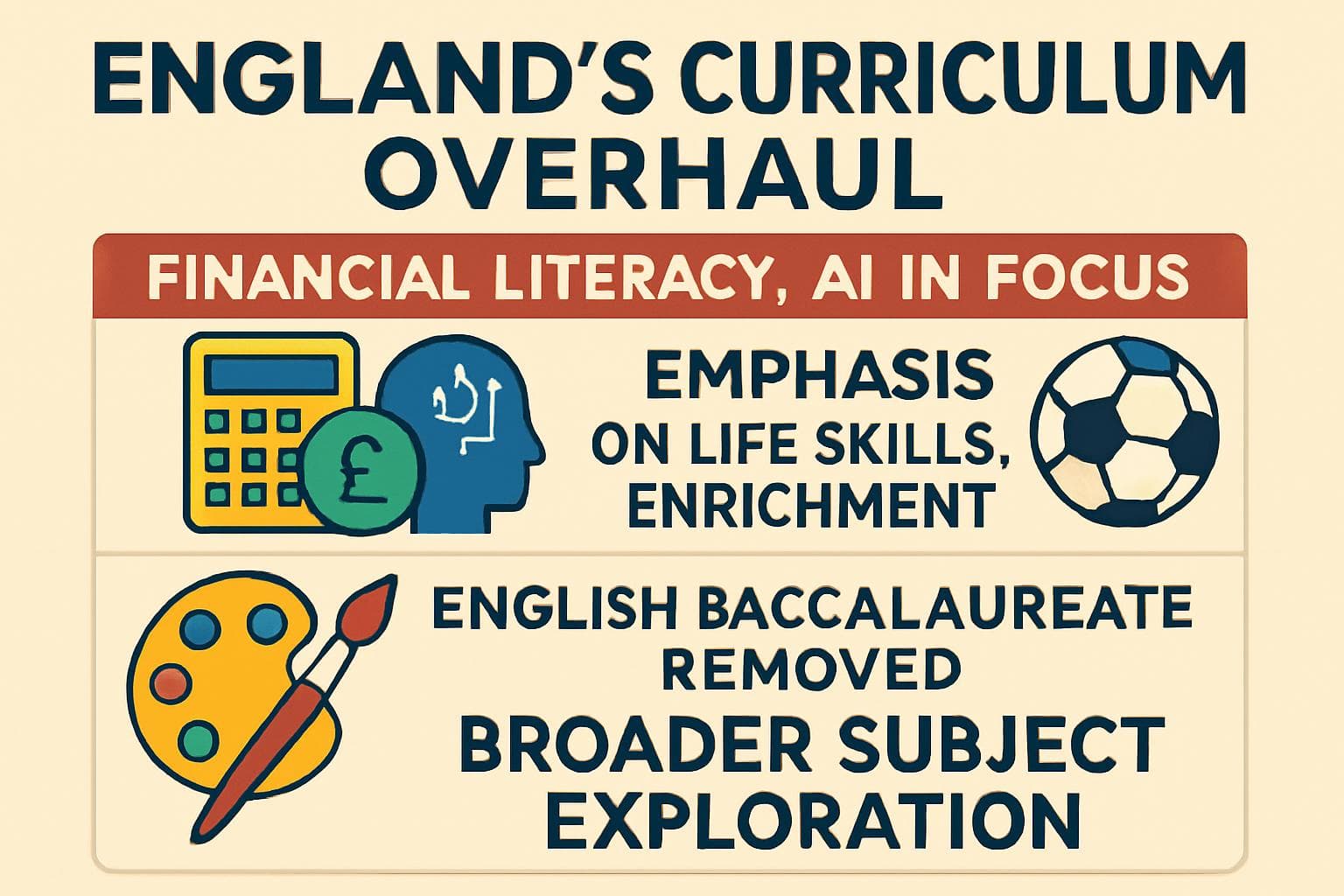
- England's curriculum will now include financial literacy and AI education to modernize learning.
- The government plans to scrap the English Baccalaureate to encourage a broader range of GCSE subjects.
- Education Secretary Bridget Phillipson emphasizes the need for a curriculum that equips students for modern challenges.
- The review suggests reducing GCSE exam time by three hours per student to focus more on life skills and enrichment.
- Some recommendations, like the new Year 8 reading test, have sparked confusion among educational leaders.
In a significant shift aimed at modernizing education, England's national curriculum will now incorporate financial literacy and artificial intelligence (AI) education. This move comes as part of a comprehensive review, the first in over a decade, led by Education Secretary Bridget Phillipson. The review seeks to equip students with essential life skills and prepare them for the challenges of the modern world.
Curriculum Modernization and Life Skills
The curriculum overhaul includes teaching students how to budget and understand mortgages, alongside lessons on identifying fake news and AI-generated content. The Department for Education (DfE) aims to create a "cutting edge" curriculum that narrows the attainment gap between disadvantaged students and their peers. The review also recommends reducing the emphasis on exams, cutting GCSE exam time by three hours per student, and focusing more on enrichment activities like sports and arts.
Changes to the English Baccalaureate
A notable change is the decision to scrap the English Baccalaureate (EBacc), a measure introduced in 2010 to assess schools based on students' performance in core academic subjects. The DfE argues that the EBacc has been "constraining" and that its removal will encourage students to explore a broader range of subjects, including the arts and humanities. However, former Conservative schools minister Nick Gibb expressed concerns that this could lead to a decline in foreign language studies, particularly in state schools.
Government's Response and Future Steps
While the government has accepted many of the review's recommendations, some proposals have sparked confusion. For instance, the introduction of a mandatory Year 8 reading test has raised questions among educational leaders, as it appears to contradict the review's suggestion for diagnostic tests in English and maths. Bridget Phillipson defended the decision, emphasizing the importance of reading fluency for academic success.
Focus on Enrichment and Diversity
The review also highlights the need for a curriculum that supports students' confidence and life skills, with new enrichment benchmarks requiring schools to offer access to civic engagement, arts, culture, and sports. These changes aim to provide a more holistic education that prepares students for the diverse opportunities and challenges they will face.
WHAT THIS MIGHT MEAN
The curriculum changes could significantly impact the educational landscape in England. By emphasizing life skills and modern subjects like AI, students may become better equipped for future job markets and societal challenges. However, the removal of the EBacc could lead to disparities in language education, potentially widening the gap between state and private schools. As the government implements these changes, it will be crucial to monitor their effects on student outcomes and ensure that all students have access to a well-rounded education. Education experts will likely continue to debate the balance between academic rigor and life skills, shaping future policy decisions.
Related Articles

UK Government Announces Major Overhaul of SEND System with £3.4 Billion Investment
UK SEND Education Reforms: New Funding, Infrastructure Proposals, and Potential Backlash
UK Government's SEND Reforms Spark Debate Over Funding and Accessibility

Government Announces £4 Billion Overhaul of SEND Support in England
Government Unveils Ambitious Plan to Halve Attainment Gap in England's Schools

UK Government's SEND Reforms: A Critical Turning Point for Special Education
England's Curriculum Overhaul: Emphasizing Life Skills and Modern Learning
In This Article
 Aya Nakamura| Published
 HIGHLIGHTS
- England's curriculum will now include financial literacy and AI education to modernize learning.
- The government plans to scrap the English Baccalaureate to encourage a broader range of GCSE subjects.
- Education Secretary Bridget Phillipson emphasizes the need for a curriculum that equips students for modern challenges.
- The review suggests reducing GCSE exam time by three hours per student to focus more on life skills and enrichment.
- Some recommendations, like the new Year 8 reading test, have sparked confusion among educational leaders.
In a significant shift aimed at modernizing education, England's national curriculum will now incorporate financial literacy and artificial intelligence (AI) education. This move comes as part of a comprehensive review, the first in over a decade, led by Education Secretary Bridget Phillipson. The review seeks to equip students with essential life skills and prepare them for the challenges of the modern world.
Curriculum Modernization and Life Skills
The curriculum overhaul includes teaching students how to budget and understand mortgages, alongside lessons on identifying fake news and AI-generated content. The Department for Education (DfE) aims to create a "cutting edge" curriculum that narrows the attainment gap between disadvantaged students and their peers. The review also recommends reducing the emphasis on exams, cutting GCSE exam time by three hours per student, and focusing more on enrichment activities like sports and arts.
Changes to the English Baccalaureate
A notable change is the decision to scrap the English Baccalaureate (EBacc), a measure introduced in 2010 to assess schools based on students' performance in core academic subjects. The DfE argues that the EBacc has been "constraining" and that its removal will encourage students to explore a broader range of subjects, including the arts and humanities. However, former Conservative schools minister Nick Gibb expressed concerns that this could lead to a decline in foreign language studies, particularly in state schools.
Government's Response and Future Steps
While the government has accepted many of the review's recommendations, some proposals have sparked confusion. For instance, the introduction of a mandatory Year 8 reading test has raised questions among educational leaders, as it appears to contradict the review's suggestion for diagnostic tests in English and maths. Bridget Phillipson defended the decision, emphasizing the importance of reading fluency for academic success.
Focus on Enrichment and Diversity
The review also highlights the need for a curriculum that supports students' confidence and life skills, with new enrichment benchmarks requiring schools to offer access to civic engagement, arts, culture, and sports. These changes aim to provide a more holistic education that prepares students for the diverse opportunities and challenges they will face.
WHAT THIS MIGHT MEAN
The curriculum changes could significantly impact the educational landscape in England. By emphasizing life skills and modern subjects like AI, students may become better equipped for future job markets and societal challenges. However, the removal of the EBacc could lead to disparities in language education, potentially widening the gap between state and private schools. As the government implements these changes, it will be crucial to monitor their effects on student outcomes and ensure that all students have access to a well-rounded education. Education experts will likely continue to debate the balance between academic rigor and life skills, shaping future policy decisions.
Related Articles
UK Government Announces Major Overhaul of SEND System with £3.4 Billion Investment
UK SEND Education Reforms: New Funding, Infrastructure Proposals, and Potential Backlash
UK Government's SEND Reforms Spark Debate Over Funding and Accessibility
Government Announces £4 Billion Overhaul of SEND Support in England
Government Unveils Ambitious Plan to Halve Attainment Gap in England's Schools
UK Government's SEND Reforms: A Critical Turning Point for Special Education