
Erin Patterson Convicted in Mushroom Poisoning Case That Shocked Australia
In This Article
HIGHLIGHTS
- Erin Patterson was found guilty of murdering three people and attempting to murder a fourth by serving them toxic mushrooms in a beef Wellington dish.
- The victims included her in-laws, Don and Gail Patterson, and Gail's sister, Heather Wilkinson; a local pastor, Ian Wilkinson, survived after extensive treatment.
- Dr. Chris Webster, who treated the victims, suspected Erin's guilt upon her arrival at the hospital, noting her suspicious claim that the mushrooms came from Woolworths.
- The case has captured global media attention, with extensive coverage in newspapers and online platforms, highlighting the intrigue surrounding the "mushroom murderer."
- Erin Patterson's conviction has sparked discussions about food safety and the potential for her to become one of Australia's most notorious female prisoners.
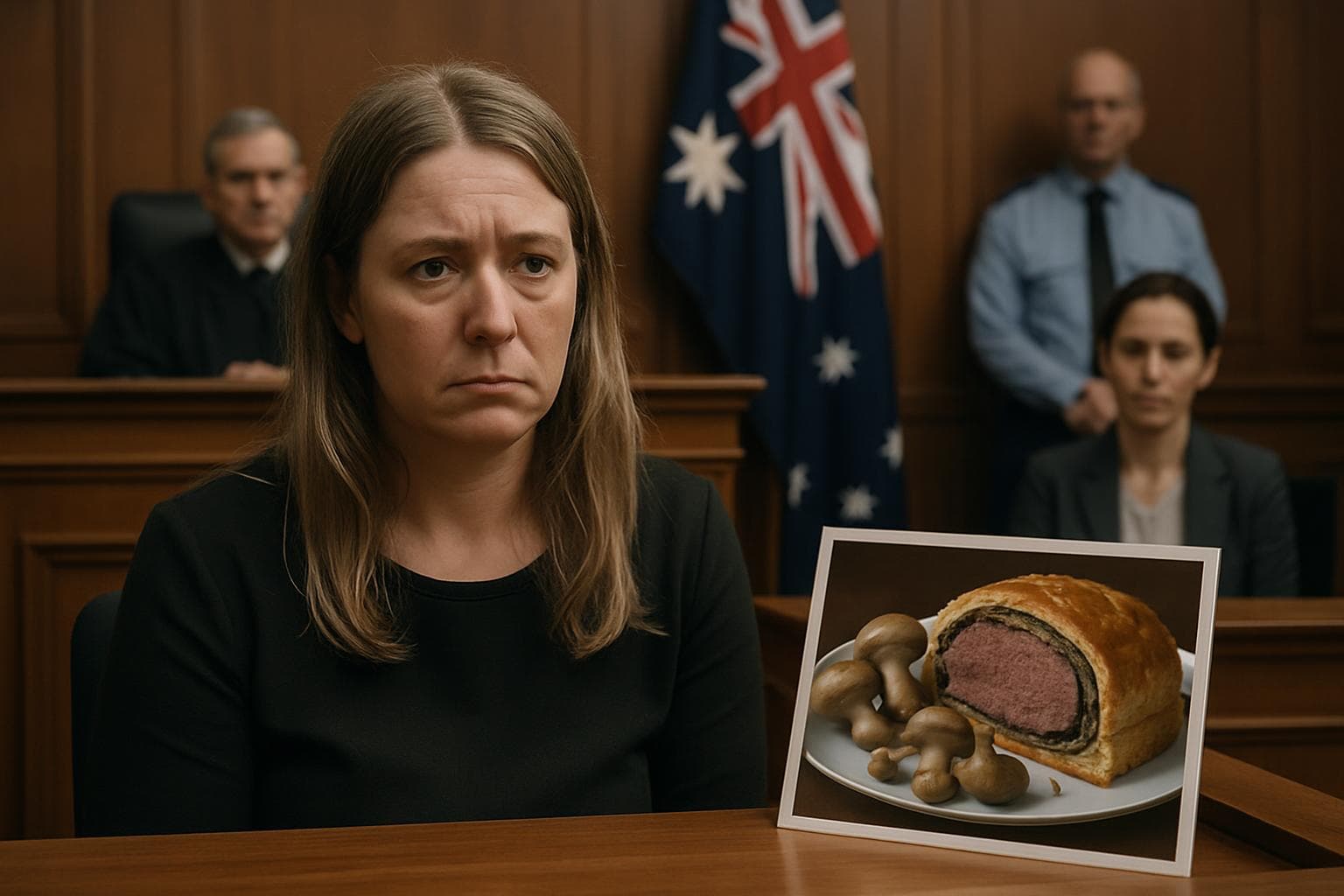
In a case that has gripped audiences worldwide, Erin Patterson has been found guilty of murdering three people and attempting to murder a fourth by serving them a beef Wellington laced with toxic mushrooms. The verdict, delivered by a Victorian Supreme Court jury, concludes a trial that has captivated the public and media alike.
The Deadly Lunch
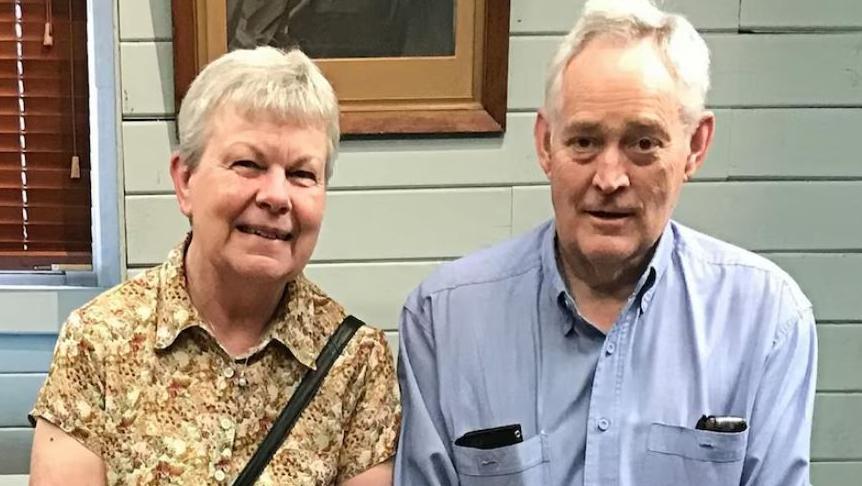
The tragic incident unfolded in July 2023, when Erin Patterson hosted a lunch at her home in rural Victoria. Among the guests were her in-laws, Don and Gail Patterson, both 70, and Gail's sister, Heather Wilkinson, 66. Also present was local pastor Ian Wilkinson, who survived the ordeal after weeks of intensive medical care. The lunch, which featured a beef Wellington dish, turned deadly due to the inclusion of death cap mushrooms, a highly toxic variety.
Medical Suspicion and Investigation
Dr. Chris Webster, who treated the victims at Leongatha Hospital, quickly suspected foul play. Initially believing it to be a case of food poisoning, Dr. Webster's suspicions were aroused when Erin Patterson arrived at the hospital claiming to have gastroenteritis. Her explanation that the mushrooms were sourced from Woolworths, a major grocery chain, seemed implausible given their stringent food safety standards. This, coupled with her lack of concern for the victims, led Dr. Webster to suspect her involvement.
Media Frenzy and Public Reaction
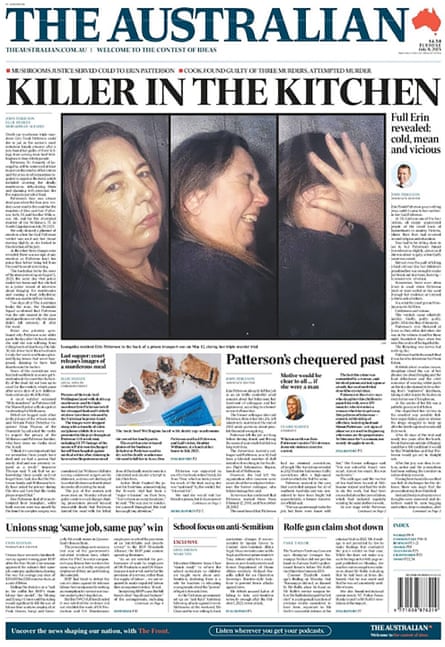
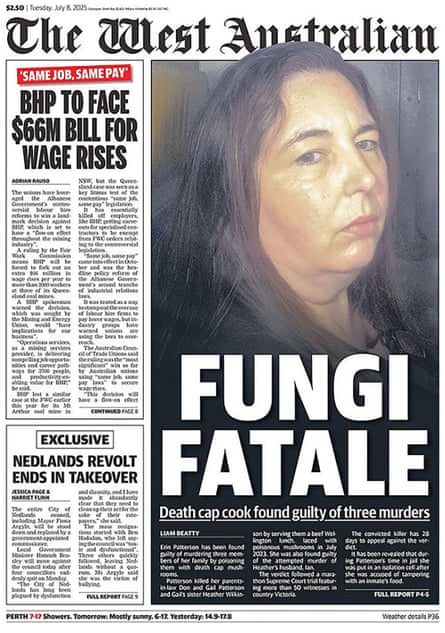
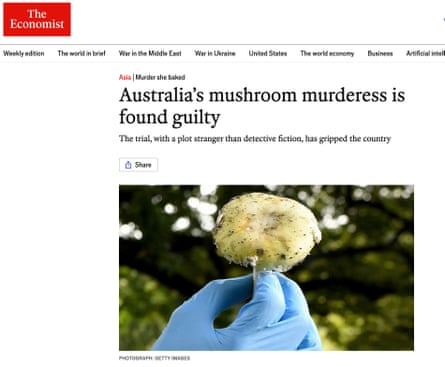
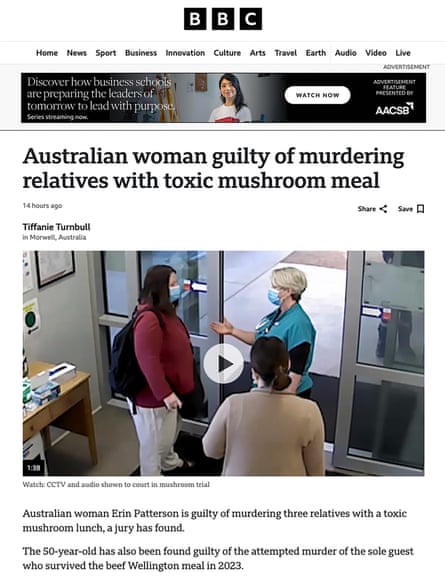
The trial and subsequent guilty verdict have been widely covered by media outlets across the globe. Publications such as The Guardian, The Sydney Morning Herald, and The Australian have dedicated extensive coverage to the case, often highlighting the bizarre and chilling nature of the crime. The media's portrayal of Erin Patterson as the "mushroom murderer" has sparked widespread public interest and debate.
Legal Implications and Future Prospects
Erin Patterson now faces the prospect of spending the rest of her life in prison, potentially becoming one of Australia's most notorious female prisoners. Her conviction has also raised questions about food safety and the dangers of foraging wild mushrooms, a common practice in some rural areas.
WHAT THIS MIGHT MEAN
The conviction of Erin Patterson could lead to increased scrutiny on food safety regulations, particularly concerning the sale and consumption of mushrooms. Legal experts suggest that this case may prompt legislative changes to prevent similar incidents in the future. Additionally, the media's intense focus on the trial may influence public perception of food-related crimes, potentially leading to heightened awareness and caution among consumers. As Erin Patterson begins her sentence, her case will likely remain a point of reference in discussions about criminal justice and food safety in Australia.
Images from the Web





Related Articles

Canada and Australia Forge Strategic Partnership Amid Global Uncertainty

UK Government to Reform Asylum Seeker Support and Employment Policies

Canada Calls for De-escalation Amid US-Israel Strikes on Iran

Trump's New Tariff Strategy Sparks Global Trade Uncertainty

Trump Raises Import Tariffs to 15% After Supreme Court Setback

Anna Murdoch-Mann: Influential Figure in Media and Philanthropy Dies at 81
Erin Patterson Convicted in Mushroom Poisoning Case That Shocked Australia
In This Article
 Aya Nakamura| Published
 HIGHLIGHTS
- Erin Patterson was found guilty of murdering three people and attempting to murder a fourth by serving them toxic mushrooms in a beef Wellington dish.
- The victims included her in-laws, Don and Gail Patterson, and Gail's sister, Heather Wilkinson; a local pastor, Ian Wilkinson, survived after extensive treatment.
- Dr. Chris Webster, who treated the victims, suspected Erin's guilt upon her arrival at the hospital, noting her suspicious claim that the mushrooms came from Woolworths.
- The case has captured global media attention, with extensive coverage in newspapers and online platforms, highlighting the intrigue surrounding the "mushroom murderer."
- Erin Patterson's conviction has sparked discussions about food safety and the potential for her to become one of Australia's most notorious female prisoners.
In a case that has gripped audiences worldwide, Erin Patterson has been found guilty of murdering three people and attempting to murder a fourth by serving them a beef Wellington laced with toxic mushrooms. The verdict, delivered by a Victorian Supreme Court jury, concludes a trial that has captivated the public and media alike.
The Deadly Lunch
The tragic incident unfolded in July 2023, when Erin Patterson hosted a lunch at her home in rural Victoria. Among the guests were her in-laws, Don and Gail Patterson, both 70, and Gail's sister, Heather Wilkinson, 66. Also present was local pastor Ian Wilkinson, who survived the ordeal after weeks of intensive medical care. The lunch, which featured a beef Wellington dish, turned deadly due to the inclusion of death cap mushrooms, a highly toxic variety.
Medical Suspicion and Investigation
Dr. Chris Webster, who treated the victims at Leongatha Hospital, quickly suspected foul play. Initially believing it to be a case of food poisoning, Dr. Webster's suspicions were aroused when Erin Patterson arrived at the hospital claiming to have gastroenteritis. Her explanation that the mushrooms were sourced from Woolworths, a major grocery chain, seemed implausible given their stringent food safety standards. This, coupled with her lack of concern for the victims, led Dr. Webster to suspect her involvement.
Media Frenzy and Public Reaction
The trial and subsequent guilty verdict have been widely covered by media outlets across the globe. Publications such as The Guardian, The Sydney Morning Herald, and The Australian have dedicated extensive coverage to the case, often highlighting the bizarre and chilling nature of the crime. The media's portrayal of Erin Patterson as the "mushroom murderer" has sparked widespread public interest and debate.
Legal Implications and Future Prospects
Erin Patterson now faces the prospect of spending the rest of her life in prison, potentially becoming one of Australia's most notorious female prisoners. Her conviction has also raised questions about food safety and the dangers of foraging wild mushrooms, a common practice in some rural areas.
WHAT THIS MIGHT MEAN
The conviction of Erin Patterson could lead to increased scrutiny on food safety regulations, particularly concerning the sale and consumption of mushrooms. Legal experts suggest that this case may prompt legislative changes to prevent similar incidents in the future. Additionally, the media's intense focus on the trial may influence public perception of food-related crimes, potentially leading to heightened awareness and caution among consumers. As Erin Patterson begins her sentence, her case will likely remain a point of reference in discussions about criminal justice and food safety in Australia.
Images from the Web
Related Articles
Canada and Australia Forge Strategic Partnership Amid Global Uncertainty
UK Government to Reform Asylum Seeker Support and Employment Policies
Canada Calls for De-escalation Amid US-Israel Strikes on Iran
Trump's New Tariff Strategy Sparks Global Trade Uncertainty
Trump Raises Import Tariffs to 15% After Supreme Court Setback
Anna Murdoch-Mann: Influential Figure in Media and Philanthropy Dies at 81