
EU Revises 2035 Car Emissions Target Amid Industry Pressure
In This Article
HIGHLIGHTS
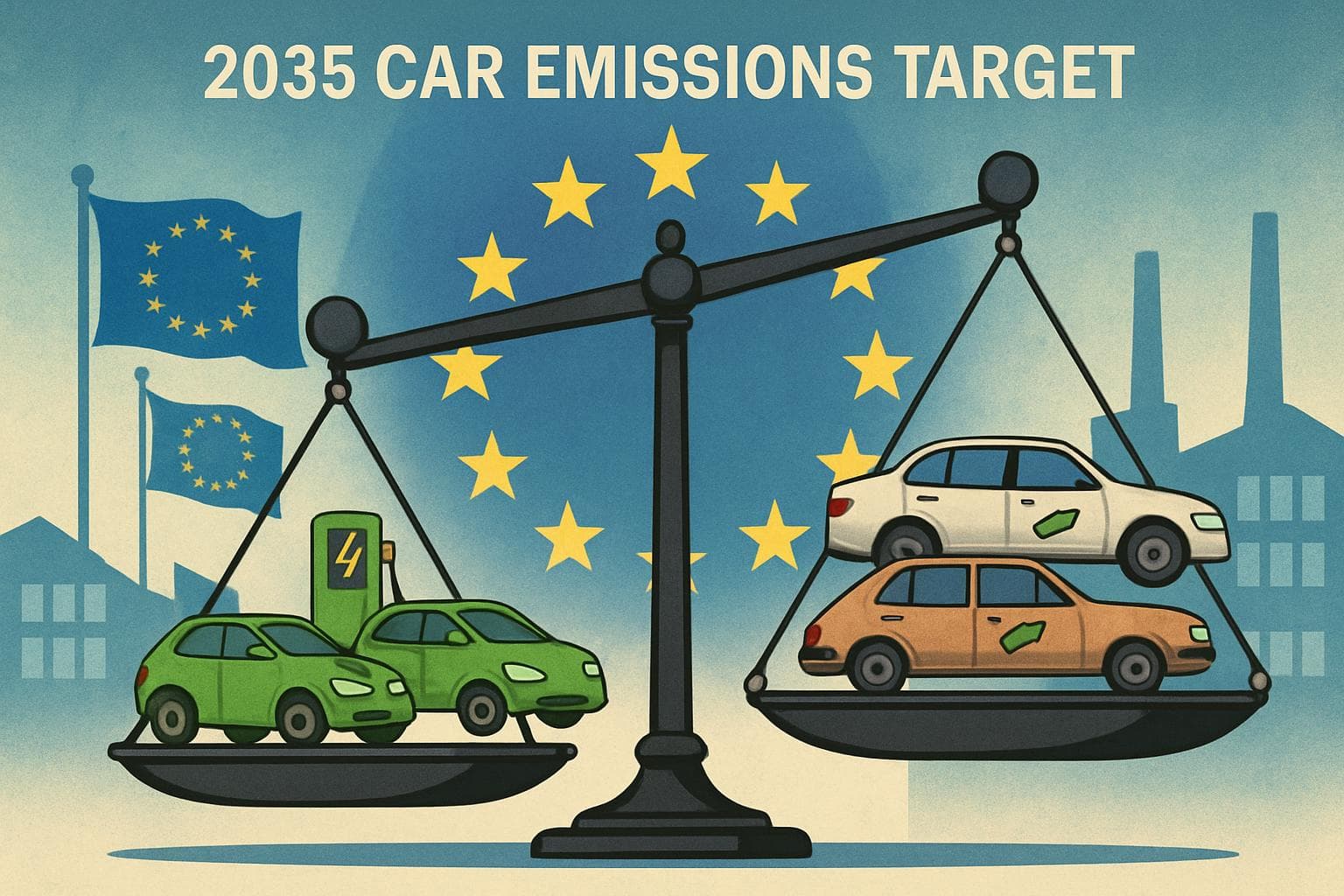
- The European Commission has revised its 2035 car emissions policy, reducing the zero-emission target from 100% to 90%.
- German and Italian carmakers lobbied for the change, citing low market demand for electric vehicles and potential financial penalties.
- The remaining 10% of new cars can include hybrids and combustion engines, provided they use green technologies like biofuels.
- Critics argue the policy shift undermines the EU's electrification goals and could weaken its competitive edge against foreign markets.
- The proposal requires approval from EU governments and the European Parliament to take effect.
The European Commission has announced a significant revision to its ambitious 2035 car emissions policy, reducing the requirement for new vehicles to be zero-emission from 100% to 90%. This decision comes after intense lobbying from car manufacturers, particularly in Germany and Italy, who argued that the current market demand for electric vehicles is insufficient to meet the original target.
Industry Concerns and Policy Adjustments
Under the revised plan, 10% of new cars sold from 2035 can still be petrol, diesel, or hybrid vehicles, provided they incorporate green technologies such as biofuels or e-fuels. The European carmakers association, ACEA, has expressed concerns about the potential "multi-billion euro" penalties manufacturers could face without this adjustment. Sigrid de Vries, director general at ACEA, emphasized the need for "flexibility" to sustain jobs and innovation within the industry.
Balancing Environmental Goals and Economic Realities
The European Commission's proposal aims to balance environmental objectives with economic realities. Wopke Hoekstra, a European climate commissioner, described the plan as a "win-win" for both consumers and the industry, maintaining the course towards electrification while introducing necessary flexibility. The policy also includes incentives for small electric vehicles, offering reductions in road tolls and charging station discounts for cars under 4.2 meters made in the EU.
Criticism and Future Implications
Despite the Commission's assurances, the policy shift has faced criticism from environmental groups and industry experts. Chris Heron of E-Mobility Europe warned that the move could hinder Europe's electrification progress, while Greenpeace's Martin Kaiser labeled it a "gift" to Chinese electric car manufacturers. The proposal, which still requires approval from EU governments and the European Parliament, marks a significant retreat from the EU's previous green policies.
WHAT THIS MIGHT MEAN
The revised emissions policy reflects a pragmatic approach to the challenges facing the European car industry, but it also raises questions about the EU's long-term commitment to environmental goals. If approved, the policy could provide temporary relief to manufacturers, allowing them to adapt to market demands without incurring heavy penalties. However, critics argue that this could slow the transition to electric vehicles, potentially leaving the EU vulnerable to competition from countries with more aggressive electrification strategies.
As the proposal moves through the legislative process, it will be crucial for EU policymakers to balance industry needs with environmental imperatives. The outcome could set a precedent for future emissions policies and influence global automotive trends. The decision will likely impact the EU's ability to meet its climate targets and maintain its position as a leader in green technology innovation.
Related Articles

US Supreme Court Ruling on Tariffs Sparks Uncertainty for UK and Global Trade

France Releases Russian 'Shadow Fleet' Tanker Amid Rising Tensions
US Supreme Court Ruling Sparks Trade Uncertainty in Asia and Beyond
Trump's New Tariff Strategy Sparks Global Trade Uncertainty

St Francis of Assisi's Bones Draw Global Pilgrims to Italy

Sicilian Man Trains Dog for Illegal Rubbish Dumping, Faces Fine
EU Revises 2035 Car Emissions Target Amid Industry Pressure
In This Article
 Alex Carter| Published
 HIGHLIGHTS
- The European Commission has revised its 2035 car emissions policy, reducing the zero-emission target from 100% to 90%.
- German and Italian carmakers lobbied for the change, citing low market demand for electric vehicles and potential financial penalties.
- The remaining 10% of new cars can include hybrids and combustion engines, provided they use green technologies like biofuels.
- Critics argue the policy shift undermines the EU's electrification goals and could weaken its competitive edge against foreign markets.
- The proposal requires approval from EU governments and the European Parliament to take effect.
The European Commission has announced a significant revision to its ambitious 2035 car emissions policy, reducing the requirement for new vehicles to be zero-emission from 100% to 90%. This decision comes after intense lobbying from car manufacturers, particularly in Germany and Italy, who argued that the current market demand for electric vehicles is insufficient to meet the original target.
Industry Concerns and Policy Adjustments
Under the revised plan, 10% of new cars sold from 2035 can still be petrol, diesel, or hybrid vehicles, provided they incorporate green technologies such as biofuels or e-fuels. The European carmakers association, ACEA, has expressed concerns about the potential "multi-billion euro" penalties manufacturers could face without this adjustment. Sigrid de Vries, director general at ACEA, emphasized the need for "flexibility" to sustain jobs and innovation within the industry.
Balancing Environmental Goals and Economic Realities
The European Commission's proposal aims to balance environmental objectives with economic realities. Wopke Hoekstra, a European climate commissioner, described the plan as a "win-win" for both consumers and the industry, maintaining the course towards electrification while introducing necessary flexibility. The policy also includes incentives for small electric vehicles, offering reductions in road tolls and charging station discounts for cars under 4.2 meters made in the EU.
Criticism and Future Implications
Despite the Commission's assurances, the policy shift has faced criticism from environmental groups and industry experts. Chris Heron of E-Mobility Europe warned that the move could hinder Europe's electrification progress, while Greenpeace's Martin Kaiser labeled it a "gift" to Chinese electric car manufacturers. The proposal, which still requires approval from EU governments and the European Parliament, marks a significant retreat from the EU's previous green policies.
WHAT THIS MIGHT MEAN
The revised emissions policy reflects a pragmatic approach to the challenges facing the European car industry, but it also raises questions about the EU's long-term commitment to environmental goals. If approved, the policy could provide temporary relief to manufacturers, allowing them to adapt to market demands without incurring heavy penalties. However, critics argue that this could slow the transition to electric vehicles, potentially leaving the EU vulnerable to competition from countries with more aggressive electrification strategies.
As the proposal moves through the legislative process, it will be crucial for EU policymakers to balance industry needs with environmental imperatives. The outcome could set a precedent for future emissions policies and influence global automotive trends. The decision will likely impact the EU's ability to meet its climate targets and maintain its position as a leader in green technology innovation.
Related Articles
US Supreme Court Ruling on Tariffs Sparks Uncertainty for UK and Global Trade
France Releases Russian 'Shadow Fleet' Tanker Amid Rising Tensions
US Supreme Court Ruling Sparks Trade Uncertainty in Asia and Beyond
Trump's New Tariff Strategy Sparks Global Trade Uncertainty
St Francis of Assisi's Bones Draw Global Pilgrims to Italy
Sicilian Man Trains Dog for Illegal Rubbish Dumping, Faces Fine