
European Leaders Stand Firm on Ukraine's Borders Amid Rising Tensions
In This Article
HIGHLIGHTS
- European leaders, excluding Hungary, reaffirmed Ukraine's territorial integrity, opposing any forceful border changes.
- President Zelensky warned of Russia's potential new offensive, thanking EU leaders for their support.
- The upcoming Trump-Putin summit in Alaska raises concerns about potential territorial concessions in Ukraine.
- NATO and EU leaders are coordinating strategies to maintain diplomatic progress with the US.
- Russia's military activities near Pokrovsk indicate ongoing tensions and potential escalations.
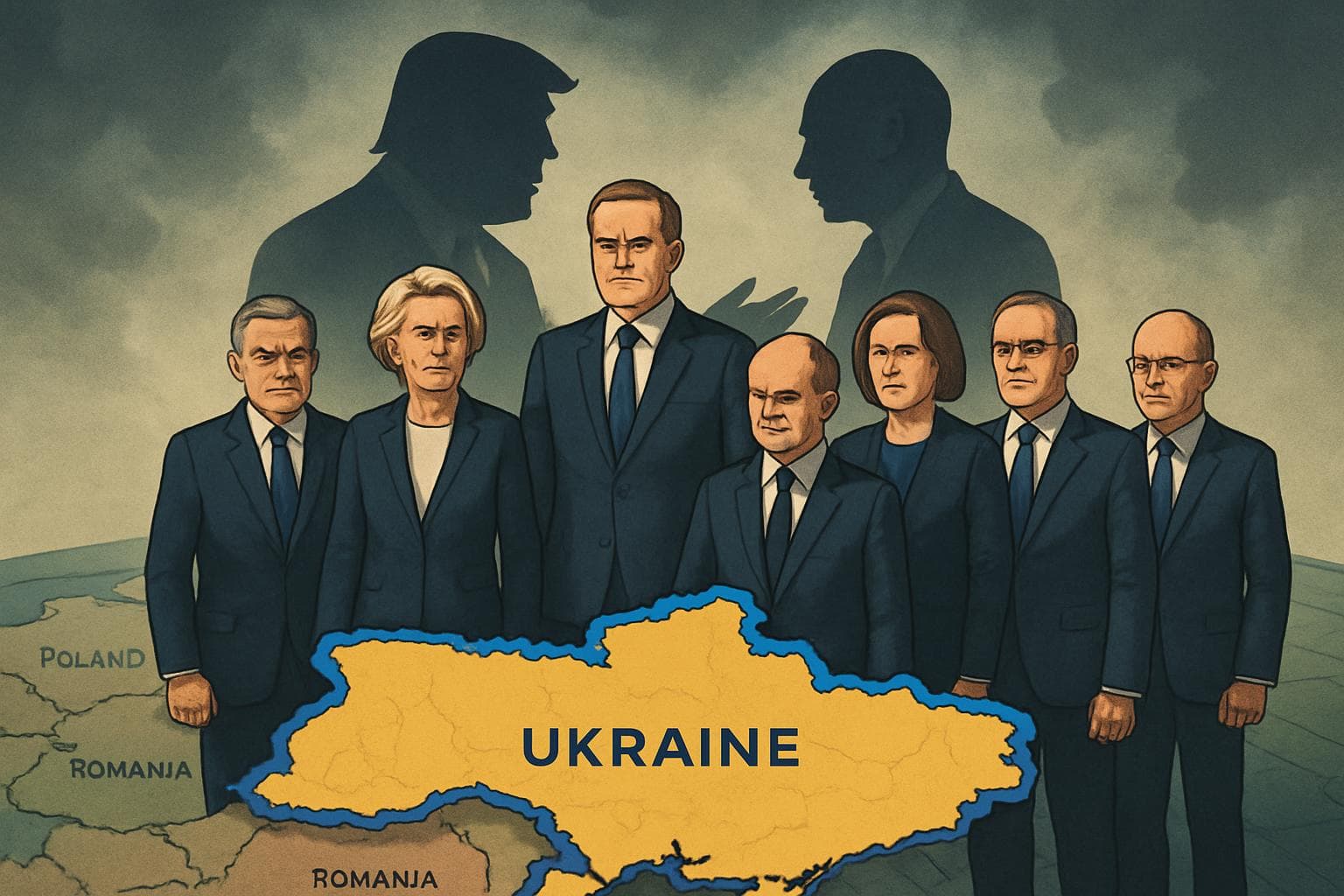
As tensions escalate in Eastern Europe, European leaders have issued a strong statement reaffirming Ukraine's territorial integrity, emphasizing that international borders must not be altered by force. This declaration, signed by 26 of the 27 EU leaders, comes just days before a critical summit between US President Donald Trump and Russian President Vladimir Putin in Alaska, where Ukraine's future will be a key topic.
EU's Unified Stance
The EU's statement, notably absent of Hungary's Viktor Orban, underscores the bloc's commitment to Ukraine's sovereignty. Orban's absence highlights his ongoing amicable relations with Russia, which have often complicated EU consensus on Ukrainian support. The EU leaders stressed that Russia's actions in Ukraine pose a broader threat to European and international security, urging for a "just and lasting peace."
Zelensky's Concerns and Military Movements
Ukrainian President Volodymyr Zelensky has expressed gratitude for the EU's support while warning of Russia's preparations for new offensive operations. Recent military reports from Ukraine indicate ongoing clashes near Pokrovsk, with Russian forces attempting to breach Ukrainian defenses. Zelensky's warnings come amid fears that the Trump-Putin summit might lead to territorial concessions, potentially altering the geopolitical landscape.
Diplomatic Efforts and Challenges
European leaders are working to align their strategies with the US ahead of the summit, aiming to preserve the diplomatic progress achieved, particularly during the successful NATO summit in June. However, there are concerns that Trump's recent impatience with Putin could jeopardize these efforts. Despite signs of Trump hardening his stance, including resuming intelligence cooperation with Ukraine, the outcome of the Alaska talks remains uncertain.
WHAT THIS MIGHT MEAN
The upcoming Trump-Putin summit could significantly impact the geopolitical dynamics in Eastern Europe. If territorial concessions are made, it might set a precedent for future conflicts, undermining international norms on territorial integrity. Experts suggest that any formal recognition of Russian control over Ukrainian territories could destabilize the region further, potentially leading to increased military engagements. European leaders will need to navigate these diplomatic waters carefully to maintain unity and support for Ukraine while managing relations with the US and Russia.
Related Articles
Russian LNG Tanker Sinks in Mediterranean Amid Accusations of Ukrainian Drone Attack
Spain's Sánchez Stands Firm Against Trump's Trade Threat Over Iran Stance
Cuba Faces Widespread Blackout Amid Deepening Fuel Crisis

UK Faces Dilemmas Amid Iran Conflict and China Spying Allegations
UK-Iran Tensions: Starmer Defends Cautious Approach Amid Trump Criticism
China Sets Lowest GDP Growth Target in Decades Amid Economic Challenges
European Leaders Stand Firm on Ukraine's Borders Amid Rising Tensions
In This Article
 Alex Carter| Published
 HIGHLIGHTS
- European leaders, excluding Hungary, reaffirmed Ukraine's territorial integrity, opposing any forceful border changes.
- President Zelensky warned of Russia's potential new offensive, thanking EU leaders for their support.
- The upcoming Trump-Putin summit in Alaska raises concerns about potential territorial concessions in Ukraine.
- NATO and EU leaders are coordinating strategies to maintain diplomatic progress with the US.
- Russia's military activities near Pokrovsk indicate ongoing tensions and potential escalations.
As tensions escalate in Eastern Europe, European leaders have issued a strong statement reaffirming Ukraine's territorial integrity, emphasizing that international borders must not be altered by force. This declaration, signed by 26 of the 27 EU leaders, comes just days before a critical summit between US President Donald Trump and Russian President Vladimir Putin in Alaska, where Ukraine's future will be a key topic.
EU's Unified Stance
The EU's statement, notably absent of Hungary's Viktor Orban, underscores the bloc's commitment to Ukraine's sovereignty. Orban's absence highlights his ongoing amicable relations with Russia, which have often complicated EU consensus on Ukrainian support. The EU leaders stressed that Russia's actions in Ukraine pose a broader threat to European and international security, urging for a "just and lasting peace."
Zelensky's Concerns and Military Movements
Ukrainian President Volodymyr Zelensky has expressed gratitude for the EU's support while warning of Russia's preparations for new offensive operations. Recent military reports from Ukraine indicate ongoing clashes near Pokrovsk, with Russian forces attempting to breach Ukrainian defenses. Zelensky's warnings come amid fears that the Trump-Putin summit might lead to territorial concessions, potentially altering the geopolitical landscape.
Diplomatic Efforts and Challenges
European leaders are working to align their strategies with the US ahead of the summit, aiming to preserve the diplomatic progress achieved, particularly during the successful NATO summit in June. However, there are concerns that Trump's recent impatience with Putin could jeopardize these efforts. Despite signs of Trump hardening his stance, including resuming intelligence cooperation with Ukraine, the outcome of the Alaska talks remains uncertain.
WHAT THIS MIGHT MEAN
The upcoming Trump-Putin summit could significantly impact the geopolitical dynamics in Eastern Europe. If territorial concessions are made, it might set a precedent for future conflicts, undermining international norms on territorial integrity. Experts suggest that any formal recognition of Russian control over Ukrainian territories could destabilize the region further, potentially leading to increased military engagements. European leaders will need to navigate these diplomatic waters carefully to maintain unity and support for Ukraine while managing relations with the US and Russia.
Related Articles
Russian LNG Tanker Sinks in Mediterranean Amid Accusations of Ukrainian Drone Attack
Spain's Sánchez Stands Firm Against Trump's Trade Threat Over Iran Stance
Cuba Faces Widespread Blackout Amid Deepening Fuel Crisis
UK Faces Dilemmas Amid Iran Conflict and China Spying Allegations
UK-Iran Tensions: Starmer Defends Cautious Approach Amid Trump Criticism
China Sets Lowest GDP Growth Target in Decades Amid Economic Challenges