
EU and US Edge Closer to Trade Agreement Amid Tariff Tensions
In This Article
HIGHLIGHTS
- The EU and US are nearing a trade deal that could impose a 15% tariff on most EU imports, with some exceptions.
- President Trump has threatened a 30% tariff on EU imports if the EU does not open its markets to American businesses.
- The European Central Bank has kept interest rates steady at 2%, amid ongoing trade uncertainty and economic concerns.
- The EU has prepared €93bn in countermeasures against US goods if a deal is not reached by the 1 August deadline.
- The EU's steel industry faces a continued 50% tariff, a significant setback amid high energy costs and competition.
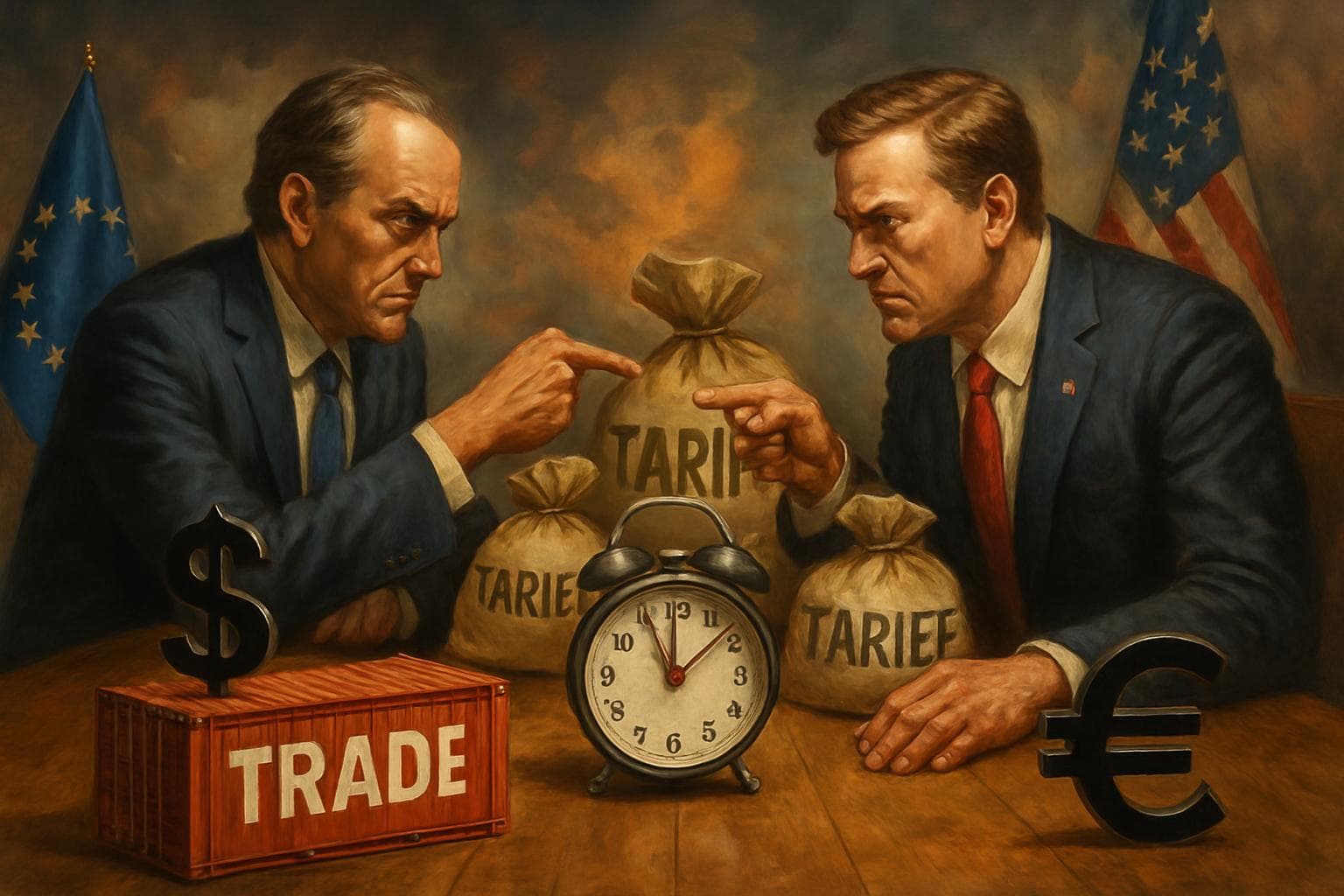
As the 1 August deadline looms, the European Union and the United States are reportedly close to finalizing a trade agreement that would impose a 15% tariff on most EU imports. This development comes as President Donald Trump has threatened to levy a 30% tariff on EU goods unless the EU opens its markets to American businesses.
Trade Negotiations Intensify
EU diplomats have indicated that the proposed 15% tariff mirrors a recent agreement between the US and Japan. However, exceptions are expected for certain products, such as aircraft and medical devices. The European Commission has been actively negotiating to secure a favorable deal for European consumers and businesses, with a spokesman emphasizing the EU's commitment to finding a negotiated outcome.
Economic Implications and ECB's Stance
The European Central Bank (ECB) has maintained its interest rates at 2%, despite sluggish economic growth and ongoing trade uncertainties. ECB President Christine Lagarde expressed optimism about the eurozone's economic position, stating that the cost of living crisis is behind them. However, she acknowledged that global trade tensions, including potential US tariffs, pose risks to economic stability.
EU's Prepared Countermeasures
In anticipation of a potential trade impasse, the EU has prepared €93bn in countermeasures targeting US goods, set to activate on 7 August if no deal is reached. This includes a €21bn list in response to previous US tariffs on European steel and aluminum, with an additional €72bn in new measures. The EU remains focused on a "twin-tracks" approach, ready to react if negotiations falter.
Challenges for the Steel Industry
The EU's steel industry faces a continued 50% tariff, a significant hurdle amid high energy costs and competition from China. While the EU seeks to negotiate exemptions and reductions, the current proposal leaves the industry at a disadvantage compared to the UK's 25% tariff, which is set to decrease.
WHAT THIS MIGHT MEAN
If the EU and US finalize the trade deal, it could stabilize transatlantic economic relations and provide a framework for future negotiations. However, failure to reach an agreement could escalate into a full-blown trade war, with significant economic repercussions for both regions. Experts suggest that the ECB may need to consider further rate cuts to mitigate potential economic fallout. Additionally, the EU's strategic response, including the potential use of the anti-coercion instrument, could redefine its trade policy and global standing.
Related Articles
China Sets Lowest GDP Growth Target in Decades Amid Economic Challenges

UK Faces Dilemmas Amid Iran Conflict and China Spying Allegations
Tech Giants Pledge to Cover AI Data Center Energy Costs Amid Rising Electricity Concerns
Cuba Faces Widespread Blackout Amid Deepening Fuel Crisis

Spain's Sánchez Stands Firm Against Trump's Trade Threat Over Iran Stance

Breakthrough Drug Offers Hope for Children with Severe Epilepsy
EU and US Edge Closer to Trade Agreement Amid Tariff Tensions
In This Article
 Daniel Rivera| Published
 HIGHLIGHTS
- The EU and US are nearing a trade deal that could impose a 15% tariff on most EU imports, with some exceptions.
- President Trump has threatened a 30% tariff on EU imports if the EU does not open its markets to American businesses.
- The European Central Bank has kept interest rates steady at 2%, amid ongoing trade uncertainty and economic concerns.
- The EU has prepared €93bn in countermeasures against US goods if a deal is not reached by the 1 August deadline.
- The EU's steel industry faces a continued 50% tariff, a significant setback amid high energy costs and competition.
As the 1 August deadline looms, the European Union and the United States are reportedly close to finalizing a trade agreement that would impose a 15% tariff on most EU imports. This development comes as President Donald Trump has threatened to levy a 30% tariff on EU goods unless the EU opens its markets to American businesses.
Trade Negotiations Intensify
EU diplomats have indicated that the proposed 15% tariff mirrors a recent agreement between the US and Japan. However, exceptions are expected for certain products, such as aircraft and medical devices. The European Commission has been actively negotiating to secure a favorable deal for European consumers and businesses, with a spokesman emphasizing the EU's commitment to finding a negotiated outcome.
Economic Implications and ECB's Stance
The European Central Bank (ECB) has maintained its interest rates at 2%, despite sluggish economic growth and ongoing trade uncertainties. ECB President Christine Lagarde expressed optimism about the eurozone's economic position, stating that the cost of living crisis is behind them. However, she acknowledged that global trade tensions, including potential US tariffs, pose risks to economic stability.
EU's Prepared Countermeasures
In anticipation of a potential trade impasse, the EU has prepared €93bn in countermeasures targeting US goods, set to activate on 7 August if no deal is reached. This includes a €21bn list in response to previous US tariffs on European steel and aluminum, with an additional €72bn in new measures. The EU remains focused on a "twin-tracks" approach, ready to react if negotiations falter.
Challenges for the Steel Industry
The EU's steel industry faces a continued 50% tariff, a significant hurdle amid high energy costs and competition from China. While the EU seeks to negotiate exemptions and reductions, the current proposal leaves the industry at a disadvantage compared to the UK's 25% tariff, which is set to decrease.
WHAT THIS MIGHT MEAN
If the EU and US finalize the trade deal, it could stabilize transatlantic economic relations and provide a framework for future negotiations. However, failure to reach an agreement could escalate into a full-blown trade war, with significant economic repercussions for both regions. Experts suggest that the ECB may need to consider further rate cuts to mitigate potential economic fallout. Additionally, the EU's strategic response, including the potential use of the anti-coercion instrument, could redefine its trade policy and global standing.
Related Articles
China Sets Lowest GDP Growth Target in Decades Amid Economic Challenges
UK Faces Dilemmas Amid Iran Conflict and China Spying Allegations
Tech Giants Pledge to Cover AI Data Center Energy Costs Amid Rising Electricity Concerns
Cuba Faces Widespread Blackout Amid Deepening Fuel Crisis
Spain's Sánchez Stands Firm Against Trump's Trade Threat Over Iran Stance
Breakthrough Drug Offers Hope for Children with Severe Epilepsy