
Evergrande's Delisting Marks a Grim Milestone in China's Property Crisis
In This Article
HIGHLIGHTS
- Evergrande, once China's largest property developer, has been delisted from the Hong Kong stock exchange following a court-ordered liquidation.
- The company defaulted on its $300 billion debt in 2021, leading to a significant impact on China's real estate sector and broader economy.
- Evergrande's founder, Hui Ka Yan, was fined $6.5 million and banned from China's capital market for life due to financial misreporting.
- The Chinese government has implemented measures to stabilize the property market, but challenges remain as property values continue to decline.
- Liquidators are working to recover assets for creditors, but Evergrande's debts still stand at $45 billion.
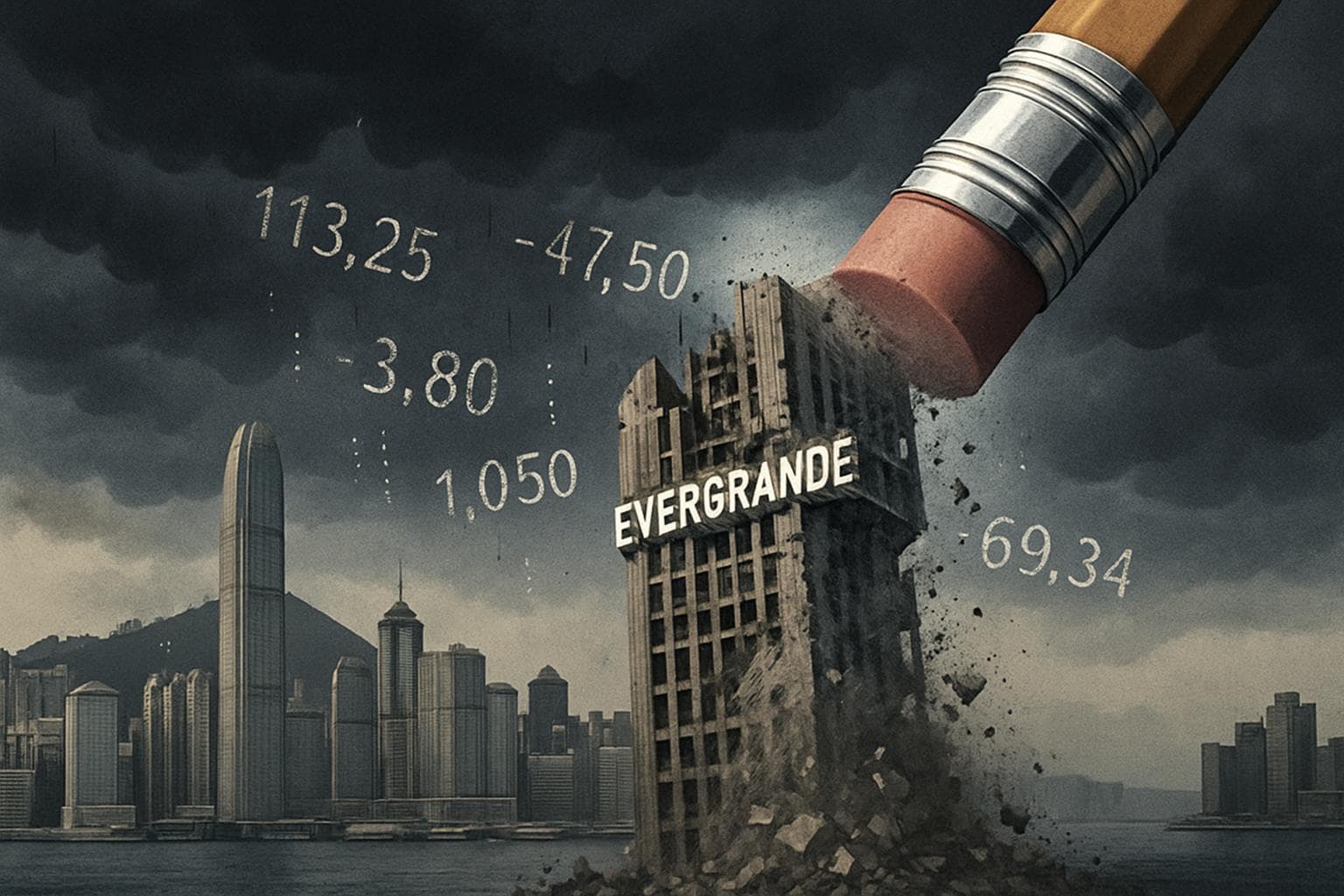
The delisting of Evergrande from the Hong Kong stock exchange marks a significant chapter in the ongoing crisis of China's property sector. Once a titan of real estate, Evergrande's removal from the exchange follows a court-ordered liquidation, highlighting the severe financial turmoil that has engulfed the company.
Rise and Fall of a Property Giant
Founded in 1996 by Hui Ka Yan, Evergrande rapidly expanded to become China's largest property developer, with over 1,300 projects across 280 cities. However, the company's aggressive growth was fueled by borrowing over $300 billion, a strategy that ultimately led to its downfall. In 2021, Evergrande defaulted on its debt, triggering a crisis that has reverberated through China's economy.
Legal and Financial Repercussions
The financial missteps of Evergrande have not gone unnoticed. In March 2024, founder Hui Ka Yan was fined $6.5 million and banned from China's capital market for life after the company was found to have overstated its revenue by $78 billion. The Hong Kong High Court ordered the company to be wound up in January 2024, and liquidators are now tasked with recovering assets for creditors, with current debts standing at $45 billion.
Economic Impact and Government Response
Evergrande's collapse has had a profound impact on China's economy, particularly in the real estate sector, which contributes significantly to the country's GDP. The downturn has affected not only property developers but also related industries such as construction and steel. In response, the Chinese government has introduced measures to stabilize the market, including low-interest loans and incentives for homebuyers. Despite these efforts, property values continue to decline, posing ongoing challenges for economic recovery.
WHAT THIS MIGHT MEAN
The delisting of Evergrande underscores the broader challenges facing China's property market. As liquidators work to recover assets, the outcome will significantly impact creditors and investors. The Chinese government's interventions may provide some relief, but the persistent decline in property values suggests a long road to recovery. Experts warn that the crisis could lead to increased scrutiny of financial practices within the sector, potentially prompting regulatory reforms. As the situation unfolds, the global economic community will be closely watching for any ripple effects from China's property market woes.
Related Articles
US Supreme Court Ruling Sparks Trade Uncertainty in Asia and Beyond

Japan Seizes Chinese Fishing Vessel Amid Rising Diplomatic Tensions
China Sets Lowest GDP Growth Target in Decades Amid Economic Challenges

UK Faces Dilemmas Amid Iran Conflict and China Spying Allegations

Labour MP's Husband Arrested in UK-China Espionage Probe
Trump's New Tariff Strategy Sparks Global Trade Uncertainty
Evergrande's Delisting Marks a Grim Milestone in China's Property Crisis
In This Article
HIGHLIGHTS
- Evergrande, once China's largest property developer, has been delisted from the Hong Kong stock exchange following a court-ordered liquidation.
- The company defaulted on its $300 billion debt in 2021, leading to a significant impact on China's real estate sector and broader economy.
- Evergrande's founder, Hui Ka Yan, was fined $6.5 million and banned from China's capital market for life due to financial misreporting.
- The Chinese government has implemented measures to stabilize the property market, but challenges remain as property values continue to decline.
- Liquidators are working to recover assets for creditors, but Evergrande's debts still stand at $45 billion.
The delisting of Evergrande from the Hong Kong stock exchange marks a significant chapter in the ongoing crisis of China's property sector. Once a titan of real estate, Evergrande's removal from the exchange follows a court-ordered liquidation, highlighting the severe financial turmoil that has engulfed the company.
Rise and Fall of a Property Giant
Founded in 1996 by Hui Ka Yan, Evergrande rapidly expanded to become China's largest property developer, with over 1,300 projects across 280 cities. However, the company's aggressive growth was fueled by borrowing over $300 billion, a strategy that ultimately led to its downfall. In 2021, Evergrande defaulted on its debt, triggering a crisis that has reverberated through China's economy.
Legal and Financial Repercussions
The financial missteps of Evergrande have not gone unnoticed. In March 2024, founder Hui Ka Yan was fined $6.5 million and banned from China's capital market for life after the company was found to have overstated its revenue by $78 billion. The Hong Kong High Court ordered the company to be wound up in January 2024, and liquidators are now tasked with recovering assets for creditors, with current debts standing at $45 billion.
Economic Impact and Government Response
Evergrande's collapse has had a profound impact on China's economy, particularly in the real estate sector, which contributes significantly to the country's GDP. The downturn has affected not only property developers but also related industries such as construction and steel. In response, the Chinese government has introduced measures to stabilize the market, including low-interest loans and incentives for homebuyers. Despite these efforts, property values continue to decline, posing ongoing challenges for economic recovery.
WHAT THIS MIGHT MEAN
The delisting of Evergrande underscores the broader challenges facing China's property market. As liquidators work to recover assets, the outcome will significantly impact creditors and investors. The Chinese government's interventions may provide some relief, but the persistent decline in property values suggests a long road to recovery. Experts warn that the crisis could lead to increased scrutiny of financial practices within the sector, potentially prompting regulatory reforms. As the situation unfolds, the global economic community will be closely watching for any ripple effects from China's property market woes.
Related Articles
US Supreme Court Ruling Sparks Trade Uncertainty in Asia and Beyond
Japan Seizes Chinese Fishing Vessel Amid Rising Diplomatic Tensions
China Sets Lowest GDP Growth Target in Decades Amid Economic Challenges
UK Faces Dilemmas Amid Iran Conflict and China Spying Allegations
Labour MP's Husband Arrested in UK-China Espionage Probe
Trump's New Tariff Strategy Sparks Global Trade Uncertainty