
Japan Seizes Chinese Fishing Vessel Amid Rising Diplomatic Tensions
In This Article
HIGHLIGHTS
- Japan seized a Chinese fishing vessel and arrested its captain in its exclusive economic zone near Nagasaki, citing illegal fishing activities.
- The incident marks the first seizure of a Chinese fishing boat by Japan since 2022, amid ongoing Japan-China tensions.
- Japan's Chief Cabinet Secretary emphasized the country's commitment to preventing illegal fishing by foreign vessels.
- The diplomatic row between Japan and China has intensified following Japan's stance on Taiwan, affecting tourism and cultural exchanges.
- China's foreign ministry has yet to respond to the latest incident, which could further strain bilateral relations.
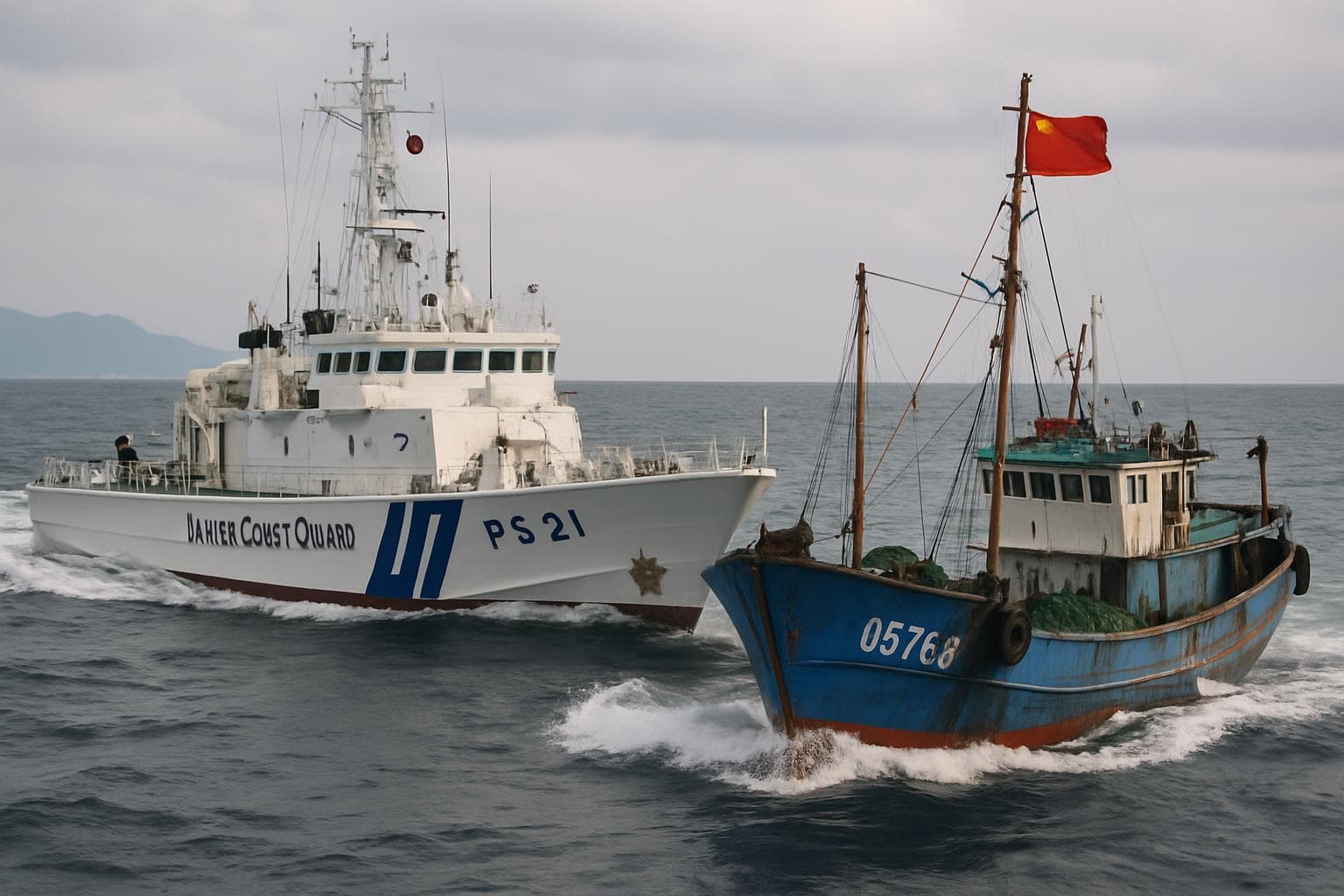
Japan has seized a Chinese fishing vessel and arrested its captain within its exclusive economic zone (EEZ) near Nagasaki, escalating ongoing diplomatic tensions with Beijing. The incident occurred on Thursday when the vessel, identified as a "tiger net fishing boat," attempted to evade an inspection by Japanese fisheries authorities. The boat, carrying 11 crew members, was intercepted approximately 170 kilometers from the southwestern port city.
Illegal Fishing and Enforcement Actions
The Japanese fisheries agency reported that the vessel's captain, a 47-year-old Chinese national, ignored orders to stop for inspection, prompting his arrest. This marks the first seizure of a Chinese fishing vessel by Japan since 2022, highlighting Japan's intensified efforts to curb illegal fishing activities within its EEZ. "We will continue to take resolute action in our enforcement activities to prevent and deter illegal fishing operations by foreign vessels," stated Japan's Chief Cabinet Secretary Minoru Kihara.
Diplomatic Strain and Broader Implications
The seizure comes amid heightened tensions between Japan and China, particularly following remarks by Japan's Prime Minister Sanae Takaichi regarding potential military involvement in the Taiwan Strait. Takaichi's comments have been met with strong opposition from Beijing, which views Taiwan as part of its territory. In response, China has advised its citizens against traveling to Japan, leading to a decline in tourism and the cancellation of cultural events, including the return of Japan's last two pandas to China.
Historical Context and Ongoing Disputes
The current incident is reminiscent of past maritime disputes, such as the 2010 arrest of a Chinese captain near the contested Senkaku Islands. These islands, rich in fishing resources, remain a point of contention between the two nations. Recent reports suggest that Japan has advised its fishers to avoid the Senkakus to prevent further diplomatic conflicts.
WHAT THIS MIGHT MEAN
The seizure of the Chinese fishing vessel could further strain Japan-China relations, especially if Beijing decides to retaliate diplomatically or economically. The incident underscores the broader geopolitical tensions in the region, particularly concerning Taiwan and the Senkaku Islands. Experts suggest that Japan's firm stance on illegal fishing may be part of a broader strategy to assert its territorial rights amid China's growing maritime presence. As both nations navigate these complex issues, the potential for diplomatic resolution remains uncertain, with significant implications for regional stability and international relations.
Images from the Web
Related Articles

US Supreme Court Ruling Sparks Trade Uncertainty in Asia and Beyond
China Sets Lowest GDP Growth Target in Decades Amid Economic Challenges

UK Faces Dilemmas Amid Iran Conflict and China Spying Allegations

Trump's New Tariff Strategy Sparks Global Trade Uncertainty

Labour MP's Husband Arrested in UK-China Espionage Probe
Trump's Tariff Strategy Faces Supreme Court Setback, New Measures Announced
Japan Seizes Chinese Fishing Vessel Amid Rising Diplomatic Tensions
In This Article
HIGHLIGHTS
- Japan seized a Chinese fishing vessel and arrested its captain in its exclusive economic zone near Nagasaki, citing illegal fishing activities.
- The incident marks the first seizure of a Chinese fishing boat by Japan since 2022, amid ongoing Japan-China tensions.
- Japan's Chief Cabinet Secretary emphasized the country's commitment to preventing illegal fishing by foreign vessels.
- The diplomatic row between Japan and China has intensified following Japan's stance on Taiwan, affecting tourism and cultural exchanges.
- China's foreign ministry has yet to respond to the latest incident, which could further strain bilateral relations.
Japan has seized a Chinese fishing vessel and arrested its captain within its exclusive economic zone (EEZ) near Nagasaki, escalating ongoing diplomatic tensions with Beijing. The incident occurred on Thursday when the vessel, identified as a "tiger net fishing boat," attempted to evade an inspection by Japanese fisheries authorities. The boat, carrying 11 crew members, was intercepted approximately 170 kilometers from the southwestern port city.
Illegal Fishing and Enforcement Actions
The Japanese fisheries agency reported that the vessel's captain, a 47-year-old Chinese national, ignored orders to stop for inspection, prompting his arrest. This marks the first seizure of a Chinese fishing vessel by Japan since 2022, highlighting Japan's intensified efforts to curb illegal fishing activities within its EEZ. "We will continue to take resolute action in our enforcement activities to prevent and deter illegal fishing operations by foreign vessels," stated Japan's Chief Cabinet Secretary Minoru Kihara.
Diplomatic Strain and Broader Implications
The seizure comes amid heightened tensions between Japan and China, particularly following remarks by Japan's Prime Minister Sanae Takaichi regarding potential military involvement in the Taiwan Strait. Takaichi's comments have been met with strong opposition from Beijing, which views Taiwan as part of its territory. In response, China has advised its citizens against traveling to Japan, leading to a decline in tourism and the cancellation of cultural events, including the return of Japan's last two pandas to China.
Historical Context and Ongoing Disputes
The current incident is reminiscent of past maritime disputes, such as the 2010 arrest of a Chinese captain near the contested Senkaku Islands. These islands, rich in fishing resources, remain a point of contention between the two nations. Recent reports suggest that Japan has advised its fishers to avoid the Senkakus to prevent further diplomatic conflicts.
WHAT THIS MIGHT MEAN
The seizure of the Chinese fishing vessel could further strain Japan-China relations, especially if Beijing decides to retaliate diplomatically or economically. The incident underscores the broader geopolitical tensions in the region, particularly concerning Taiwan and the Senkaku Islands. Experts suggest that Japan's firm stance on illegal fishing may be part of a broader strategy to assert its territorial rights amid China's growing maritime presence. As both nations navigate these complex issues, the potential for diplomatic resolution remains uncertain, with significant implications for regional stability and international relations.
Images from the Web
Related Articles
US Supreme Court Ruling Sparks Trade Uncertainty in Asia and Beyond
China Sets Lowest GDP Growth Target in Decades Amid Economic Challenges
UK Faces Dilemmas Amid Iran Conflict and China Spying Allegations
Trump's New Tariff Strategy Sparks Global Trade Uncertainty
Labour MP's Husband Arrested in UK-China Espionage Probe
Trump's Tariff Strategy Faces Supreme Court Setback, New Measures Announced