
Fatal Train Derailment in Germany: Three Dead, Several Injured
In This Article
HIGHLIGHTS
- A passenger train derailed near Riedlingen, Germany, killing three and injuring several others.
- The accident occurred on a route between Sigmaringen and Ulm, with around 100 passengers on board.
- Severe storms and a possible landslide are being investigated as potential causes of the derailment.
- German Chancellor Friedrich Merz expressed condolences and assured support for emergency services.
- The incident highlights ongoing concerns about Germany's rail infrastructure and safety.
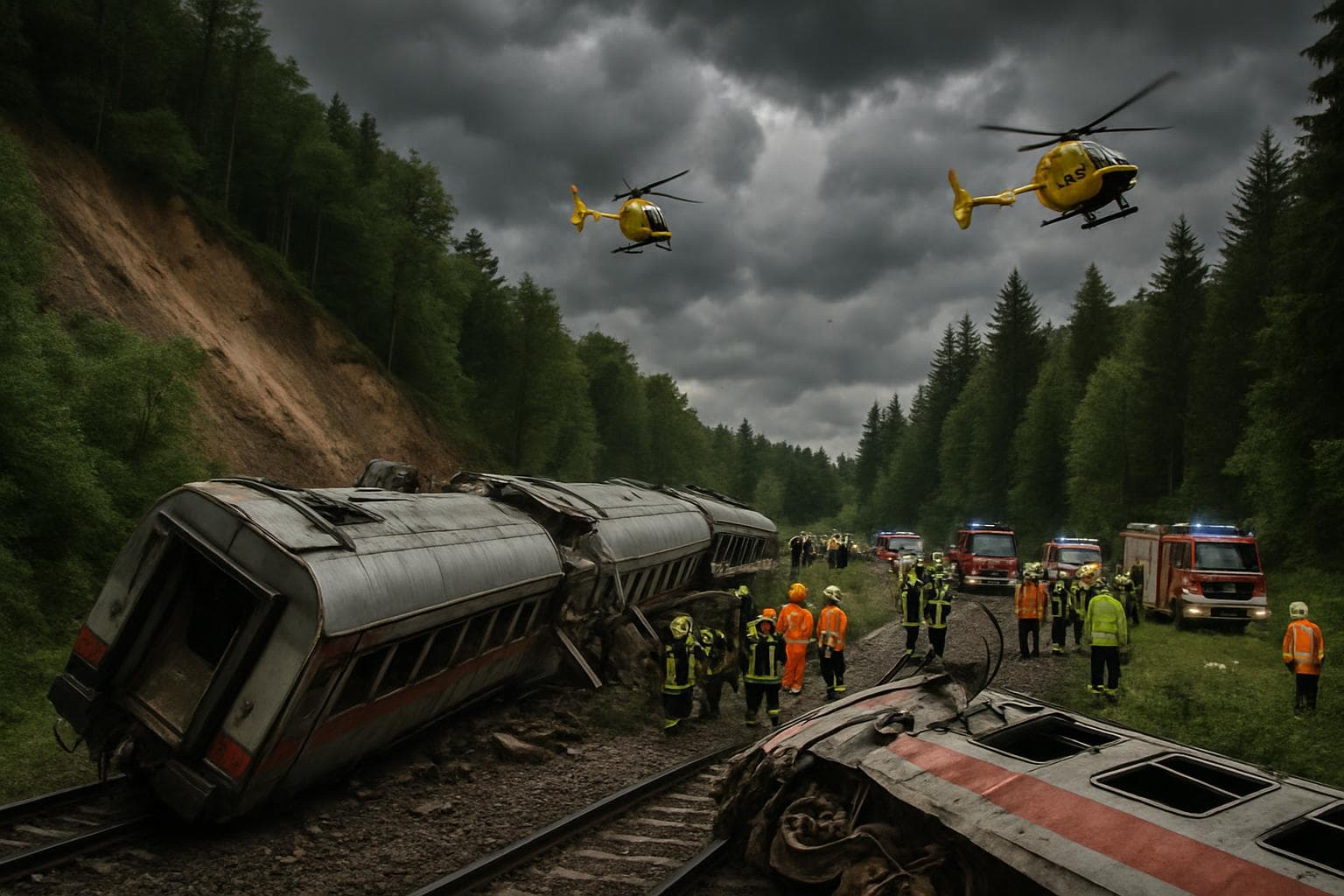
In a tragic incident on Sunday evening, a passenger train derailed near the town of Riedlingen in southwestern Germany, resulting in the deaths of three individuals and leaving several others injured. The train, operated by Deutsche Bahn, was traveling from Sigmaringen to Ulm when it derailed in a forested area around 18:10 local time. Approximately 100 passengers were on board at the time of the accident.
Investigation Underway
The cause of the derailment remains under investigation, with authorities considering severe storms and a potential landslide as contributing factors. Deutsche Bahn confirmed that two carriages had derailed, but the exact circumstances are still unclear. The rail operator has suspended traffic over a 40-kilometer stretch of the route as investigations continue.
Emergency Response and Condolences
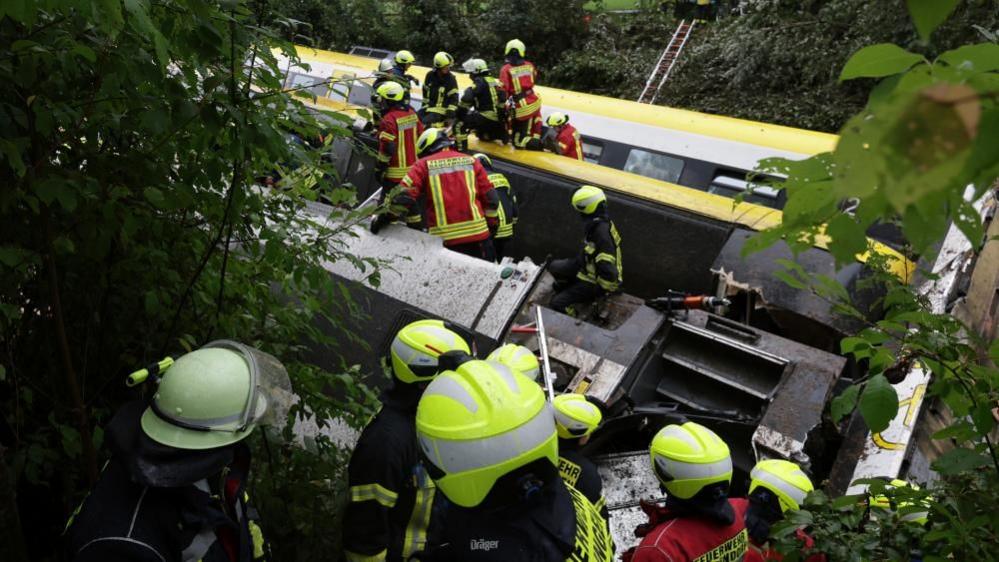
Emergency services, including firefighters and medical teams, swiftly responded to the scene, working to rescue trapped passengers. Helicopters were deployed to transport the injured to nearby hospitals. German Chancellor Friedrich Merz expressed his condolences to the victims' families via social media and assured that emergency services would receive all necessary support. "Our thoughts and sympathies are with the victims and everyone who now has to process this experience," Deutsche Bahn stated.
Ongoing Rail Safety Concerns
This incident has reignited discussions about Germany's rail infrastructure, which has faced criticism for being outdated and prone to delays and technical issues. The government has pledged significant investments to modernize the rail system. The derailment is reminiscent of a similar incident in June 2022 near a Bavarian Alpine resort, which resulted in four fatalities. Germany's deadliest rail accident occurred in 1998 in Eschede, claiming 101 lives.
WHAT THIS MIGHT MEAN
As investigations into the Riedlingen train derailment progress, authorities will likely focus on determining whether the severe weather conditions played a direct role in the accident. Should a landslide be confirmed as the cause, it may prompt a reevaluation of rail safety measures in areas prone to such natural events. The incident could also accelerate government efforts to modernize Germany's rail infrastructure, addressing long-standing concerns about safety and reliability. In the broader context, this tragedy may lead to increased scrutiny of Deutsche Bahn's operational practices and emergency response protocols.
Images from the Web
Related Articles

Spain's Sánchez Stands Firm Against Trump's Trade Threat Over Iran Stance

Trump's Board of Peace Pledges $7 Billion for Gaza Amidst International Skepticism

German Chancellor Warns of Eroding Global Order at Munich Security Conference

Trump Claims Putin Agreed to Ceasefire Amid Ukraine's Winter Crisis

UK Withholds Support for Trump's Controversial Board of Peace Amid Putin Concerns

NHS Faces Joint Surgery Delays Amid Bone Cement Shortage
Fatal Train Derailment in Germany: Three Dead, Several Injured
In This Article
 Ethan Brooks| Published
 HIGHLIGHTS
- A passenger train derailed near Riedlingen, Germany, killing three and injuring several others.
- The accident occurred on a route between Sigmaringen and Ulm, with around 100 passengers on board.
- Severe storms and a possible landslide are being investigated as potential causes of the derailment.
- German Chancellor Friedrich Merz expressed condolences and assured support for emergency services.
- The incident highlights ongoing concerns about Germany's rail infrastructure and safety.
In a tragic incident on Sunday evening, a passenger train derailed near the town of Riedlingen in southwestern Germany, resulting in the deaths of three individuals and leaving several others injured. The train, operated by Deutsche Bahn, was traveling from Sigmaringen to Ulm when it derailed in a forested area around 18:10 local time. Approximately 100 passengers were on board at the time of the accident.
Investigation Underway
The cause of the derailment remains under investigation, with authorities considering severe storms and a potential landslide as contributing factors. Deutsche Bahn confirmed that two carriages had derailed, but the exact circumstances are still unclear. The rail operator has suspended traffic over a 40-kilometer stretch of the route as investigations continue.
Emergency Response and Condolences
Emergency services, including firefighters and medical teams, swiftly responded to the scene, working to rescue trapped passengers. Helicopters were deployed to transport the injured to nearby hospitals. German Chancellor Friedrich Merz expressed his condolences to the victims' families via social media and assured that emergency services would receive all necessary support. "Our thoughts and sympathies are with the victims and everyone who now has to process this experience," Deutsche Bahn stated.
Ongoing Rail Safety Concerns
This incident has reignited discussions about Germany's rail infrastructure, which has faced criticism for being outdated and prone to delays and technical issues. The government has pledged significant investments to modernize the rail system. The derailment is reminiscent of a similar incident in June 2022 near a Bavarian Alpine resort, which resulted in four fatalities. Germany's deadliest rail accident occurred in 1998 in Eschede, claiming 101 lives.
WHAT THIS MIGHT MEAN
As investigations into the Riedlingen train derailment progress, authorities will likely focus on determining whether the severe weather conditions played a direct role in the accident. Should a landslide be confirmed as the cause, it may prompt a reevaluation of rail safety measures in areas prone to such natural events. The incident could also accelerate government efforts to modernize Germany's rail infrastructure, addressing long-standing concerns about safety and reliability. In the broader context, this tragedy may lead to increased scrutiny of Deutsche Bahn's operational practices and emergency response protocols.
Images from the Web
Related Articles
Spain's Sánchez Stands Firm Against Trump's Trade Threat Over Iran Stance
Trump's Board of Peace Pledges $7 Billion for Gaza Amidst International Skepticism
German Chancellor Warns of Eroding Global Order at Munich Security Conference
Trump Claims Putin Agreed to Ceasefire Amid Ukraine's Winter Crisis
UK Withholds Support for Trump's Controversial Board of Peace Amid Putin Concerns
NHS Faces Joint Surgery Delays Amid Bone Cement Shortage