
Trump Claims Putin Agreed to Ceasefire Amid Ukraine's Winter Crisis
In This Article
HIGHLIGHTS
- Donald Trump claims Vladimir Putin agreed to a week-long pause on attacks in Ukraine due to extreme cold, though Russia has not confirmed this.
- Ukrainian President Volodymyr Zelensky welcomed the potential ceasefire, emphasizing the need for security during harsh winter conditions.
- Despite Trump's announcement, Russian attacks on Ukraine's energy infrastructure have continued, leaving millions without power.
- Recent trilateral talks in the UAE involving Russia, Ukraine, and the US were described as constructive but yielded no confirmed ceasefire.
- The International Atomic Energy Agency is set to discuss nuclear safety in Ukraine amid ongoing infrastructure attacks.
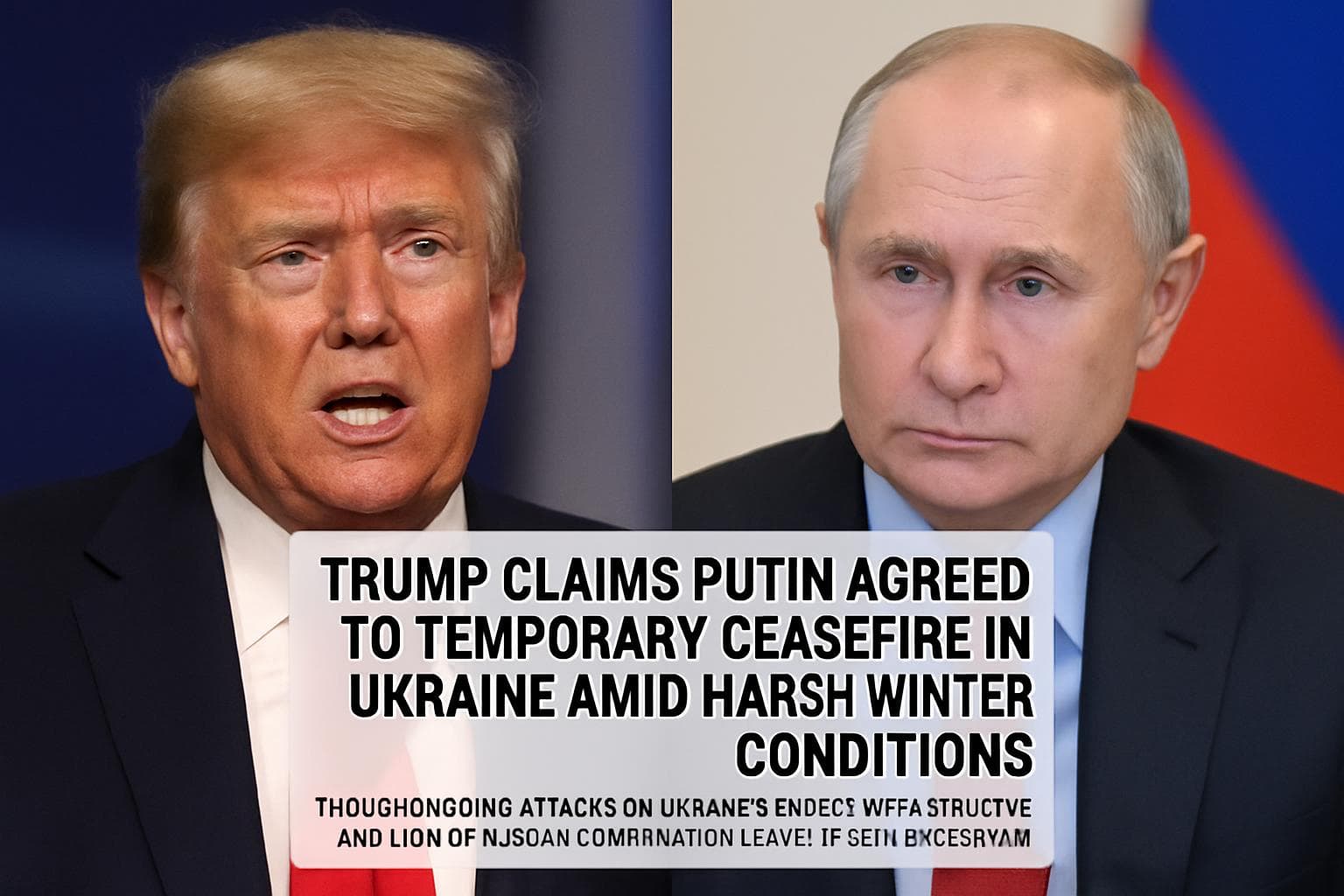
In a surprising development, former US President Donald Trump announced that Russian President Vladimir Putin has agreed to a temporary halt on attacks in Ukraine, citing the severe winter conditions gripping the region. This claim, made during a televised cabinet meeting, has not been confirmed by Russian officials, leaving the situation uncertain.
Ceasefire Claims and Reactions
Trump stated that he personally appealed to Putin to cease fire on Kyiv and other Ukrainian cities for a week, a request he claims was granted. "I personally asked President Putin not to fire into Kyiv and various towns for a week, and he agreed to do that," Trump said. Ukrainian President Volodymyr Zelensky expressed cautious optimism, acknowledging Trump's "important statement" and the potential for increased security during this extreme winter period.
Continued Attacks and Energy Crisis
Despite the announcement, Russian attacks on Ukraine's energy infrastructure have persisted. Recent strikes have left over a million people in Kyiv without power, exacerbating the challenges posed by plummeting temperatures expected to reach as low as -30C. Ukrainian officials are racing to restore power, but ongoing attacks hinder these efforts, leaving many without heating or electricity.
Diplomatic Efforts and International Concerns
Last week's trilateral talks in the United Arab Emirates, involving Russia, Ukraine, and the US, marked the first such negotiations since the war began in 2022. While described as constructive, no official ceasefire was confirmed. Meanwhile, the International Atomic Energy Agency is convening to address nuclear safety concerns amid the volatile conditions at Ukrainian power plants, following a series of damaging attacks.
Humanitarian Impact and Global Response
The humanitarian toll of the conflict continues to mount, with recent Russian strikes killing civilians and causing widespread destruction. German Chancellor Friedrich Merz condemned the ongoing attacks, highlighting the systematic destruction of Ukraine's civilian infrastructure. As the international community watches closely, Ukraine is urging allies to take decisive action against Russia's aggressive tactics.
WHAT THIS MIGHT MEAN
The potential ceasefire, if confirmed, could provide a brief respite for Ukraine's beleaguered energy infrastructure and civilian population. However, the lack of confirmation from Russia raises doubts about its implementation. Should the ceasefire hold, it may pave the way for further diplomatic negotiations, potentially easing tensions in the region.
Conversely, continued Russian aggression could exacerbate the humanitarian crisis, prompting increased international intervention. The upcoming talks in Abu Dhabi may offer a platform for renewed dialogue, but the path to a lasting resolution remains fraught with challenges. As winter intensifies, the resilience of the Ukrainian people and the resolve of the international community will be tested.
Related Articles
Russian LNG Tanker Sinks in Mediterranean Amid Accusations of Ukrainian Drone Attack

Cuba Faces Widespread Blackout Amid Deepening Fuel Crisis

UK Faces Dilemmas Amid Iran Conflict and China Spying Allegations
China Sets Lowest GDP Growth Target in Decades Amid Economic Challenges

Tech Giants Pledge to Cover AI Data Center Energy Costs Amid Rising Electricity Concerns

Congress Subpoenas Attorney General Bondi in Epstein Investigation
Trump Claims Putin Agreed to Ceasefire Amid Ukraine's Winter Crisis
In This Article
 Leila Hassan| Published
 HIGHLIGHTS
- Donald Trump claims Vladimir Putin agreed to a week-long pause on attacks in Ukraine due to extreme cold, though Russia has not confirmed this.
- Ukrainian President Volodymyr Zelensky welcomed the potential ceasefire, emphasizing the need for security during harsh winter conditions.
- Despite Trump's announcement, Russian attacks on Ukraine's energy infrastructure have continued, leaving millions without power.
- Recent trilateral talks in the UAE involving Russia, Ukraine, and the US were described as constructive but yielded no confirmed ceasefire.
- The International Atomic Energy Agency is set to discuss nuclear safety in Ukraine amid ongoing infrastructure attacks.
In a surprising development, former US President Donald Trump announced that Russian President Vladimir Putin has agreed to a temporary halt on attacks in Ukraine, citing the severe winter conditions gripping the region. This claim, made during a televised cabinet meeting, has not been confirmed by Russian officials, leaving the situation uncertain.
Ceasefire Claims and Reactions
Trump stated that he personally appealed to Putin to cease fire on Kyiv and other Ukrainian cities for a week, a request he claims was granted. "I personally asked President Putin not to fire into Kyiv and various towns for a week, and he agreed to do that," Trump said. Ukrainian President Volodymyr Zelensky expressed cautious optimism, acknowledging Trump's "important statement" and the potential for increased security during this extreme winter period.
Continued Attacks and Energy Crisis
Despite the announcement, Russian attacks on Ukraine's energy infrastructure have persisted. Recent strikes have left over a million people in Kyiv without power, exacerbating the challenges posed by plummeting temperatures expected to reach as low as -30C. Ukrainian officials are racing to restore power, but ongoing attacks hinder these efforts, leaving many without heating or electricity.
Diplomatic Efforts and International Concerns
Last week's trilateral talks in the United Arab Emirates, involving Russia, Ukraine, and the US, marked the first such negotiations since the war began in 2022. While described as constructive, no official ceasefire was confirmed. Meanwhile, the International Atomic Energy Agency is convening to address nuclear safety concerns amid the volatile conditions at Ukrainian power plants, following a series of damaging attacks.
Humanitarian Impact and Global Response
The humanitarian toll of the conflict continues to mount, with recent Russian strikes killing civilians and causing widespread destruction. German Chancellor Friedrich Merz condemned the ongoing attacks, highlighting the systematic destruction of Ukraine's civilian infrastructure. As the international community watches closely, Ukraine is urging allies to take decisive action against Russia's aggressive tactics.
WHAT THIS MIGHT MEAN
The potential ceasefire, if confirmed, could provide a brief respite for Ukraine's beleaguered energy infrastructure and civilian population. However, the lack of confirmation from Russia raises doubts about its implementation. Should the ceasefire hold, it may pave the way for further diplomatic negotiations, potentially easing tensions in the region.
Conversely, continued Russian aggression could exacerbate the humanitarian crisis, prompting increased international intervention. The upcoming talks in Abu Dhabi may offer a platform for renewed dialogue, but the path to a lasting resolution remains fraught with challenges. As winter intensifies, the resilience of the Ukrainian people and the resolve of the international community will be tested.
Related Articles
Russian LNG Tanker Sinks in Mediterranean Amid Accusations of Ukrainian Drone Attack
Cuba Faces Widespread Blackout Amid Deepening Fuel Crisis
UK Faces Dilemmas Amid Iran Conflict and China Spying Allegations
China Sets Lowest GDP Growth Target in Decades Amid Economic Challenges
Tech Giants Pledge to Cover AI Data Center Energy Costs Amid Rising Electricity Concerns
Congress Subpoenas Attorney General Bondi in Epstein Investigation