
Federal Reserve Holds Steady on Interest Rates Amid Economic Uncertainty
In This Article
HIGHLIGHTS
- The Federal Reserve has maintained its key interest rate at 4.3%, marking the fourth consecutive decision to hold rates steady.
- Fed officials anticipate slower economic growth and higher inflation, with projections showing a growth rate of 1.4% and inflation at 3% for the year.
- President Donald Trump has criticized Fed Chair Jerome Powell, urging for rate cuts amidst his tariff policies, which are expected to increase prices.
- Despite Trump's demands, the Fed emphasizes its independence and bases decisions on economic data rather than political pressure.
- The Fed's future outlook includes potential rate cuts in 2025, with a majority of officials expecting rates to drop below 4% by the end of that year.
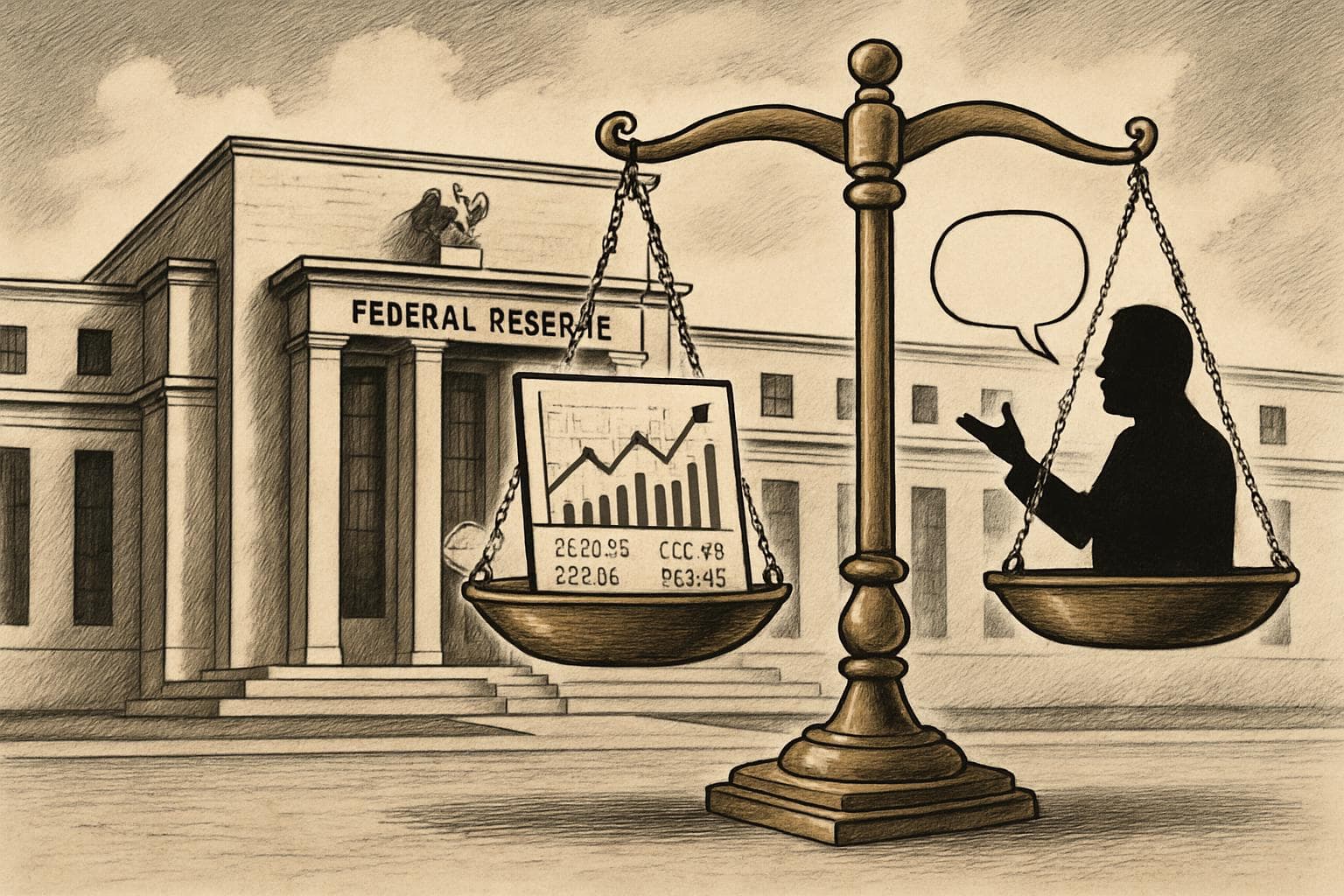
In a move that defies presidential pressure, the US Federal Reserve has decided to keep its key interest rate unchanged at 4.3%, marking the fourth consecutive decision to hold rates steady. This decision comes amid a backdrop of economic uncertainty fueled by President Donald Trump's aggressive tariff policies.
Economic Projections and Inflation Concerns
Federal Reserve officials have adjusted their economic forecasts, now anticipating a slowdown in growth to 1.4% this year, a significant drop from last year's 2.5%. Inflation is projected to rise to 3%, surpassing the Fed's target of 2%. Fed Chair Jerome Powell highlighted the potential for tariffs to drive up prices, stating, "Increases in tariffs this year are likely to push up prices and weigh on economic activity."
Trump's Criticism and Fed's Independence
President Trump has been vocal in his criticism of Powell, calling him "stupid" and demanding rate cuts. Despite this, the Fed maintains its independence, with Powell emphasizing that decisions are based on economic data rather than political influence. "We have a pretty healthy diversity of views on the committee," Powell remarked, underscoring the varied opinions within the Fed on the path forward.
Future Rate Outlook
Looking ahead, the Fed's projections suggest potential rate cuts in 2025, with most officials expecting rates to fall below 4% by the end of that year. However, there remains a diversity of opinion among policymakers, with some not anticipating any cuts this year. The Fed's cautious approach reflects ongoing concerns about the impact of tariffs and the overall economic outlook.
WHAT THIS MIGHT MEAN
As the Federal Reserve continues to navigate a complex economic landscape, the potential for future rate cuts remains a topic of debate. Should inflation persist beyond current projections, the Fed may be compelled to adjust its strategy. The ongoing tension between the Fed's data-driven approach and political pressures from the White House could further complicate decision-making processes. Experts suggest that maintaining the Fed's independence will be crucial in ensuring sound economic policy amidst these challenges.
Related Articles
Trump's New Tariff Strategy Sparks Global Trade Uncertainty
Trump Raises Import Tariffs to 15% After Supreme Court Setback

Tech Giants Pledge to Cover AI Data Center Energy Costs Amid Rising Electricity Concerns
Congress Subpoenas Attorney General Bondi in Epstein Investigation

Cuba Faces Widespread Blackout Amid Deepening Fuel Crisis

UK Faces Dilemmas Amid Iran Conflict and China Spying Allegations
Federal Reserve Holds Steady on Interest Rates Amid Economic Uncertainty
In This Article
 Daniel Rivera| Published
 HIGHLIGHTS
- The Federal Reserve has maintained its key interest rate at 4.3%, marking the fourth consecutive decision to hold rates steady.
- Fed officials anticipate slower economic growth and higher inflation, with projections showing a growth rate of 1.4% and inflation at 3% for the year.
- President Donald Trump has criticized Fed Chair Jerome Powell, urging for rate cuts amidst his tariff policies, which are expected to increase prices.
- Despite Trump's demands, the Fed emphasizes its independence and bases decisions on economic data rather than political pressure.
- The Fed's future outlook includes potential rate cuts in 2025, with a majority of officials expecting rates to drop below 4% by the end of that year.
In a move that defies presidential pressure, the US Federal Reserve has decided to keep its key interest rate unchanged at 4.3%, marking the fourth consecutive decision to hold rates steady. This decision comes amid a backdrop of economic uncertainty fueled by President Donald Trump's aggressive tariff policies.
Economic Projections and Inflation Concerns
Federal Reserve officials have adjusted their economic forecasts, now anticipating a slowdown in growth to 1.4% this year, a significant drop from last year's 2.5%. Inflation is projected to rise to 3%, surpassing the Fed's target of 2%. Fed Chair Jerome Powell highlighted the potential for tariffs to drive up prices, stating, "Increases in tariffs this year are likely to push up prices and weigh on economic activity."
Trump's Criticism and Fed's Independence
President Trump has been vocal in his criticism of Powell, calling him "stupid" and demanding rate cuts. Despite this, the Fed maintains its independence, with Powell emphasizing that decisions are based on economic data rather than political influence. "We have a pretty healthy diversity of views on the committee," Powell remarked, underscoring the varied opinions within the Fed on the path forward.
Future Rate Outlook
Looking ahead, the Fed's projections suggest potential rate cuts in 2025, with most officials expecting rates to fall below 4% by the end of that year. However, there remains a diversity of opinion among policymakers, with some not anticipating any cuts this year. The Fed's cautious approach reflects ongoing concerns about the impact of tariffs and the overall economic outlook.
WHAT THIS MIGHT MEAN
As the Federal Reserve continues to navigate a complex economic landscape, the potential for future rate cuts remains a topic of debate. Should inflation persist beyond current projections, the Fed may be compelled to adjust its strategy. The ongoing tension between the Fed's data-driven approach and political pressures from the White House could further complicate decision-making processes. Experts suggest that maintaining the Fed's independence will be crucial in ensuring sound economic policy amidst these challenges.
Related Articles
Trump's New Tariff Strategy Sparks Global Trade Uncertainty
Trump Raises Import Tariffs to 15% After Supreme Court Setback
Tech Giants Pledge to Cover AI Data Center Energy Costs Amid Rising Electricity Concerns
Congress Subpoenas Attorney General Bondi in Epstein Investigation
Cuba Faces Widespread Blackout Amid Deepening Fuel Crisis
UK Faces Dilemmas Amid Iran Conflict and China Spying Allegations