
First US Case of Flesh-Eating Screwworm Parasite Sparks Concerns
In This Article
HIGHLIGHTS
- The first human case of New World screwworm myiasis in the US was confirmed on August 4, involving a patient returning from El Salvador.
- The Centers for Disease Control and Prevention (CDC) and Maryland's health department are investigating the case, with the public health risk deemed "very low."
- The USDA warns that a screwworm outbreak could severely impact the US livestock industry, potentially costing billions.
- Discrepancies exist regarding the source of the human case, with reports mentioning both El Salvador and Guatemala.
- Efforts to combat the pest include building a sterile fly facility in Texas, announced by the USDA.
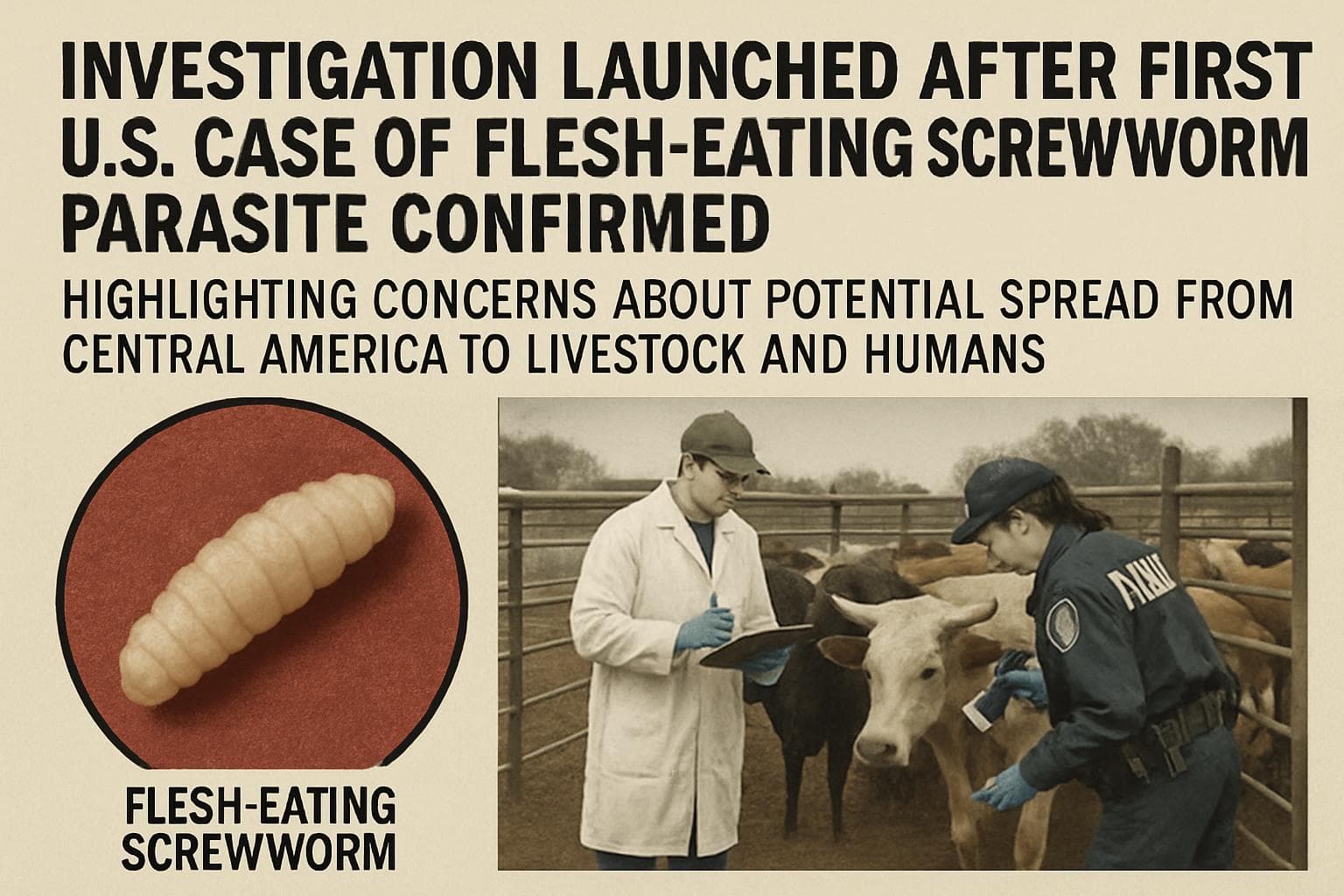
The United States has confirmed its first human case of New World screwworm myiasis, a flesh-eating parasitic infestation, in a patient who recently returned from El Salvador. The case, verified by the Centers for Disease Control and Prevention (CDC) on August 4, has prompted a joint investigation with Maryland's health department. Despite the alarming nature of the condition, authorities assure that the risk to public health remains "very low."
Background and Investigation
The New World screwworm, a parasitic fly whose larvae feed on live tissue, primarily affects livestock but can also infest humans, particularly those with open wounds. The parasite is typically found in South America and the Caribbean, but recent cases have been reported throughout Central America, including Mexico. The USDA has partnered with various agencies to address this outbreak, emphasizing the potential economic threat to the US cattle industry, which could face losses exceeding $100 billion.
Discrepancies and Industry Concerns
Conflicting reports have emerged regarding the origin of the human case, with some sources citing Guatemala instead of El Salvador. This inconsistency has caused unease among cattle ranchers and beef producers, who are already vigilant about the parasite's northward spread. The USDA's recent announcement of a sterile fly facility in Texas is part of a broader strategy to mitigate the pest's impact.
Economic and Public Health Implications
The USDA estimates that a screwworm outbreak could cost Texas, the largest cattle-producing state, approximately $1.8 billion in livestock deaths, labor, and medication expenses. While no animal cases have been confirmed this year, the industry remains on high alert. Beth Thompson, South Dakota's state veterinarian, expressed frustration over the CDC's communication, highlighting the need for transparency in managing such public health risks.
WHAT THIS MIGHT MEAN
The confirmation of a human screwworm case in the US raises questions about the potential for further infestations, particularly in livestock. If the parasite spreads, it could have severe economic repercussions for the cattle industry, necessitating increased surveillance and preventive measures. The establishment of a sterile fly facility in Texas is a proactive step, but ongoing collaboration between federal and state agencies will be crucial in containing the threat. Public health officials must also ensure clear communication to prevent misinformation and maintain public confidence in their response efforts.
Related Articles

El Mencho's Death Sparks Violent Unrest Across Mexico

Cuba Faces Widespread Blackout Amid Deepening Fuel Crisis

Venezuelan Political Prisoners Seek Amnesty Amidst Hopes for Democratic Transition

China Sets Lowest GDP Growth Target in Decades Amid Economic Challenges

UK Faces Dilemmas Amid Iran Conflict and China Spying Allegations

Google Faces Legal Battle Over AI Chatbot's Alleged Role in Tragic Death
First US Case of Flesh-Eating Screwworm Parasite Sparks Concerns
In This Article
HIGHLIGHTS
- The first human case of New World screwworm myiasis in the US was confirmed on August 4, involving a patient returning from El Salvador.
- The Centers for Disease Control and Prevention (CDC) and Maryland's health department are investigating the case, with the public health risk deemed "very low."
- The USDA warns that a screwworm outbreak could severely impact the US livestock industry, potentially costing billions.
- Discrepancies exist regarding the source of the human case, with reports mentioning both El Salvador and Guatemala.
- Efforts to combat the pest include building a sterile fly facility in Texas, announced by the USDA.
The United States has confirmed its first human case of New World screwworm myiasis, a flesh-eating parasitic infestation, in a patient who recently returned from El Salvador. The case, verified by the Centers for Disease Control and Prevention (CDC) on August 4, has prompted a joint investigation with Maryland's health department. Despite the alarming nature of the condition, authorities assure that the risk to public health remains "very low."
Background and Investigation
The New World screwworm, a parasitic fly whose larvae feed on live tissue, primarily affects livestock but can also infest humans, particularly those with open wounds. The parasite is typically found in South America and the Caribbean, but recent cases have been reported throughout Central America, including Mexico. The USDA has partnered with various agencies to address this outbreak, emphasizing the potential economic threat to the US cattle industry, which could face losses exceeding $100 billion.
Discrepancies and Industry Concerns
Conflicting reports have emerged regarding the origin of the human case, with some sources citing Guatemala instead of El Salvador. This inconsistency has caused unease among cattle ranchers and beef producers, who are already vigilant about the parasite's northward spread. The USDA's recent announcement of a sterile fly facility in Texas is part of a broader strategy to mitigate the pest's impact.
Economic and Public Health Implications
The USDA estimates that a screwworm outbreak could cost Texas, the largest cattle-producing state, approximately $1.8 billion in livestock deaths, labor, and medication expenses. While no animal cases have been confirmed this year, the industry remains on high alert. Beth Thompson, South Dakota's state veterinarian, expressed frustration over the CDC's communication, highlighting the need for transparency in managing such public health risks.
WHAT THIS MIGHT MEAN
The confirmation of a human screwworm case in the US raises questions about the potential for further infestations, particularly in livestock. If the parasite spreads, it could have severe economic repercussions for the cattle industry, necessitating increased surveillance and preventive measures. The establishment of a sterile fly facility in Texas is a proactive step, but ongoing collaboration between federal and state agencies will be crucial in containing the threat. Public health officials must also ensure clear communication to prevent misinformation and maintain public confidence in their response efforts.
Related Articles
El Mencho's Death Sparks Violent Unrest Across Mexico
Cuba Faces Widespread Blackout Amid Deepening Fuel Crisis
Venezuelan Political Prisoners Seek Amnesty Amidst Hopes for Democratic Transition
China Sets Lowest GDP Growth Target in Decades Amid Economic Challenges
UK Faces Dilemmas Amid Iran Conflict and China Spying Allegations
Google Faces Legal Battle Over AI Chatbot's Alleged Role in Tragic Death