
Severe Flash Flooding Claims Lives and Disrupts Transport in New Jersey and New York City
In This Article
HIGHLIGHTS
- Flash flooding in New Jersey and New York City resulted in two fatalities and significant disruptions, prompting a state of emergency.
- New Jersey Governor Phil Murphy declared a state of emergency due to heavy rainfall and advised residents to avoid unnecessary travel.
- New York City experienced its second-highest hourly rainfall in over 80 years, causing subway delays and road closures.
- Emergency responders conducted rescues in New Jersey, including using ropes to save stranded drivers.
- The National Weather Service warned of potential further flooding in the northeast, Florida, and the mid-western US.
Torrential rains swept through New Jersey and New York City on Monday night, leading to flash floods that claimed two lives and caused widespread disruption. The severe weather prompted New Jersey Governor Phil Murphy to declare a state of emergency, urging residents to stay indoors and avoid unnecessary travel.
Fatalities and Emergency Response
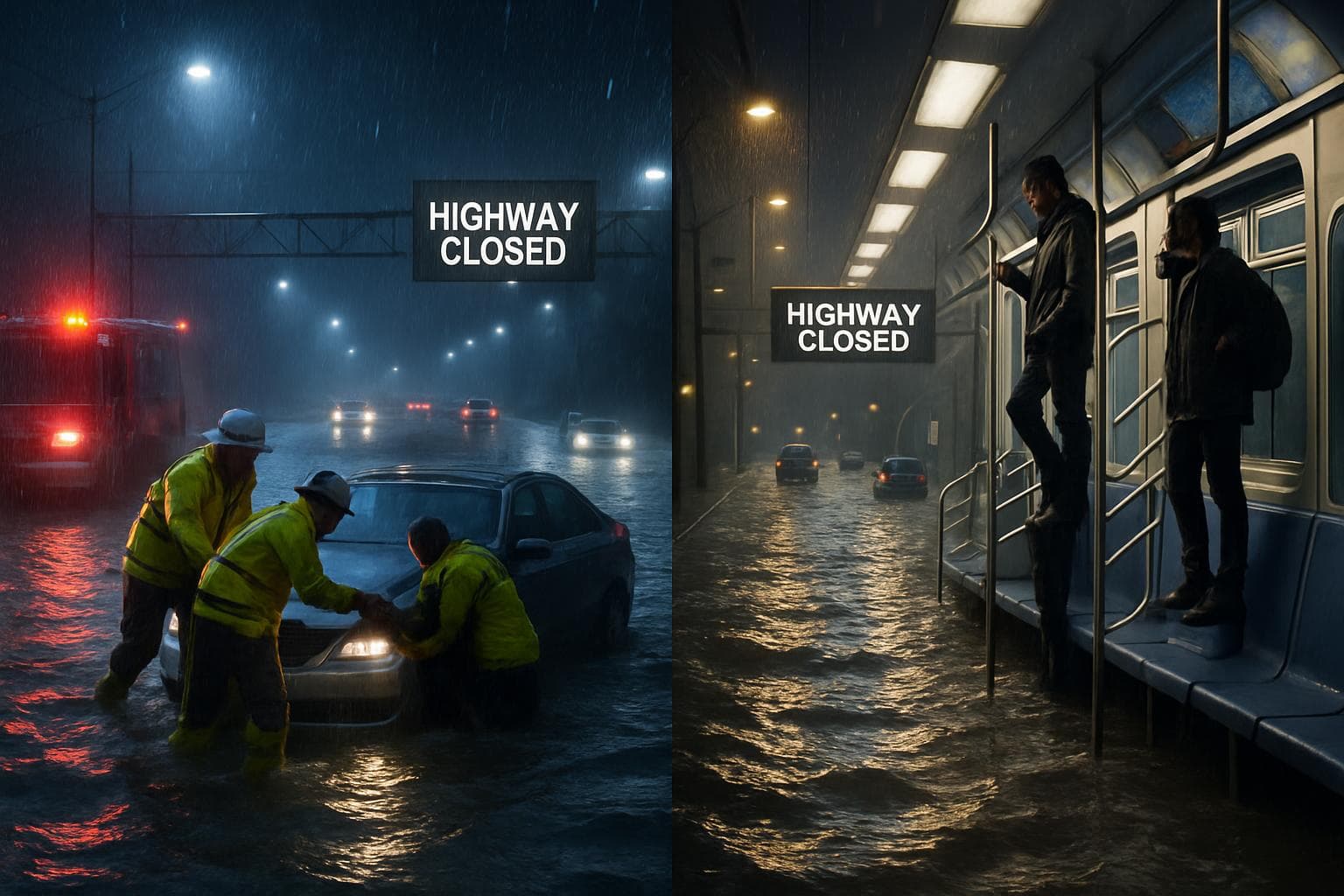
In Plainfield, New Jersey, two individuals tragically lost their lives when their vehicle was swept away by floodwaters. The incident underscored the perilous conditions that left many drivers stranded on inundated roads. Emergency responders were deployed across the region, conducting rescues, including a dramatic operation in Scotch Plains where a man was pulled from his car using a rope.
Impact on Transportation
The deluge wreaked havoc on transportation infrastructure, with New York City experiencing its second-highest hourly rainfall in over 80 years. Subway services were severely disrupted, with some lines suspended and others operating with significant delays. Passengers were seen standing on train seats to avoid rising water levels. Major roads, including the Saw Mill River Parkway and the Cross Bronx Expressway, were temporarily closed due to flooding and debris.
Broader Weather Concerns
The National Weather Service (NWS) issued warnings for further potential flooding across the northeast, as well as in Florida and the mid-western US. The heaviest rainfall is expected to move eastward, though its intensity is predicted to diminish. In Virginia, cities like Colonial Heights and Petersburg faced the risk of "catastrophic" flood damage.
WHAT THIS MIGHT MEAN
As the region grapples with the aftermath of this extreme weather event, authorities are focused on recovery and assessing the damage. The declaration of a state of emergency facilitates the mobilization of resources and support for affected communities. Looking ahead, experts warn that climate change may increase the frequency and severity of such extreme weather events, necessitating improved infrastructure and emergency preparedness. The recent flooding serves as a stark reminder of the vulnerabilities faced by urban areas in the face of climate-induced weather patterns.
Related Articles
Historic Nor'easter Storm Paralyzes US North-East with Blizzard Warnings and Travel Bans
Historic Cold Snap in New York City Claims 18 Lives
Bomb Cyclone Paralyzes Eastern US with Snow and Freezing Temperatures
US Winter Storm Causes Widespread Disruption and Fatalities
California Avalanche Leaves Ten Skiers Missing Amid Severe Weather

Maine Jet Crash Claims Six Lives Amid Severe Winter Storm
Severe Flash Flooding Claims Lives and Disrupts Transport in New Jersey and New York City
In This Article
 Leila Hassan| Published
 HIGHLIGHTS
- Flash flooding in New Jersey and New York City resulted in two fatalities and significant disruptions, prompting a state of emergency.
- New Jersey Governor Phil Murphy declared a state of emergency due to heavy rainfall and advised residents to avoid unnecessary travel.
- New York City experienced its second-highest hourly rainfall in over 80 years, causing subway delays and road closures.
- Emergency responders conducted rescues in New Jersey, including using ropes to save stranded drivers.
- The National Weather Service warned of potential further flooding in the northeast, Florida, and the mid-western US.
Torrential rains swept through New Jersey and New York City on Monday night, leading to flash floods that claimed two lives and caused widespread disruption. The severe weather prompted New Jersey Governor Phil Murphy to declare a state of emergency, urging residents to stay indoors and avoid unnecessary travel.
Fatalities and Emergency Response
In Plainfield, New Jersey, two individuals tragically lost their lives when their vehicle was swept away by floodwaters. The incident underscored the perilous conditions that left many drivers stranded on inundated roads. Emergency responders were deployed across the region, conducting rescues, including a dramatic operation in Scotch Plains where a man was pulled from his car using a rope.
Impact on Transportation
The deluge wreaked havoc on transportation infrastructure, with New York City experiencing its second-highest hourly rainfall in over 80 years. Subway services were severely disrupted, with some lines suspended and others operating with significant delays. Passengers were seen standing on train seats to avoid rising water levels. Major roads, including the Saw Mill River Parkway and the Cross Bronx Expressway, were temporarily closed due to flooding and debris.
Broader Weather Concerns
The National Weather Service (NWS) issued warnings for further potential flooding across the northeast, as well as in Florida and the mid-western US. The heaviest rainfall is expected to move eastward, though its intensity is predicted to diminish. In Virginia, cities like Colonial Heights and Petersburg faced the risk of "catastrophic" flood damage.
WHAT THIS MIGHT MEAN
As the region grapples with the aftermath of this extreme weather event, authorities are focused on recovery and assessing the damage. The declaration of a state of emergency facilitates the mobilization of resources and support for affected communities. Looking ahead, experts warn that climate change may increase the frequency and severity of such extreme weather events, necessitating improved infrastructure and emergency preparedness. The recent flooding serves as a stark reminder of the vulnerabilities faced by urban areas in the face of climate-induced weather patterns.
Related Articles
Historic Nor'easter Storm Paralyzes US North-East with Blizzard Warnings and Travel Bans
Historic Cold Snap in New York City Claims 18 Lives
Bomb Cyclone Paralyzes Eastern US with Snow and Freezing Temperatures
US Winter Storm Causes Widespread Disruption and Fatalities
California Avalanche Leaves Ten Skiers Missing Amid Severe Weather
Maine Jet Crash Claims Six Lives Amid Severe Winter Storm