
Devastating Flash Floods in Kashmir and Pakistan Highlight Climate Challenges
In This Article
HIGHLIGHTS
- Flash floods in Indian-administered Kashmir have resulted in at least 60 deaths, with many still missing.
- Over 320 people have died in Pakistan due to monsoon floods, with Khyber Pakhtunkhwa being the hardest hit.
- Rescue operations are ongoing, but efforts are hampered by damaged infrastructure and challenging weather conditions.
- Climate change is contributing to more frequent and severe weather events, exacerbating the impact of monsoon rains.
- Survivors recount harrowing experiences, highlighting the sudden and devastating nature of the floods.
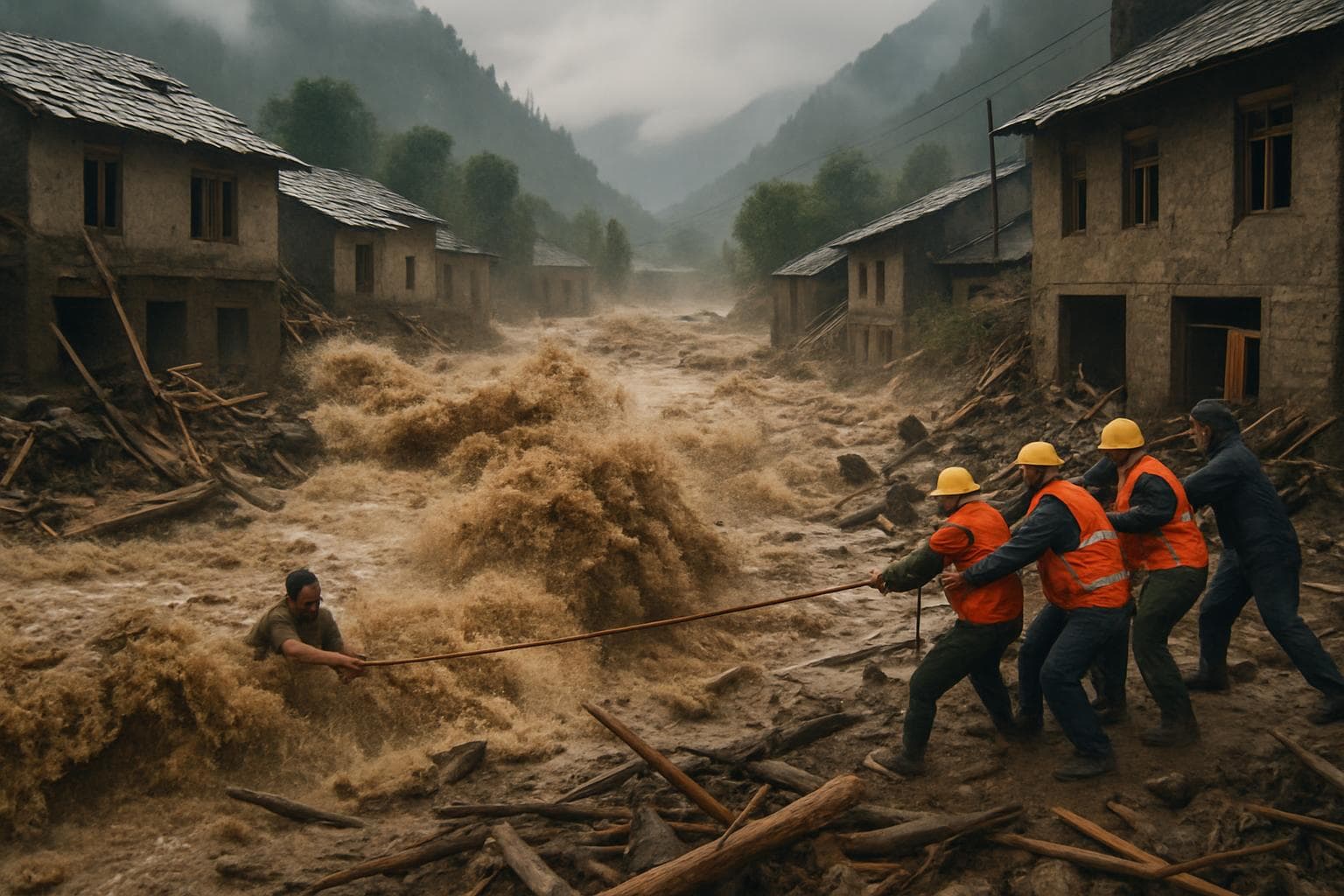
Flash floods have wreaked havoc in Indian-administered Kashmir and Pakistan, leaving a trail of destruction and loss. In Kashmir, at least 60 people have perished, with many more missing after a torrent of water and debris swept through Chositi village in Kishtwar district. The village, a key stop for Hindu pilgrims visiting the Machail Mata shrine, was hit by what officials suspect was a cloudburst, though confirmation from meteorological authorities is pending.
Kashmir's Tragic Toll
The chaos unfolded as water mixed with mud and debris surged down the hills, catching pilgrims and locals off guard. Survivors, like Putul Devi, recount the terrifying moments when the flood struck. "We had completed the darshan, and then suddenly there was a blast-like sound," she told ANI. Devi, who was with 13 family members, has only been reunited with two, while the rest, including her husband and children, remain missing.
Rescue operations are underway, but the remote location and limited resources, such as a single earth mover, are slowing progress. Sanjay Kumar, another survivor, described the scene as he served lunch at a community kitchen when the flood hit. "I told everyone to run. We had no time, not even a minute," he recalled.
Pakistan's Rising Death Toll
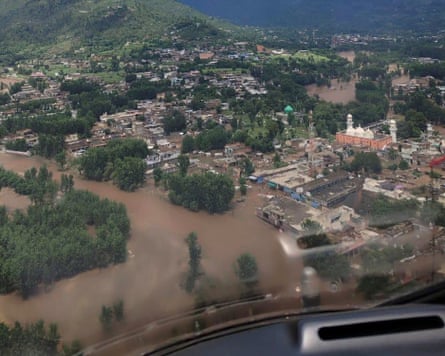
Across the border, Pakistan is grappling with its own disaster. Monsoon rains have claimed over 320 lives, with Khyber Pakhtunkhwa province bearing the brunt. The region has been declared a disaster zone, and rescue efforts are complicated by landslides and washed-out roads. A rescue helicopter crash in Bajaur added to the tragedy, killing all five crew members.
Azizullah, a survivor from Buner, described the flood's arrival as "doomsday," with the ground trembling under the force of the water. The provincial government has mobilized thousands of rescue workers, but the scale of the disaster presents significant challenges.
Climate Change and Future Risks
Experts warn that climate change is intensifying weather events, making them more frequent and severe. The monsoon season, which provides the majority of South Asia's annual rainfall, is becoming increasingly unpredictable. A recent study by World Weather Attribution found that global heating has increased rainfall intensity in Pakistan by 10% to 15%.
WHAT THIS MIGHT MEAN
As rescue operations continue, the immediate focus remains on finding survivors and providing aid to affected communities. However, the long-term implications of these disasters are profound. Governments in both India and Pakistan face mounting pressure to improve disaster preparedness and infrastructure resilience. The increasing frequency of extreme weather events underscores the urgent need for climate adaptation strategies. Without significant action, the human and economic toll of such disasters is likely to rise, posing a persistent threat to vulnerable regions.
Images from the Web

Related Articles

Sisters Tragically Drown at Eryri National Park's Watkin Path

Iran Postpones Khamenei Funeral Amid Escalating US-Israeli Strikes

Canada Calls for De-escalation Amid US-Israel Strikes on Iran

US Supreme Court Ruling Sparks Trade Uncertainty in Asia and Beyond

Trump's New Tariff Strategy Sparks Global Trade Uncertainty

Pakistan's Airstrikes on Afghanistan Escalate Cross-Border Tensions
Devastating Flash Floods in Kashmir and Pakistan Highlight Climate Challenges
In This Article
 Leila Hassan| Published
 HIGHLIGHTS
- Flash floods in Indian-administered Kashmir have resulted in at least 60 deaths, with many still missing.
- Over 320 people have died in Pakistan due to monsoon floods, with Khyber Pakhtunkhwa being the hardest hit.
- Rescue operations are ongoing, but efforts are hampered by damaged infrastructure and challenging weather conditions.
- Climate change is contributing to more frequent and severe weather events, exacerbating the impact of monsoon rains.
- Survivors recount harrowing experiences, highlighting the sudden and devastating nature of the floods.
Flash floods have wreaked havoc in Indian-administered Kashmir and Pakistan, leaving a trail of destruction and loss. In Kashmir, at least 60 people have perished, with many more missing after a torrent of water and debris swept through Chositi village in Kishtwar district. The village, a key stop for Hindu pilgrims visiting the Machail Mata shrine, was hit by what officials suspect was a cloudburst, though confirmation from meteorological authorities is pending.
Kashmir's Tragic Toll
The chaos unfolded as water mixed with mud and debris surged down the hills, catching pilgrims and locals off guard. Survivors, like Putul Devi, recount the terrifying moments when the flood struck. "We had completed the darshan, and then suddenly there was a blast-like sound," she told ANI. Devi, who was with 13 family members, has only been reunited with two, while the rest, including her husband and children, remain missing.
Rescue operations are underway, but the remote location and limited resources, such as a single earth mover, are slowing progress. Sanjay Kumar, another survivor, described the scene as he served lunch at a community kitchen when the flood hit. "I told everyone to run. We had no time, not even a minute," he recalled.
Pakistan's Rising Death Toll
Across the border, Pakistan is grappling with its own disaster. Monsoon rains have claimed over 320 lives, with Khyber Pakhtunkhwa province bearing the brunt. The region has been declared a disaster zone, and rescue efforts are complicated by landslides and washed-out roads. A rescue helicopter crash in Bajaur added to the tragedy, killing all five crew members.
Azizullah, a survivor from Buner, described the flood's arrival as "doomsday," with the ground trembling under the force of the water. The provincial government has mobilized thousands of rescue workers, but the scale of the disaster presents significant challenges.
Climate Change and Future Risks
Experts warn that climate change is intensifying weather events, making them more frequent and severe. The monsoon season, which provides the majority of South Asia's annual rainfall, is becoming increasingly unpredictable. A recent study by World Weather Attribution found that global heating has increased rainfall intensity in Pakistan by 10% to 15%.
WHAT THIS MIGHT MEAN
As rescue operations continue, the immediate focus remains on finding survivors and providing aid to affected communities. However, the long-term implications of these disasters are profound. Governments in both India and Pakistan face mounting pressure to improve disaster preparedness and infrastructure resilience. The increasing frequency of extreme weather events underscores the urgent need for climate adaptation strategies. Without significant action, the human and economic toll of such disasters is likely to rise, posing a persistent threat to vulnerable regions.
Images from the Web
Related Articles
Sisters Tragically Drown at Eryri National Park's Watkin Path
Iran Postpones Khamenei Funeral Amid Escalating US-Israeli Strikes
Canada Calls for De-escalation Amid US-Israel Strikes on Iran
US Supreme Court Ruling Sparks Trade Uncertainty in Asia and Beyond
Trump's New Tariff Strategy Sparks Global Trade Uncertainty
Pakistan's Airstrikes on Afghanistan Escalate Cross-Border Tensions