
Ford and Copper Industries Grapple with Trump's Tariff Policies
In This Article
HIGHLIGHTS
- Ford anticipates a $2 billion impact from tariffs in 2023, largely due to levies on Mexico and Canada.
- The Trump administration plans a 50% tariff on copper pipes and wiring, affecting US copper prices and manufacturers.
- Ford's manufacturing is primarily US-based, mitigating some tariff impacts compared to competitors like General Motors.
- The copper tariff excludes raw materials like ores and cathodes, benefiting major suppliers like Chile and Peru.
- Ford is in ongoing negotiations with the White House to potentially lower tariffs on vehicle parts.
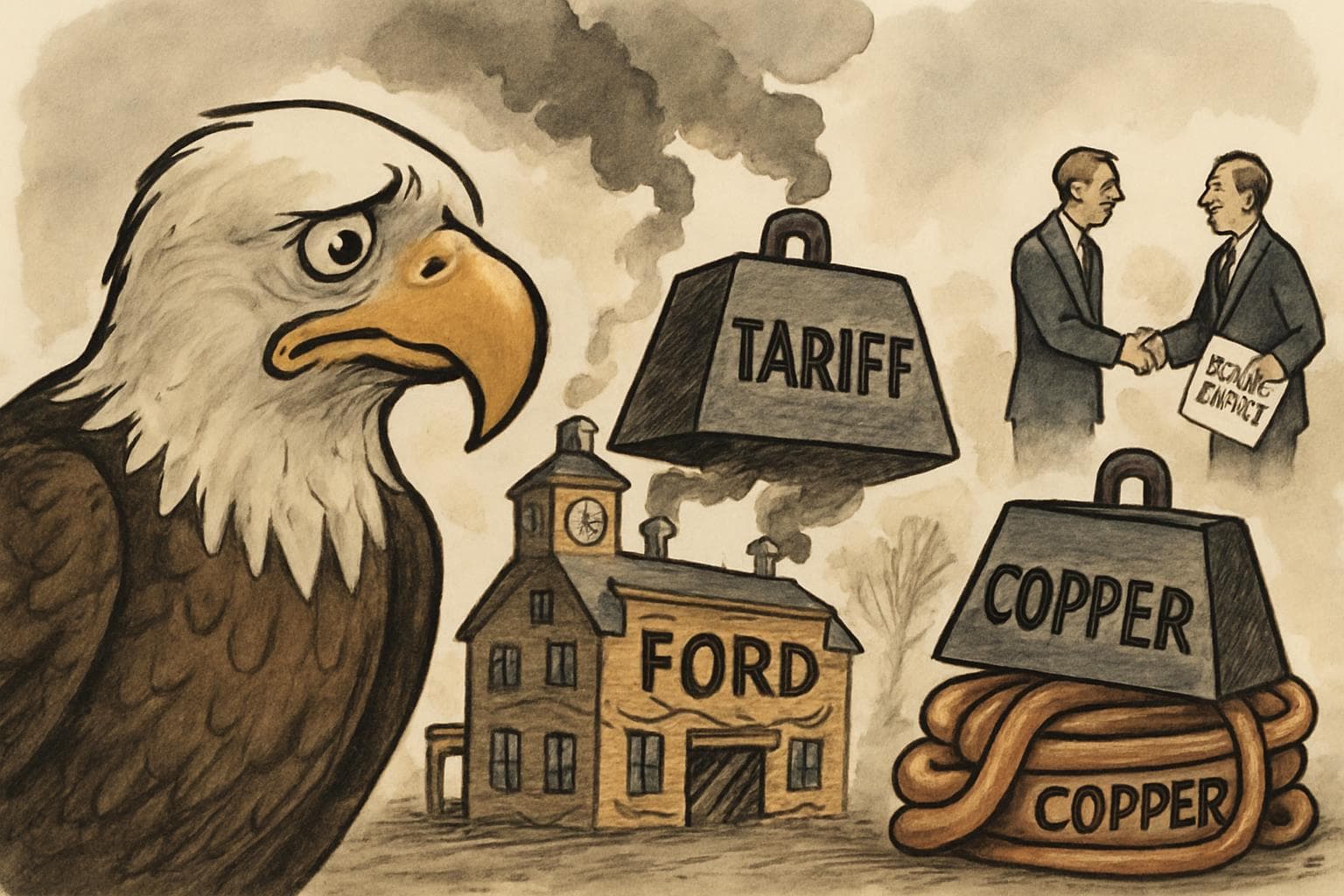
The automotive and copper industries are facing significant challenges as a result of US President Donald Trump's tariff policies. Ford Motor Company has announced that it expects tariffs to cost the company approximately $2 billion this year, a figure higher than initially projected. This increase is attributed to sustained tariffs on imports from Mexico and Canada, as well as US tariffs on imported aluminum and steel. Despite these challenges, Ford's predominantly US-based manufacturing operations have somewhat cushioned the impact compared to its competitors.
Automotive Industry Struggles
Ford's financial chief, Sherry House, highlighted that the company had already incurred an additional $800 million in duties in the second quarter of 2023. The tariffs have also affected Ford's electric vehicle program, contributing to financial losses. In contrast, General Motors reported a $1 billion tariff cost, while Volkswagen faced a $1.5 billion impact. Ford's CEO, Jim Farley, emphasized ongoing discussions with the White House to negotiate lower tariffs, particularly on vehicle parts, expressing optimism about potential positive outcomes.
Copper Market Turmoil
In a parallel development, the Trump administration has announced a 50% tariff on copper pipes and wiring, a move that has sent US copper prices plummeting by over 17% on the Comex exchange. The tariff, however, excludes raw materials such as copper ores and cathodes, which has been a relief to major suppliers like Chile and Peru. This decision has been criticized for not addressing the needs of the US copper mining industry, which has long sought regulatory reforms to stimulate growth.
Economic and Trade Implications
The tariffs are part of President Trump's broader strategy to encourage domestic manufacturing by imposing duties on imported goods. However, the policy has sparked debate over its effectiveness and impact on global supply chains. Analysts, including Tom Price from Panmure Liberum, have noted that the tariff adjustments have led to significant market repricing and uncertainty.
WHAT THIS MIGHT MEAN
Moving forward, the automotive and copper industries will closely monitor the outcomes of ongoing negotiations between Ford and the White House. A reduction in tariffs could alleviate some financial burdens on the automotive sector, potentially leading to increased investment in electric vehicle programs. Meanwhile, the copper market may continue to experience volatility as stakeholders adjust to the new tariff landscape. The exclusion of raw materials from the copper tariff could strengthen trade relations with major suppliers like Chile and Peru, but it may also prompt calls for further policy adjustments to support the US mining industry. As these developments unfold, the broader implications for US manufacturing and global trade dynamics remain to be seen.
Related Articles

Tech Giants Pledge to Cover AI Data Center Energy Costs Amid Rising Electricity Concerns
Trump's New Tariff Strategy Sparks Global Trade Uncertainty

Spain's Sánchez Stands Firm Against Trump's Trade Threat Over Iran Stance
Canada and Australia Forge Strategic Partnership Amid Global Uncertainty

Congress Subpoenas Attorney General Bondi in Epstein Investigation

Cuba Faces Widespread Blackout Amid Deepening Fuel Crisis
Ford and Copper Industries Grapple with Trump's Tariff Policies
In This Article
 Daniel Rivera| Published
 HIGHLIGHTS
- Ford anticipates a $2 billion impact from tariffs in 2023, largely due to levies on Mexico and Canada.
- The Trump administration plans a 50% tariff on copper pipes and wiring, affecting US copper prices and manufacturers.
- Ford's manufacturing is primarily US-based, mitigating some tariff impacts compared to competitors like General Motors.
- The copper tariff excludes raw materials like ores and cathodes, benefiting major suppliers like Chile and Peru.
- Ford is in ongoing negotiations with the White House to potentially lower tariffs on vehicle parts.
The automotive and copper industries are facing significant challenges as a result of US President Donald Trump's tariff policies. Ford Motor Company has announced that it expects tariffs to cost the company approximately $2 billion this year, a figure higher than initially projected. This increase is attributed to sustained tariffs on imports from Mexico and Canada, as well as US tariffs on imported aluminum and steel. Despite these challenges, Ford's predominantly US-based manufacturing operations have somewhat cushioned the impact compared to its competitors.
Automotive Industry Struggles
Ford's financial chief, Sherry House, highlighted that the company had already incurred an additional $800 million in duties in the second quarter of 2023. The tariffs have also affected Ford's electric vehicle program, contributing to financial losses. In contrast, General Motors reported a $1 billion tariff cost, while Volkswagen faced a $1.5 billion impact. Ford's CEO, Jim Farley, emphasized ongoing discussions with the White House to negotiate lower tariffs, particularly on vehicle parts, expressing optimism about potential positive outcomes.
Copper Market Turmoil
In a parallel development, the Trump administration has announced a 50% tariff on copper pipes and wiring, a move that has sent US copper prices plummeting by over 17% on the Comex exchange. The tariff, however, excludes raw materials such as copper ores and cathodes, which has been a relief to major suppliers like Chile and Peru. This decision has been criticized for not addressing the needs of the US copper mining industry, which has long sought regulatory reforms to stimulate growth.
Economic and Trade Implications
The tariffs are part of President Trump's broader strategy to encourage domestic manufacturing by imposing duties on imported goods. However, the policy has sparked debate over its effectiveness and impact on global supply chains. Analysts, including Tom Price from Panmure Liberum, have noted that the tariff adjustments have led to significant market repricing and uncertainty.
WHAT THIS MIGHT MEAN
Moving forward, the automotive and copper industries will closely monitor the outcomes of ongoing negotiations between Ford and the White House. A reduction in tariffs could alleviate some financial burdens on the automotive sector, potentially leading to increased investment in electric vehicle programs. Meanwhile, the copper market may continue to experience volatility as stakeholders adjust to the new tariff landscape. The exclusion of raw materials from the copper tariff could strengthen trade relations with major suppliers like Chile and Peru, but it may also prompt calls for further policy adjustments to support the US mining industry. As these developments unfold, the broader implications for US manufacturing and global trade dynamics remain to be seen.
Related Articles
Tech Giants Pledge to Cover AI Data Center Energy Costs Amid Rising Electricity Concerns
Trump's New Tariff Strategy Sparks Global Trade Uncertainty
Spain's Sánchez Stands Firm Against Trump's Trade Threat Over Iran Stance
Canada and Australia Forge Strategic Partnership Amid Global Uncertainty
Congress Subpoenas Attorney General Bondi in Epstein Investigation
Cuba Faces Widespread Blackout Amid Deepening Fuel Crisis