
Ford's $19.5 Billion Writedown Marks Shift from Electric Vehicles Amid Policy Changes
In This Article
HIGHLIGHTS
- Ford announced a $19.5 billion writedown as it scales back its electric vehicle (EV) plans due to declining demand and regulatory changes.
- The company will discontinue the electric F-150 Lightning and other EV models, focusing instead on hybrid and gas-powered vehicles.
- The shift comes amid the Trump administration's rollback of EV incentives and fuel economy regulations, impacting the US electric vehicle market.
- Ford's decision mirrors a broader industry trend, with General Motors also reducing its EV ambitions recently.
- The company plans to increase its hybrid and extended-range EV production to 50% of its global mix by 2030.
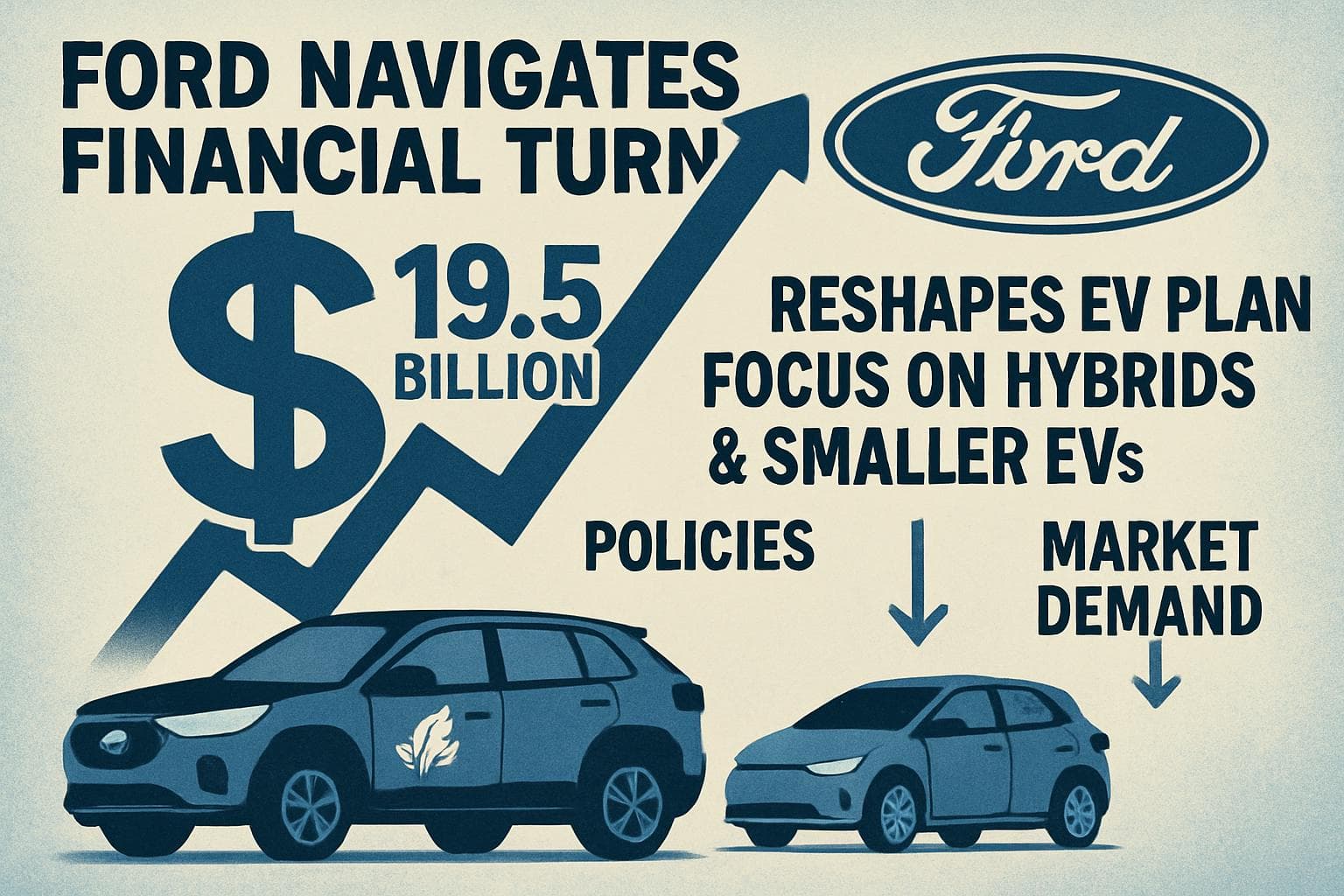
Ford Motor Company has announced a significant strategic shift, taking a $19.5 billion hit as it scales back its electric vehicle (EV) ambitions. The decision, revealed on Monday, reflects the automaker's response to waning demand for large EVs and recent regulatory changes under the Trump administration.
Pivot to Hybrid and Gas-Powered Models
The Dearborn, Michigan-based company will discontinue several planned EV models, including the electric version of its popular F-150 Lightning pickup truck. Instead, Ford will focus on producing hybrid vehicles and smaller, more affordable electric models. The F-150 Lightning will be redesigned as a hybrid, featuring a gas-powered generator to recharge its battery.
Ford's CEO, Jim Farley, emphasized the customer-driven nature of this shift, stating, "The operating reality has changed, and we are redeploying capital into higher-return growth opportunities." The company plans to increase its global mix of hybrids, extended-range EVs, and pure EVs to 50% by 2030, up from 17% today.
Impact of Regulatory Changes
The strategic pivot comes as the Trump administration has rolled back several policies that previously supported the EV market. The expiration of a $7,500 consumer tax credit in September and the easing of fuel economy rules have contributed to a decline in EV sales. In November, US electric vehicle sales fell by about 40%.
Ford's decision aligns with broader industry trends, as General Motors also announced a reduction in its EV plans, citing similar reasons. The automotive industry had invested heavily in EVs earlier this decade, but the outlook has dimmed due to policy shifts and reduced consumer incentives.
Future Focus on Affordable EVs
Looking ahead, Ford aims to concentrate on more affordable EV models while expanding its hybrid and gas-powered vehicle lineup. The company plans to hire thousands of workers, although some layoffs are expected at a Tennessee battery plant in the short term.
Andrew Frick, head of Ford's gas and electric-vehicle operations, stated, "Rather than spending billions more on large EVs that now have no path to profitability, we are allocating that money into higher-returning areas."
WHAT THIS MIGHT MEAN
Ford's strategic shift could have significant implications for the automotive industry and the broader push towards electrification. As the company pivots to hybrid and gas-powered models, it may influence other automakers to reassess their EV strategies, particularly in light of changing regulatory landscapes.
The rollback of EV incentives and fuel economy regulations under the Trump administration has already impacted the US electric vehicle market. If these policies remain in place, the transition to electric vehicles could slow further, affecting efforts to reduce carbon emissions and combat climate change.
Experts suggest that the future of the EV market may hinge on policy developments and consumer demand. Should the regulatory environment shift again, perhaps under a new administration, automakers like Ford may need to adapt their strategies once more to align with evolving market conditions and environmental goals.
Related Articles
China Sets Lowest GDP Growth Target in Decades Amid Economic Challenges
US Economic Growth Slows Amid Government Shutdown and Inflation Concerns
Tech Giants Pledge to Cover AI Data Center Energy Costs Amid Rising Electricity Concerns

Cuba Faces Widespread Blackout Amid Deepening Fuel Crisis

UK Faces Dilemmas Amid Iran Conflict and China Spying Allegations

Google Faces Legal Battle Over AI Chatbot's Alleged Role in Tragic Death
Ford's $19.5 Billion Writedown Marks Shift from Electric Vehicles Amid Policy Changes
In This Article
 Daniel Rivera| Published
 HIGHLIGHTS
- Ford announced a $19.5 billion writedown as it scales back its electric vehicle (EV) plans due to declining demand and regulatory changes.
- The company will discontinue the electric F-150 Lightning and other EV models, focusing instead on hybrid and gas-powered vehicles.
- The shift comes amid the Trump administration's rollback of EV incentives and fuel economy regulations, impacting the US electric vehicle market.
- Ford's decision mirrors a broader industry trend, with General Motors also reducing its EV ambitions recently.
- The company plans to increase its hybrid and extended-range EV production to 50% of its global mix by 2030.
Ford Motor Company has announced a significant strategic shift, taking a $19.5 billion hit as it scales back its electric vehicle (EV) ambitions. The decision, revealed on Monday, reflects the automaker's response to waning demand for large EVs and recent regulatory changes under the Trump administration.
Pivot to Hybrid and Gas-Powered Models
The Dearborn, Michigan-based company will discontinue several planned EV models, including the electric version of its popular F-150 Lightning pickup truck. Instead, Ford will focus on producing hybrid vehicles and smaller, more affordable electric models. The F-150 Lightning will be redesigned as a hybrid, featuring a gas-powered generator to recharge its battery.
Ford's CEO, Jim Farley, emphasized the customer-driven nature of this shift, stating, "The operating reality has changed, and we are redeploying capital into higher-return growth opportunities." The company plans to increase its global mix of hybrids, extended-range EVs, and pure EVs to 50% by 2030, up from 17% today.
Impact of Regulatory Changes
The strategic pivot comes as the Trump administration has rolled back several policies that previously supported the EV market. The expiration of a $7,500 consumer tax credit in September and the easing of fuel economy rules have contributed to a decline in EV sales. In November, US electric vehicle sales fell by about 40%.
Ford's decision aligns with broader industry trends, as General Motors also announced a reduction in its EV plans, citing similar reasons. The automotive industry had invested heavily in EVs earlier this decade, but the outlook has dimmed due to policy shifts and reduced consumer incentives.
Future Focus on Affordable EVs
Looking ahead, Ford aims to concentrate on more affordable EV models while expanding its hybrid and gas-powered vehicle lineup. The company plans to hire thousands of workers, although some layoffs are expected at a Tennessee battery plant in the short term.
Andrew Frick, head of Ford's gas and electric-vehicle operations, stated, "Rather than spending billions more on large EVs that now have no path to profitability, we are allocating that money into higher-returning areas."
WHAT THIS MIGHT MEAN
Ford's strategic shift could have significant implications for the automotive industry and the broader push towards electrification. As the company pivots to hybrid and gas-powered models, it may influence other automakers to reassess their EV strategies, particularly in light of changing regulatory landscapes.
The rollback of EV incentives and fuel economy regulations under the Trump administration has already impacted the US electric vehicle market. If these policies remain in place, the transition to electric vehicles could slow further, affecting efforts to reduce carbon emissions and combat climate change.
Experts suggest that the future of the EV market may hinge on policy developments and consumer demand. Should the regulatory environment shift again, perhaps under a new administration, automakers like Ford may need to adapt their strategies once more to align with evolving market conditions and environmental goals.
Related Articles
China Sets Lowest GDP Growth Target in Decades Amid Economic Challenges
US Economic Growth Slows Amid Government Shutdown and Inflation Concerns
Tech Giants Pledge to Cover AI Data Center Energy Costs Amid Rising Electricity Concerns
Cuba Faces Widespread Blackout Amid Deepening Fuel Crisis
UK Faces Dilemmas Amid Iran Conflict and China Spying Allegations
Google Faces Legal Battle Over AI Chatbot's Alleged Role in Tragic Death