
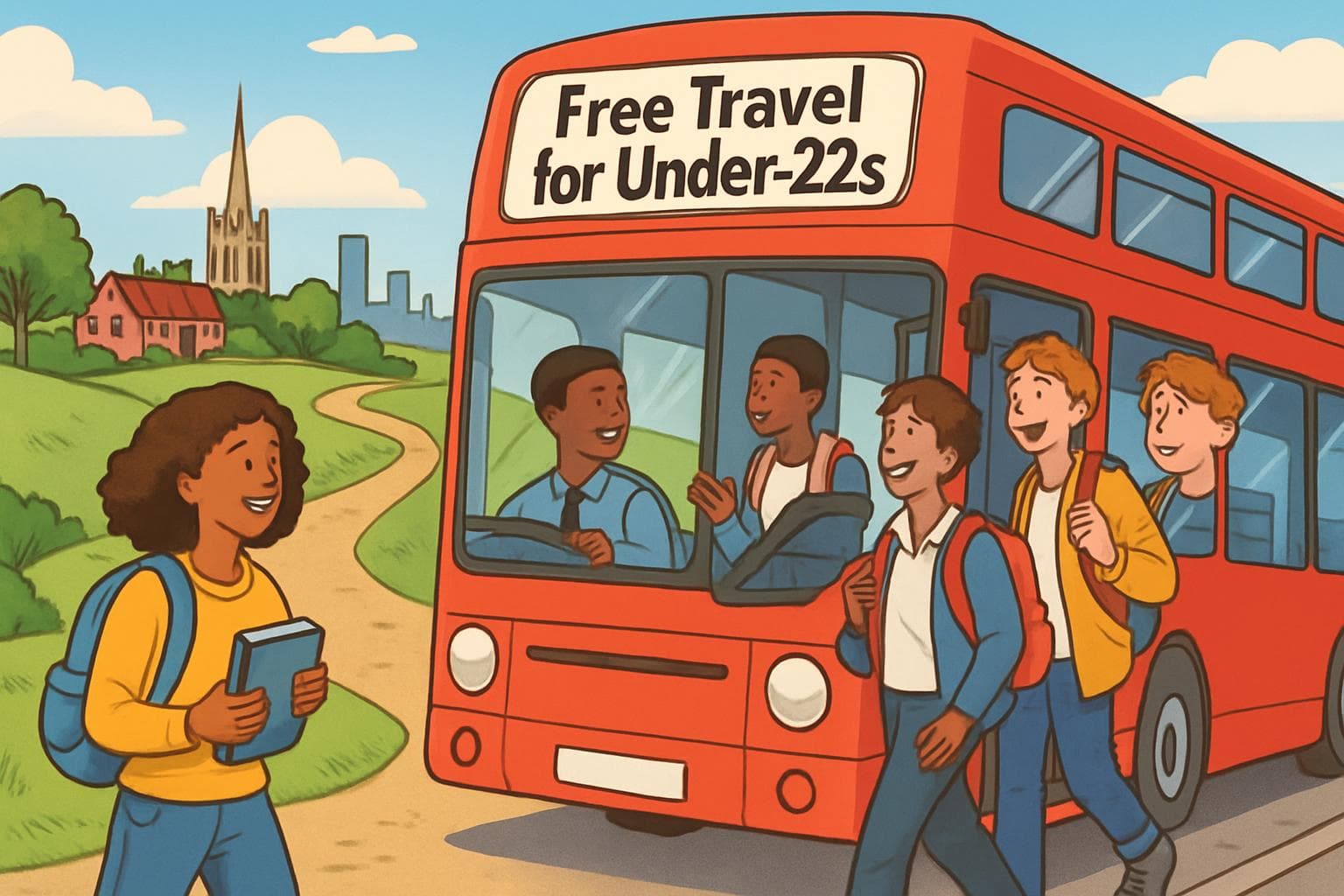
MPs Advocate Free Bus Travel for Under-22s to Boost Employment and Education Access
In This Article
HIGHLIGHTS
- MPs recommend free bus travel for under-22s in England to improve access to work and education.
- Bus journeys in England have declined by 20% since 2009, with many areas becoming "transport deserts."
- The Department for Transport is investing £1bn to enhance bus service reliability and frequency.
- A pilot scheme for free bus travel for under-22s is proposed to address high fares and limited service.
- The report suggests extending the English national concessionary travel scheme to include young people.
In a bid to enhance access to employment and education for young people, a committee of MPs has called for free bus travel for those under 22 in England. This recommendation comes amid a significant decline in bus usage, with passenger numbers dropping by 20% since 2009, according to a report by the Commons Transport Committee.
Decline in Bus Usage and Rising Fares
The report highlights that the number of bus journeys in England has fallen from 4.6 billion in 2009 to 3.6 billion in 2024. Rising fares, which have outpaced inflation, are cited as a major barrier to opportunity, particularly in smaller towns and rural areas that are increasingly becoming "transport deserts." The committee suggests that extending the English national concessionary travel scheme to include under-22s could help reverse this trend.
Addressing Barriers to Opportunity
The MPs' report emphasizes the need for a pilot scheme offering free bus travel at any time of day for young people. This initiative aims to remove financial barriers that prevent access to jobs, apprenticeships, and training, especially in communities where opportunities are scarce. Roman Dibden, chief executive of youth charity Rise Up, noted, "Free bus passes for under-22s would remove a huge barrier, opening up access to jobs and training."
Government Response and Future Plans
The Department for Transport has committed £1bn in multi-year funding to improve bus service reliability and frequency across the country. A spokesperson stated, "Our landmark bus services bill will protect routes and prevent services from being scrapped, bringing buses back into local control." The government has also extended the £3 fare cap until March 2027 to prevent fare hikes.
Personal Accounts Highlight Need
Young individuals like Alex Mustafa and Dylan Lewis-Creser have shared their struggles with current bus services. Mustafa, who relies on buses due to health and financial constraints, expressed how free travel would alleviate the burden of planning around unreliable schedules. Lewis-Creser, a student, highlighted the financial strain of current fares, stating, "A free bus pass would mean I could get to and from university and work without paying £10 a week."
WHAT THIS MIGHT MEAN
The proposal for free bus travel for under-22s could significantly impact youth employment and education access if implemented. By removing financial barriers, young people in rural and underserved areas may find it easier to pursue job opportunities and training. However, the success of such a scheme will depend on the government's ability to secure long-term funding and ensure reliable service levels across all regions. As the Department for Transport continues to invest in bus services, the potential for improved connectivity and reduced transport deserts remains a critical focus for policymakers.
Images from the Web

Related Articles
UK Government's SEND Reforms Spark Debate Over Funding and Accessibility

Saharan Dust to Illuminate UK Skies with Vivid Sunrises and Sunsets

Government Announces £4 Billion Overhaul of SEND Support in England

UK Government Announces Major Overhaul of SEND System with £3.4 Billion Investment
Government Unveils Ambitious Plan to Halve Attainment Gap in England's Schools

UK Government's SEND Reforms: A Critical Turning Point for Special Education
MPs Advocate Free Bus Travel for Under-22s to Boost Employment and Education Access
In This Article
 Leila Hassan| Published
 HIGHLIGHTS
- MPs recommend free bus travel for under-22s in England to improve access to work and education.
- Bus journeys in England have declined by 20% since 2009, with many areas becoming "transport deserts."
- The Department for Transport is investing £1bn to enhance bus service reliability and frequency.
- A pilot scheme for free bus travel for under-22s is proposed to address high fares and limited service.
- The report suggests extending the English national concessionary travel scheme to include young people.
In a bid to enhance access to employment and education for young people, a committee of MPs has called for free bus travel for those under 22 in England. This recommendation comes amid a significant decline in bus usage, with passenger numbers dropping by 20% since 2009, according to a report by the Commons Transport Committee.
Decline in Bus Usage and Rising Fares
The report highlights that the number of bus journeys in England has fallen from 4.6 billion in 2009 to 3.6 billion in 2024. Rising fares, which have outpaced inflation, are cited as a major barrier to opportunity, particularly in smaller towns and rural areas that are increasingly becoming "transport deserts." The committee suggests that extending the English national concessionary travel scheme to include under-22s could help reverse this trend.
Addressing Barriers to Opportunity
The MPs' report emphasizes the need for a pilot scheme offering free bus travel at any time of day for young people. This initiative aims to remove financial barriers that prevent access to jobs, apprenticeships, and training, especially in communities where opportunities are scarce. Roman Dibden, chief executive of youth charity Rise Up, noted, "Free bus passes for under-22s would remove a huge barrier, opening up access to jobs and training."
Government Response and Future Plans
The Department for Transport has committed £1bn in multi-year funding to improve bus service reliability and frequency across the country. A spokesperson stated, "Our landmark bus services bill will protect routes and prevent services from being scrapped, bringing buses back into local control." The government has also extended the £3 fare cap until March 2027 to prevent fare hikes.
Personal Accounts Highlight Need
Young individuals like Alex Mustafa and Dylan Lewis-Creser have shared their struggles with current bus services. Mustafa, who relies on buses due to health and financial constraints, expressed how free travel would alleviate the burden of planning around unreliable schedules. Lewis-Creser, a student, highlighted the financial strain of current fares, stating, "A free bus pass would mean I could get to and from university and work without paying £10 a week."
WHAT THIS MIGHT MEAN
The proposal for free bus travel for under-22s could significantly impact youth employment and education access if implemented. By removing financial barriers, young people in rural and underserved areas may find it easier to pursue job opportunities and training. However, the success of such a scheme will depend on the government's ability to secure long-term funding and ensure reliable service levels across all regions. As the Department for Transport continues to invest in bus services, the potential for improved connectivity and reduced transport deserts remains a critical focus for policymakers.
Images from the Web
Related Articles
UK Government's SEND Reforms Spark Debate Over Funding and Accessibility
Saharan Dust to Illuminate UK Skies with Vivid Sunrises and Sunsets
Government Announces £4 Billion Overhaul of SEND Support in England
UK Government Announces Major Overhaul of SEND System with £3.4 Billion Investment
Government Unveils Ambitious Plan to Halve Attainment Gap in England's Schools
UK Government's SEND Reforms: A Critical Turning Point for Special Education