
G7 Summit in Canada Confronts Iran-Israel Crisis Amid Trade Tensions
In This Article
HIGHLIGHTS
- The G7 summit in Kananaskis, Canada, is overshadowed by the Iran-Israel conflict, shifting focus from the original agenda.
- Canadian Prime Minister Mark Carney faces scrutiny in his first major international role, especially in handling US President Donald Trump.
- Trade tensions, particularly US tariffs, are expected to dominate discussions, with potential impacts on the global economy.
- European leaders aim to persuade Trump to support de-escalation in the Middle East and reconsider his America-first strategy.
- The UK-US trade deal is nearing finalization, with British Prime Minister Keir Starmer set to discuss its implementation with Trump.
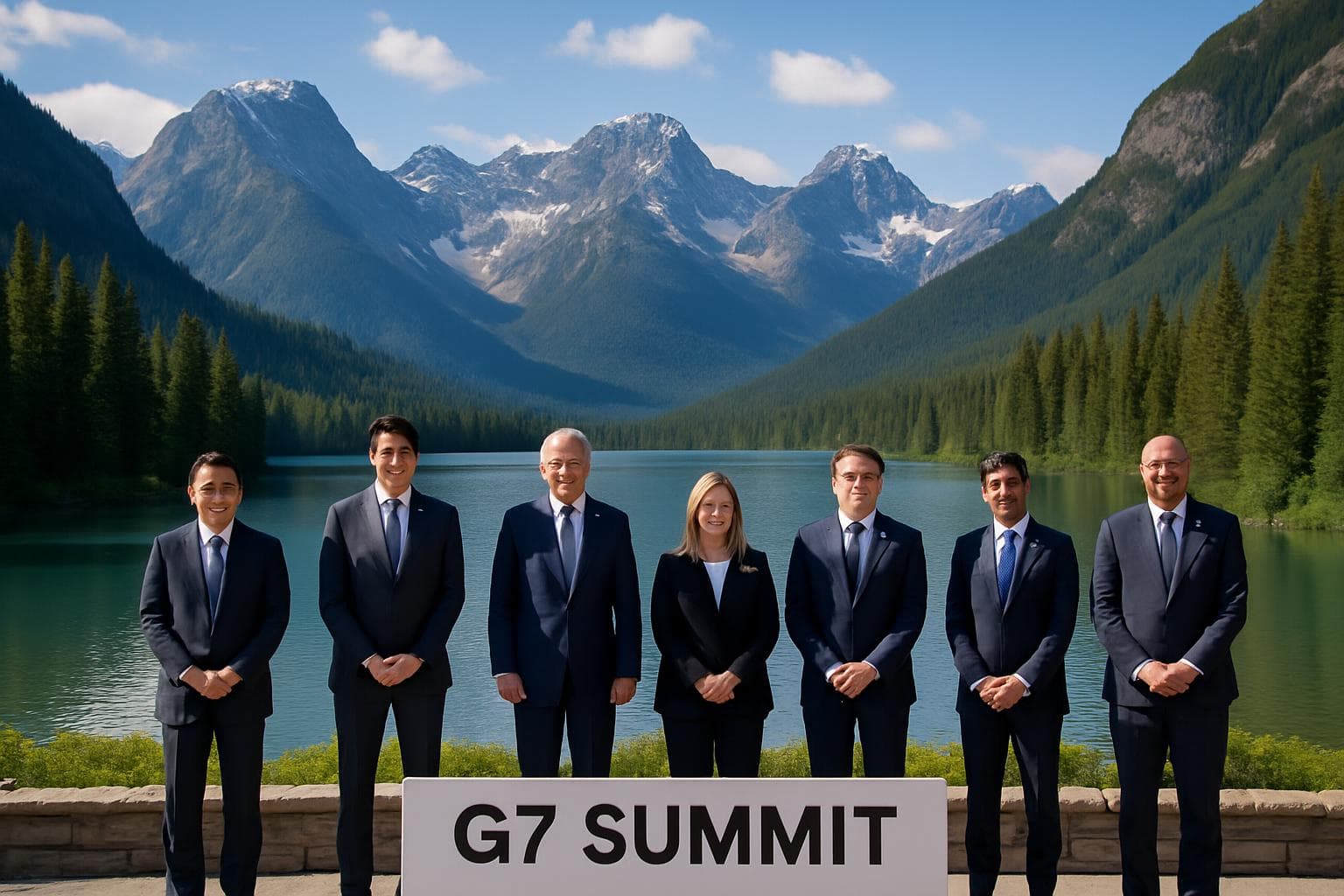
The G7 summit, hosted in the scenic Kananaskis, Canada, has commenced under the shadow of escalating tensions between Iran and Israel. Originally intended to focus on global economic stability and security, the summit's agenda has been dramatically altered by the Middle East crisis. Canadian Prime Minister Mark Carney, in his first major international role, is tasked with navigating these complex geopolitical waters.
Iran-Israel Conflict Takes Center Stage
The Iran-Israel conflict has surged to the forefront of discussions, overshadowing the summit's initial priorities. European leaders are expected to urge US President Donald Trump to adopt a more conciliatory approach, fearing his America-first strategy could exacerbate global instability. The summit provides a platform for leaders to address shared concerns, including the potential for further sanctions on Iran and the implications for regional security.
Trade Tensions and Economic Concerns
Trade tensions, fueled by US tariffs, are another critical issue on the table. The World Bank's prediction of the slowest economic growth since the 1960s adds urgency to these discussions. Leaders are wary of the impact of Trump's trade policies, which have strained international relations and could potentially lead to a global recession.
UK-US Trade Deal on the Horizon
Amid these tensions, British Prime Minister Keir Starmer is set to meet Trump to finalize the UK-US trade deal. The agreement, which aims to reduce import taxes on British goods, is in its final stages. However, uncertainty remains over its implementation, with British businesses anxious about potential tariff hikes.
Diplomatic Efforts for Middle East De-escalation
Efforts to de-escalate the Middle East conflict are a priority, with a consensus among G7 leaders on the need for diplomatic solutions. Iran has signaled a willingness to resume talks, seeking to end hostilities through Arab intermediaries. The summit offers a rare opportunity for direct dialogue, with Ukrainian President Volodymyr Zelenskyy also seeking to discuss defense arrangements with Trump.
WHAT THIS MIGHT MEAN
The outcomes of the G7 summit could significantly influence global diplomatic and economic landscapes. If leaders successfully persuade Trump to support de-escalation in the Middle East, it may pave the way for renewed negotiations and stability in the region. Conversely, failure to reach consensus could exacerbate tensions, impacting global markets and diplomatic relations.
The finalization of the UK-US trade deal could bolster economic ties between the two nations, providing a model for future agreements. However, unresolved trade tensions and tariff disputes may continue to pose challenges for global economic recovery.
As the summit progresses, the ability of leaders to navigate these complex issues will be crucial in shaping international cooperation and addressing the pressing challenges of our time.
Related Articles

UK Faces Dilemmas Amid Iran Conflict and China Spying Allegations
Senate Blocks Resolution to Limit Trump's Military Actions in Iran
US and Israel Intensify Military Campaign as Iran's Capabilities Dwindle

Intensified US-Israel Strikes on Iran Spark Global Outcry
UK-Iran Tensions: Starmer Defends Cautious Approach Amid Trump Criticism
Canada and Australia Forge Strategic Partnership Amid Global Uncertainty
G7 Summit in Canada Confronts Iran-Israel Crisis Amid Trade Tensions
In This Article
 Ethan Brooks| Published
 HIGHLIGHTS
- The G7 summit in Kananaskis, Canada, is overshadowed by the Iran-Israel conflict, shifting focus from the original agenda.
- Canadian Prime Minister Mark Carney faces scrutiny in his first major international role, especially in handling US President Donald Trump.
- Trade tensions, particularly US tariffs, are expected to dominate discussions, with potential impacts on the global economy.
- European leaders aim to persuade Trump to support de-escalation in the Middle East and reconsider his America-first strategy.
- The UK-US trade deal is nearing finalization, with British Prime Minister Keir Starmer set to discuss its implementation with Trump.
The G7 summit, hosted in the scenic Kananaskis, Canada, has commenced under the shadow of escalating tensions between Iran and Israel. Originally intended to focus on global economic stability and security, the summit's agenda has been dramatically altered by the Middle East crisis. Canadian Prime Minister Mark Carney, in his first major international role, is tasked with navigating these complex geopolitical waters.
Iran-Israel Conflict Takes Center Stage
The Iran-Israel conflict has surged to the forefront of discussions, overshadowing the summit's initial priorities. European leaders are expected to urge US President Donald Trump to adopt a more conciliatory approach, fearing his America-first strategy could exacerbate global instability. The summit provides a platform for leaders to address shared concerns, including the potential for further sanctions on Iran and the implications for regional security.
Trade Tensions and Economic Concerns
Trade tensions, fueled by US tariffs, are another critical issue on the table. The World Bank's prediction of the slowest economic growth since the 1960s adds urgency to these discussions. Leaders are wary of the impact of Trump's trade policies, which have strained international relations and could potentially lead to a global recession.
UK-US Trade Deal on the Horizon
Amid these tensions, British Prime Minister Keir Starmer is set to meet Trump to finalize the UK-US trade deal. The agreement, which aims to reduce import taxes on British goods, is in its final stages. However, uncertainty remains over its implementation, with British businesses anxious about potential tariff hikes.
Diplomatic Efforts for Middle East De-escalation
Efforts to de-escalate the Middle East conflict are a priority, with a consensus among G7 leaders on the need for diplomatic solutions. Iran has signaled a willingness to resume talks, seeking to end hostilities through Arab intermediaries. The summit offers a rare opportunity for direct dialogue, with Ukrainian President Volodymyr Zelenskyy also seeking to discuss defense arrangements with Trump.
WHAT THIS MIGHT MEAN
The outcomes of the G7 summit could significantly influence global diplomatic and economic landscapes. If leaders successfully persuade Trump to support de-escalation in the Middle East, it may pave the way for renewed negotiations and stability in the region. Conversely, failure to reach consensus could exacerbate tensions, impacting global markets and diplomatic relations.
The finalization of the UK-US trade deal could bolster economic ties between the two nations, providing a model for future agreements. However, unresolved trade tensions and tariff disputes may continue to pose challenges for global economic recovery.
As the summit progresses, the ability of leaders to navigate these complex issues will be crucial in shaping international cooperation and addressing the pressing challenges of our time.
Related Articles
UK Faces Dilemmas Amid Iran Conflict and China Spying Allegations
Senate Blocks Resolution to Limit Trump's Military Actions in Iran
US and Israel Intensify Military Campaign as Iran's Capabilities Dwindle
Intensified US-Israel Strikes on Iran Spark Global Outcry
UK-Iran Tensions: Starmer Defends Cautious Approach Amid Trump Criticism
Canada and Australia Forge Strategic Partnership Amid Global Uncertainty