
Airdrops in Gaza: A Desperate Measure Amid a Growing Humanitarian Crisis
In This Article
HIGHLIGHTS
- Israel has initiated airdrops of humanitarian aid into Gaza amid international pressure and a worsening starvation crisis.
- Aid agencies criticize airdrops as ineffective, urging for the opening of land routes to deliver essential supplies.
- The UN and international organizations report severe malnutrition, with over 90,000 women and children in urgent need of aid.
- Israel claims no restrictions on aid, but international bodies and allies dispute this, citing bureaucratic obstacles.
- Ceasefire talks have stalled, exacerbating the humanitarian crisis, as calls for unrestricted aid access grow louder.
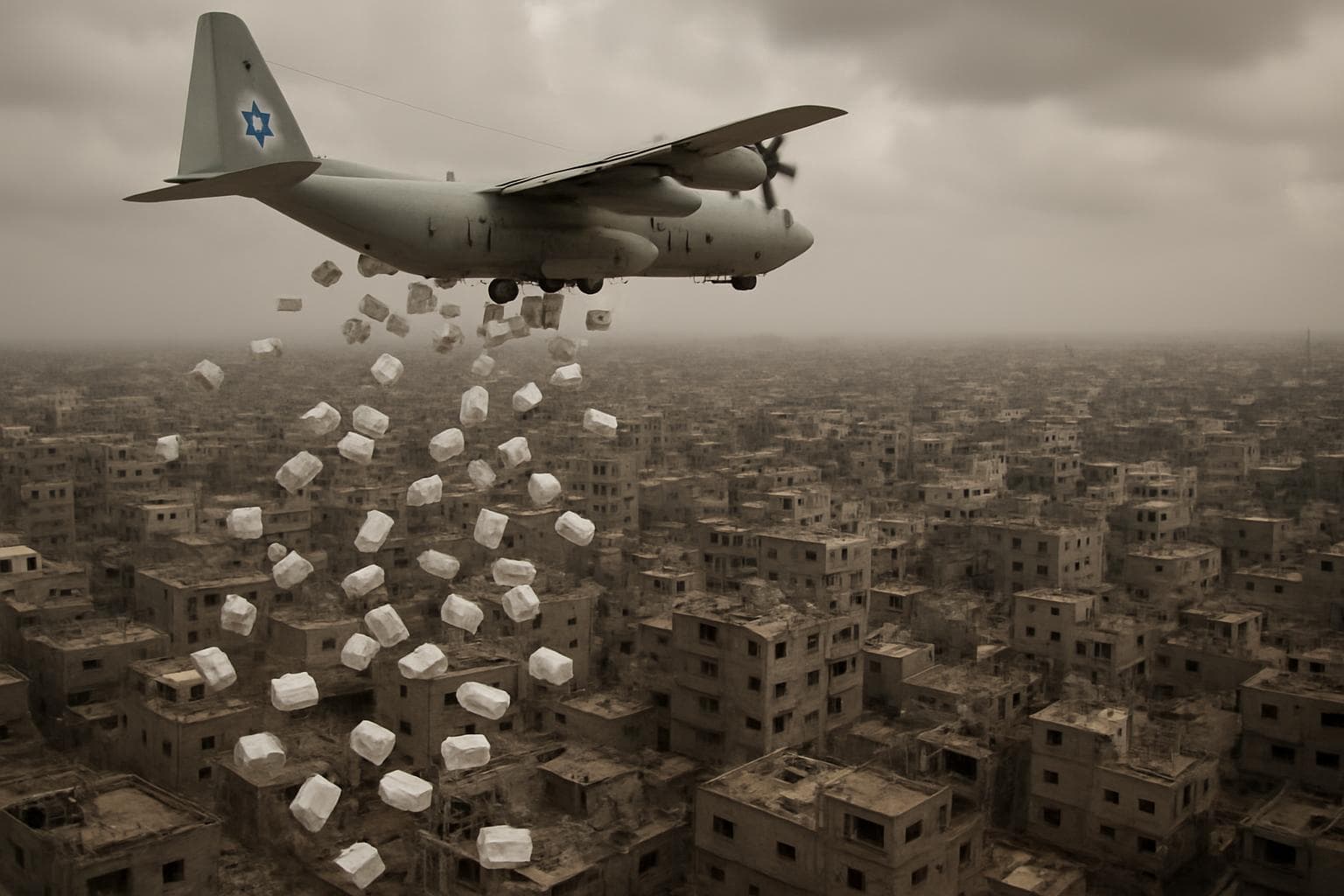
Israel has commenced airdrops of humanitarian aid into the Gaza Strip, responding to mounting international pressure and a deepening starvation crisis in the region. The Israeli Defense Forces (IDF) announced the delivery of seven packages containing flour, sugar, and canned food, amid calls for more substantial aid efforts.
Criticism of Airdrop Effectiveness
Despite these efforts, aid agencies and international organizations have criticized airdrops as a "grotesque distraction" from the urgent need to open land routes for aid delivery. Ciarán Donnelly of the International Rescue Committee emphasized that airdrops cannot meet the volume or quality of aid required. Philippe Lazzarini, head of the UN's Palestinian refugee agency Unrwa, described airdrops as "expensive, inefficient, and potentially dangerous," advocating for the opening of humanitarian corridors.
Humanitarian Crisis Deepens
The humanitarian situation in Gaza is dire, with the World Food Programme warning that one in three Gazans are not eating for days at a time. Over 90,000 women and children are in urgent need of treatment for malnutrition. The Hamas-run Gaza health ministry reported 127 deaths due to malnutrition, including 85 children, since the conflict began.
International and Political Reactions
International bodies and allies, including the UK, France, and Germany, have urged Israel to lift restrictions on aid flow, citing breaches of international humanitarian law. Israel maintains that it imposes no restrictions, attributing aid distribution issues to Hamas. However, the UN and other agencies refute this, pointing to bureaucratic hurdles.
Stalled Ceasefire Talks
Efforts to negotiate a ceasefire have stalled, with the US and Israel withdrawing from talks in Doha. The humanitarian crisis continues to escalate, with calls for unrestricted aid access becoming more urgent. The UK, alongside Jordan, plans to proceed with airdrop initiatives and evacuate children needing medical assistance, as part of broader efforts to address the crisis.
WHAT THIS MIGHT MEAN
The ongoing humanitarian crisis in Gaza poses significant challenges for international diplomacy and humanitarian efforts. If land routes for aid remain closed, the situation could worsen, leading to increased international condemnation and pressure on Israel. The stalled ceasefire talks further complicate the crisis, with potential for renewed negotiations hinging on diplomatic interventions by mediators like Egypt and Qatar. As the humanitarian situation deteriorates, the international community may need to explore alternative strategies to ensure aid reaches those in need, potentially involving more robust diplomatic or economic measures against parties obstructing aid delivery.
Related Articles

Middle East Conflict Drives UK Energy Prices to New Highs
Canada and Australia Forge Strategic Partnership Amid Global Uncertainty

UK Faces Dilemmas Amid Iran Conflict and China Spying Allegations

US and Israel Intensify Military Campaign as Iran's Capabilities Dwindle

Intensified US-Israel Strikes on Iran Spark Global Outcry

UK Reinforces Military Presence in Cyprus Amid Middle East Tensions
Airdrops in Gaza: A Desperate Measure Amid a Growing Humanitarian Crisis
In This Article
 Aya Nakamura| Published
 HIGHLIGHTS
- Israel has initiated airdrops of humanitarian aid into Gaza amid international pressure and a worsening starvation crisis.
- Aid agencies criticize airdrops as ineffective, urging for the opening of land routes to deliver essential supplies.
- The UN and international organizations report severe malnutrition, with over 90,000 women and children in urgent need of aid.
- Israel claims no restrictions on aid, but international bodies and allies dispute this, citing bureaucratic obstacles.
- Ceasefire talks have stalled, exacerbating the humanitarian crisis, as calls for unrestricted aid access grow louder.
Israel has commenced airdrops of humanitarian aid into the Gaza Strip, responding to mounting international pressure and a deepening starvation crisis in the region. The Israeli Defense Forces (IDF) announced the delivery of seven packages containing flour, sugar, and canned food, amid calls for more substantial aid efforts.
Criticism of Airdrop Effectiveness
Despite these efforts, aid agencies and international organizations have criticized airdrops as a "grotesque distraction" from the urgent need to open land routes for aid delivery. Ciarán Donnelly of the International Rescue Committee emphasized that airdrops cannot meet the volume or quality of aid required. Philippe Lazzarini, head of the UN's Palestinian refugee agency Unrwa, described airdrops as "expensive, inefficient, and potentially dangerous," advocating for the opening of humanitarian corridors.
Humanitarian Crisis Deepens
The humanitarian situation in Gaza is dire, with the World Food Programme warning that one in three Gazans are not eating for days at a time. Over 90,000 women and children are in urgent need of treatment for malnutrition. The Hamas-run Gaza health ministry reported 127 deaths due to malnutrition, including 85 children, since the conflict began.
International and Political Reactions
International bodies and allies, including the UK, France, and Germany, have urged Israel to lift restrictions on aid flow, citing breaches of international humanitarian law. Israel maintains that it imposes no restrictions, attributing aid distribution issues to Hamas. However, the UN and other agencies refute this, pointing to bureaucratic hurdles.
Stalled Ceasefire Talks
Efforts to negotiate a ceasefire have stalled, with the US and Israel withdrawing from talks in Doha. The humanitarian crisis continues to escalate, with calls for unrestricted aid access becoming more urgent. The UK, alongside Jordan, plans to proceed with airdrop initiatives and evacuate children needing medical assistance, as part of broader efforts to address the crisis.
WHAT THIS MIGHT MEAN
The ongoing humanitarian crisis in Gaza poses significant challenges for international diplomacy and humanitarian efforts. If land routes for aid remain closed, the situation could worsen, leading to increased international condemnation and pressure on Israel. The stalled ceasefire talks further complicate the crisis, with potential for renewed negotiations hinging on diplomatic interventions by mediators like Egypt and Qatar. As the humanitarian situation deteriorates, the international community may need to explore alternative strategies to ensure aid reaches those in need, potentially involving more robust diplomatic or economic measures against parties obstructing aid delivery.
Related Articles
Middle East Conflict Drives UK Energy Prices to New Highs
Canada and Australia Forge Strategic Partnership Amid Global Uncertainty
UK Faces Dilemmas Amid Iran Conflict and China Spying Allegations
US and Israel Intensify Military Campaign as Iran's Capabilities Dwindle
Intensified US-Israel Strikes on Iran Spark Global Outcry
UK Reinforces Military Presence in Cyprus Amid Middle East Tensions