
Gaza Faces Humanitarian Crisis as Aid Chaos and Agricultural Destruction Persist
In This Article
HIGHLIGHTS
- Twenty people died and over 30 were injured in Gaza after trucks overturned amid chaotic aid distribution.
- Only 1.5% of Gaza's cropland remains accessible and undamaged, exacerbating the risk of famine.
- Israeli military actions have severely damaged Gaza's agricultural infrastructure, impacting local food production.
- Aid convoys face attacks and blockades, with recent incidents involving Israeli settlers targeting Jordanian trucks.
- International organizations warn of mass starvation in Gaza, urging for safe humanitarian access and support.
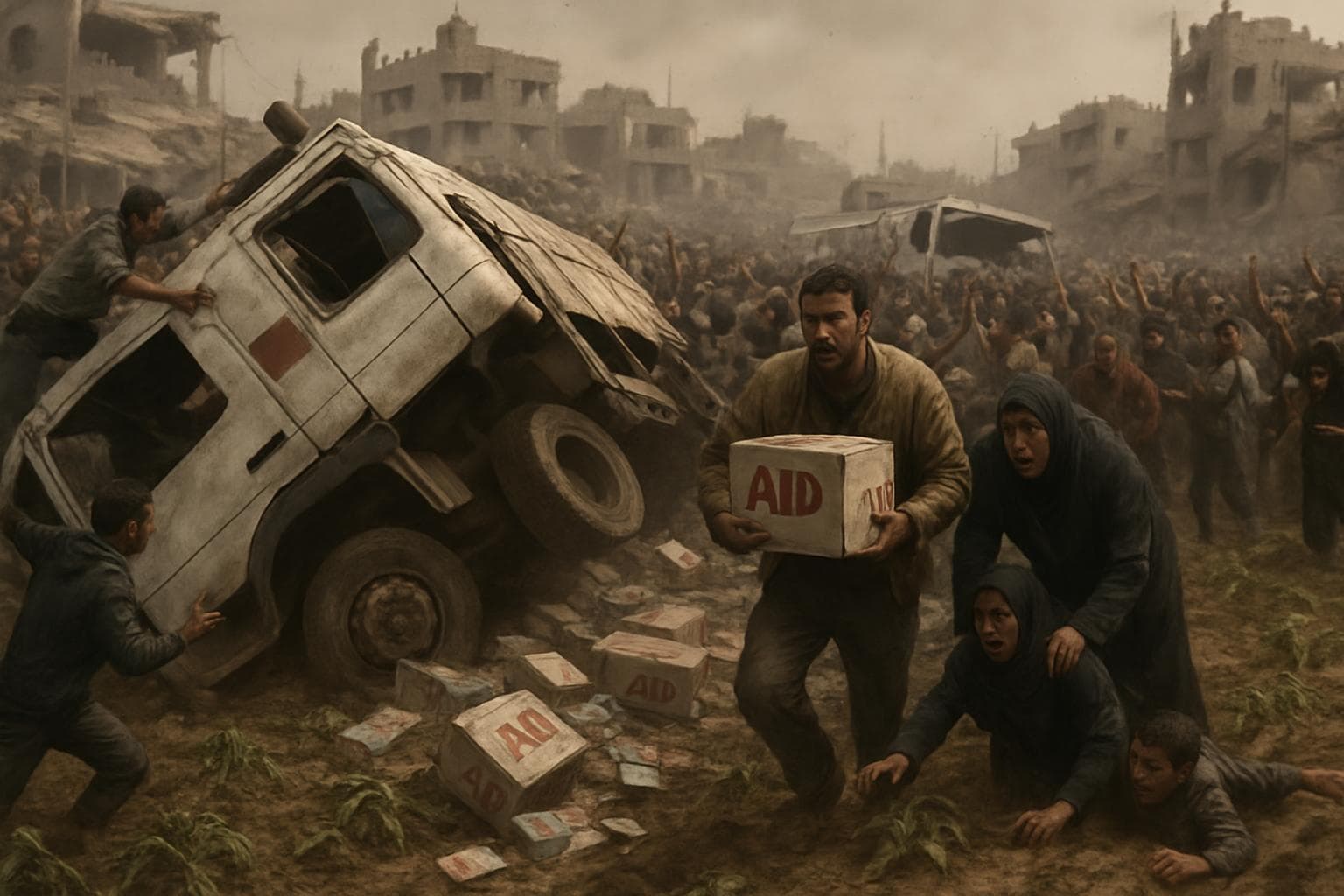
The humanitarian situation in Gaza continues to deteriorate as recent incidents highlight the severe challenges faced by the region. On Tuesday evening, a tragic event unfolded when four trucks overturned on a crowd in central Gaza, resulting in the deaths of 20 people and injuries to more than 30 others. The chaos erupted as desperate civilians swarmed the vehicles, which were delivering much-needed supplies. The Hamas-run civil defense agency reported that the rugged roads, under Israeli military control, contributed to the accident.
Aid Distribution Challenges
The incident underscores the ongoing difficulties in distributing aid within Gaza. With Israel's recent decision to allow the gradual entry of goods via the private sector, including essential items like baby food and hygiene products, the demand for supplies has intensified. However, the chaotic scenes of aid distribution have led to tragic outcomes, as seen with the overturned trucks. The private transport association in Gaza noted that out of 26 commercial trucks entering the territory, six were looted, and four overturned.
Agricultural Devastation and Famine Risk
Compounding the crisis is the alarming reduction in accessible farmland. According to the UN's Food and Agriculture Organization (FAO), only 1.5% of Gaza's cropland remains both accessible and undamaged, a stark decline from previous figures. This destruction of agricultural infrastructure, attributed to Israeli military actions, has left Gaza on the brink of a full-scale famine. The FAO's director-general, Qu Dongyu, emphasized the urgent need for safe humanitarian access and support to restore local food production.
Attacks on Aid Convoys
The challenges extend beyond Gaza's borders, as aid convoys face threats and blockades. In a recent incident, Israeli settlers attacked a Gaza-bound convoy of 30 trucks from Jordan, pelting them with stones and smashing windscreens. This marks the second attack on a Jordanian aid convoy, prompting calls for Israeli intervention to ensure the safe passage of humanitarian aid.
International Warnings and Calls for Action
International organizations and human rights groups have repeatedly warned of the dire humanitarian situation in Gaza, accusing Israel of impeding aid distribution. Despite Israeli Prime Minister Benjamin Netanyahu's denial of starvation in the territory, the evidence of mass starvation and the collapse of local agrifood systems is mounting. The UN and other agencies continue to advocate for immediate action to prevent further loss of life and uphold the basic human right to food.
WHAT THIS MIGHT MEAN
The ongoing humanitarian crisis in Gaza presents significant challenges for both local and international stakeholders. If the current situation persists, the risk of a full-scale famine could become a devastating reality, further exacerbating the suffering of the Palestinian population. The international community may increase pressure on Israel to ensure safe and sustained humanitarian access, potentially leading to diplomatic interventions or negotiations.
Additionally, the destruction of Gaza's agricultural infrastructure raises questions about long-term food security and economic stability in the region. Efforts to rebuild and restore local food production will be crucial in preventing further humanitarian disasters. As the situation evolves, the role of international aid organizations and diplomatic efforts will be pivotal in addressing the crisis and supporting the people of Gaza.
Related Articles

Hamas Leadership Vote Amidst Critical Crossroads for the Movement

US Ambassador's Biblical Land Remarks Spark Outcry from Arab Nations
Israeli Airstrikes in Lebanon's Bekaa Valley Leave 10 Dead Amid Rising Tensions

Palestinian-American Teen Killed by Israeli Settlers in West Bank Sparks Calls for Accountability

Middle East Conflict Drives UK Energy Prices to New Highs

UK Faces Dilemmas Amid Iran Conflict and China Spying Allegations
Gaza Faces Humanitarian Crisis as Aid Chaos and Agricultural Destruction Persist
In This Article
 Aya Nakamura| Published
 HIGHLIGHTS
- Twenty people died and over 30 were injured in Gaza after trucks overturned amid chaotic aid distribution.
- Only 1.5% of Gaza's cropland remains accessible and undamaged, exacerbating the risk of famine.
- Israeli military actions have severely damaged Gaza's agricultural infrastructure, impacting local food production.
- Aid convoys face attacks and blockades, with recent incidents involving Israeli settlers targeting Jordanian trucks.
- International organizations warn of mass starvation in Gaza, urging for safe humanitarian access and support.
The humanitarian situation in Gaza continues to deteriorate as recent incidents highlight the severe challenges faced by the region. On Tuesday evening, a tragic event unfolded when four trucks overturned on a crowd in central Gaza, resulting in the deaths of 20 people and injuries to more than 30 others. The chaos erupted as desperate civilians swarmed the vehicles, which were delivering much-needed supplies. The Hamas-run civil defense agency reported that the rugged roads, under Israeli military control, contributed to the accident.
Aid Distribution Challenges
The incident underscores the ongoing difficulties in distributing aid within Gaza. With Israel's recent decision to allow the gradual entry of goods via the private sector, including essential items like baby food and hygiene products, the demand for supplies has intensified. However, the chaotic scenes of aid distribution have led to tragic outcomes, as seen with the overturned trucks. The private transport association in Gaza noted that out of 26 commercial trucks entering the territory, six were looted, and four overturned.
Agricultural Devastation and Famine Risk
Compounding the crisis is the alarming reduction in accessible farmland. According to the UN's Food and Agriculture Organization (FAO), only 1.5% of Gaza's cropland remains both accessible and undamaged, a stark decline from previous figures. This destruction of agricultural infrastructure, attributed to Israeli military actions, has left Gaza on the brink of a full-scale famine. The FAO's director-general, Qu Dongyu, emphasized the urgent need for safe humanitarian access and support to restore local food production.
Attacks on Aid Convoys
The challenges extend beyond Gaza's borders, as aid convoys face threats and blockades. In a recent incident, Israeli settlers attacked a Gaza-bound convoy of 30 trucks from Jordan, pelting them with stones and smashing windscreens. This marks the second attack on a Jordanian aid convoy, prompting calls for Israeli intervention to ensure the safe passage of humanitarian aid.
International Warnings and Calls for Action
International organizations and human rights groups have repeatedly warned of the dire humanitarian situation in Gaza, accusing Israel of impeding aid distribution. Despite Israeli Prime Minister Benjamin Netanyahu's denial of starvation in the territory, the evidence of mass starvation and the collapse of local agrifood systems is mounting. The UN and other agencies continue to advocate for immediate action to prevent further loss of life and uphold the basic human right to food.
WHAT THIS MIGHT MEAN
The ongoing humanitarian crisis in Gaza presents significant challenges for both local and international stakeholders. If the current situation persists, the risk of a full-scale famine could become a devastating reality, further exacerbating the suffering of the Palestinian population. The international community may increase pressure on Israel to ensure safe and sustained humanitarian access, potentially leading to diplomatic interventions or negotiations.
Additionally, the destruction of Gaza's agricultural infrastructure raises questions about long-term food security and economic stability in the region. Efforts to rebuild and restore local food production will be crucial in preventing further humanitarian disasters. As the situation evolves, the role of international aid organizations and diplomatic efforts will be pivotal in addressing the crisis and supporting the people of Gaza.
Related Articles
Hamas Leadership Vote Amidst Critical Crossroads for the Movement
US Ambassador's Biblical Land Remarks Spark Outcry from Arab Nations
Israeli Airstrikes in Lebanon's Bekaa Valley Leave 10 Dead Amid Rising Tensions
Palestinian-American Teen Killed by Israeli Settlers in West Bank Sparks Calls for Accountability
Middle East Conflict Drives UK Energy Prices to New Highs
UK Faces Dilemmas Amid Iran Conflict and China Spying Allegations