
US Ambassador's Biblical Land Remarks Spark Outcry from Arab Nations
In This Article
HIGHLIGHTS
- US Ambassador to Israel, Mike Huckabee, suggested Israel could claim a large part of the Middle East based on biblical grounds, sparking widespread condemnation.
- More than a dozen Arab and Muslim nations, including Saudi Arabia and Egypt, denounced Huckabee's remarks as "dangerous and inflammatory."
- The comments were seen as contradicting international law and undermining efforts to resolve the Gaza conflict.
- Huckabee later clarified his statement as "hyperbolic," asserting Israel only seeks to protect its current territory.
- The controversy highlights ongoing tensions over Israel's territorial claims and the broader Middle East peace process.
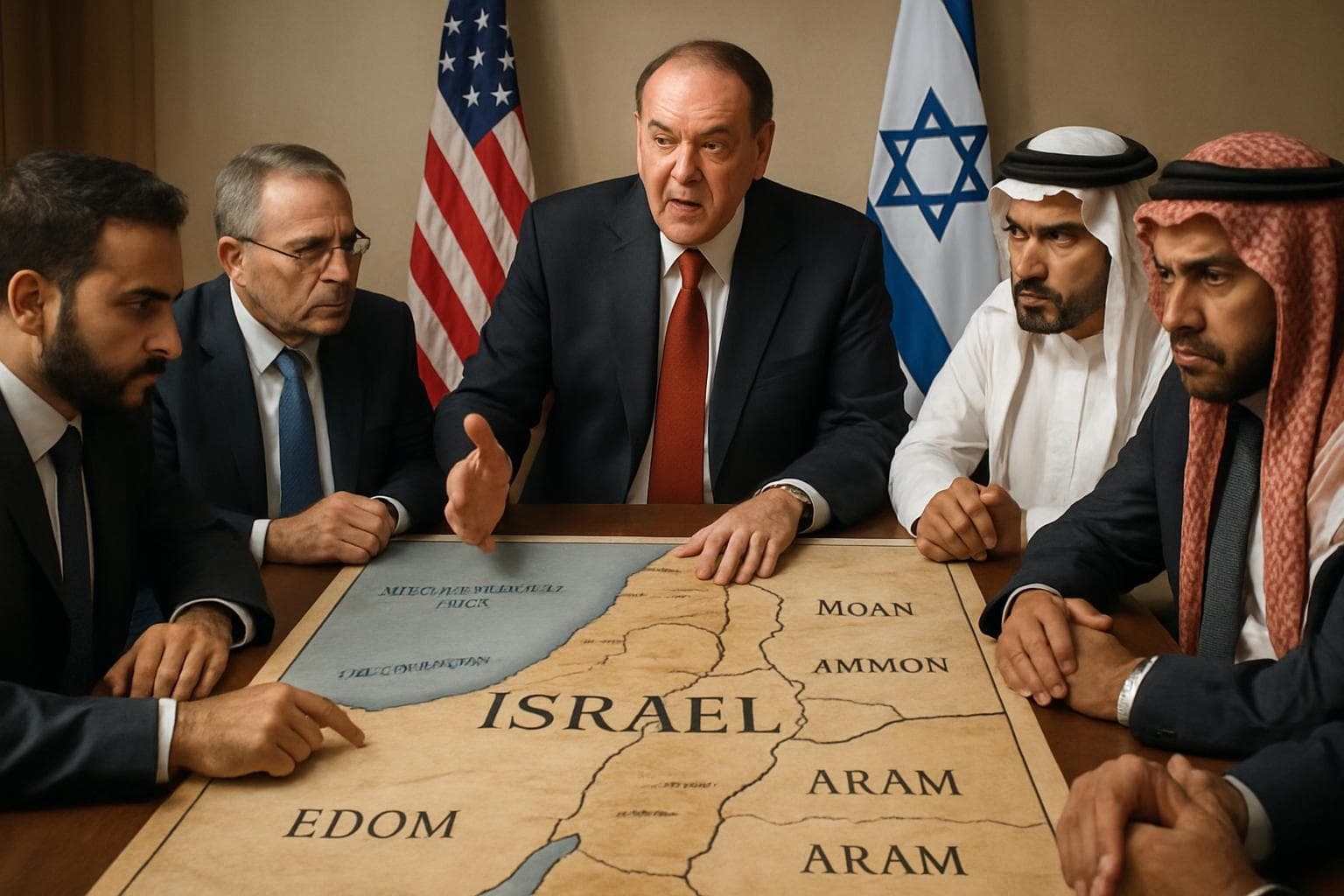
Remarks made by US Ambassador to Israel, Mike Huckabee, suggesting Israel could claim a vast expanse of the Middle East based on biblical texts have ignited a firestorm of criticism from Arab and Muslim nations. In a recent interview with conservative commentator Tucker Carlson, Huckabee, a staunch supporter of Israel, stated that it "would be fine" for Israel to take over the region described in the Bible as stretching from the Nile to the Euphrates.
Regional Backlash
The comments, released on Friday, prompted a swift and unified response from over a dozen Arab and Muslim countries, including Saudi Arabia, Egypt, and Jordan. These nations, alongside major regional organizations such as the Arab League and the Gulf Cooperation Council, issued a joint statement condemning Huckabee's remarks as "dangerous and inflammatory." They argued that such statements violate international law and threaten ongoing efforts to de-escalate the Gaza conflict and achieve a comprehensive peace settlement.
Clarifications and Continued Support
Huckabee, a former Baptist minister, later described his comments as "somewhat hyperbolic," emphasizing that Israel is not seeking to expand its territory beyond its current borders. He reiterated that Israel's primary goal is to maintain a safe haven for its people within the land it currently occupies. Despite the backlash, Huckabee's pro-Israel stance received praise from Israeli officials, including Amir Ohana, the speaker of the Israeli parliament.
International Implications
The controversy underscores the delicate balance of international diplomacy in the Middle East, where territorial claims and historical grievances continue to fuel tensions. The Palestinian Authority and other critics argue that Huckabee's comments contradict US policy under President Donald Trump, which opposes Israeli annexation of the West Bank. The incident also highlights the ongoing debate over the interpretation of biblical texts in modern geopolitical contexts.
WHAT THIS MIGHT MEAN
The fallout from Huckabee's remarks could further strain US relations with Arab and Muslim nations, potentially complicating diplomatic efforts in the region. If tensions escalate, it may hinder progress towards a peaceful resolution of the Gaza conflict and broader Middle East peace initiatives. Experts suggest that the US administration may need to clarify its stance on Israel's territorial claims to mitigate diplomatic repercussions. Additionally, this incident may prompt renewed discussions on the role of religious texts in shaping modern political boundaries and international law.
Related Articles

Middle East Conflict Drives UK Energy Prices to New Highs

UK Faces Dilemmas Amid Iran Conflict and China Spying Allegations

US and Israel Intensify Military Campaign as Iran's Capabilities Dwindle

Senate Blocks Resolution to Limit Trump's Military Actions in Iran

Tech Giants Pledge to Cover AI Data Center Energy Costs Amid Rising Electricity Concerns
Congress Subpoenas Attorney General Bondi in Epstein Investigation
US Ambassador's Biblical Land Remarks Spark Outcry from Arab Nations
In This Article
 James Okoro| Published
 HIGHLIGHTS
- US Ambassador to Israel, Mike Huckabee, suggested Israel could claim a large part of the Middle East based on biblical grounds, sparking widespread condemnation.
- More than a dozen Arab and Muslim nations, including Saudi Arabia and Egypt, denounced Huckabee's remarks as "dangerous and inflammatory."
- The comments were seen as contradicting international law and undermining efforts to resolve the Gaza conflict.
- Huckabee later clarified his statement as "hyperbolic," asserting Israel only seeks to protect its current territory.
- The controversy highlights ongoing tensions over Israel's territorial claims and the broader Middle East peace process.
Remarks made by US Ambassador to Israel, Mike Huckabee, suggesting Israel could claim a vast expanse of the Middle East based on biblical texts have ignited a firestorm of criticism from Arab and Muslim nations. In a recent interview with conservative commentator Tucker Carlson, Huckabee, a staunch supporter of Israel, stated that it "would be fine" for Israel to take over the region described in the Bible as stretching from the Nile to the Euphrates.
Regional Backlash
The comments, released on Friday, prompted a swift and unified response from over a dozen Arab and Muslim countries, including Saudi Arabia, Egypt, and Jordan. These nations, alongside major regional organizations such as the Arab League and the Gulf Cooperation Council, issued a joint statement condemning Huckabee's remarks as "dangerous and inflammatory." They argued that such statements violate international law and threaten ongoing efforts to de-escalate the Gaza conflict and achieve a comprehensive peace settlement.
Clarifications and Continued Support
Huckabee, a former Baptist minister, later described his comments as "somewhat hyperbolic," emphasizing that Israel is not seeking to expand its territory beyond its current borders. He reiterated that Israel's primary goal is to maintain a safe haven for its people within the land it currently occupies. Despite the backlash, Huckabee's pro-Israel stance received praise from Israeli officials, including Amir Ohana, the speaker of the Israeli parliament.
International Implications
The controversy underscores the delicate balance of international diplomacy in the Middle East, where territorial claims and historical grievances continue to fuel tensions. The Palestinian Authority and other critics argue that Huckabee's comments contradict US policy under President Donald Trump, which opposes Israeli annexation of the West Bank. The incident also highlights the ongoing debate over the interpretation of biblical texts in modern geopolitical contexts.
WHAT THIS MIGHT MEAN
The fallout from Huckabee's remarks could further strain US relations with Arab and Muslim nations, potentially complicating diplomatic efforts in the region. If tensions escalate, it may hinder progress towards a peaceful resolution of the Gaza conflict and broader Middle East peace initiatives. Experts suggest that the US administration may need to clarify its stance on Israel's territorial claims to mitigate diplomatic repercussions. Additionally, this incident may prompt renewed discussions on the role of religious texts in shaping modern political boundaries and international law.
Related Articles
Middle East Conflict Drives UK Energy Prices to New Highs
UK Faces Dilemmas Amid Iran Conflict and China Spying Allegations
US and Israel Intensify Military Campaign as Iran's Capabilities Dwindle
Senate Blocks Resolution to Limit Trump's Military Actions in Iran
Tech Giants Pledge to Cover AI Data Center Energy Costs Amid Rising Electricity Concerns
Congress Subpoenas Attorney General Bondi in Epstein Investigation