
Global Stock Markets Slide Amid Persistent AI Bubble Concerns
In This Article
HIGHLIGHTS
- US stock markets fell sharply on Thursday despite strong earnings from Nvidia, with the S&P 500 down 1.5% and Nasdaq dropping over 2%.
- Fears of an AI bubble persist, as Nvidia's robust demand for AI chips failed to alleviate concerns about overvaluation in the tech sector.
- Asian markets followed suit, with Japan's Nikkei 225 and South Korea's Kospi experiencing significant declines.
- Analysts remain cautious about the concentration of tech stocks, particularly the "magnificent seven," which heavily influence market movements.
- The Federal Reserve is expected to maintain interest rates, following a mixed jobs report showing both growth and rising unemployment.
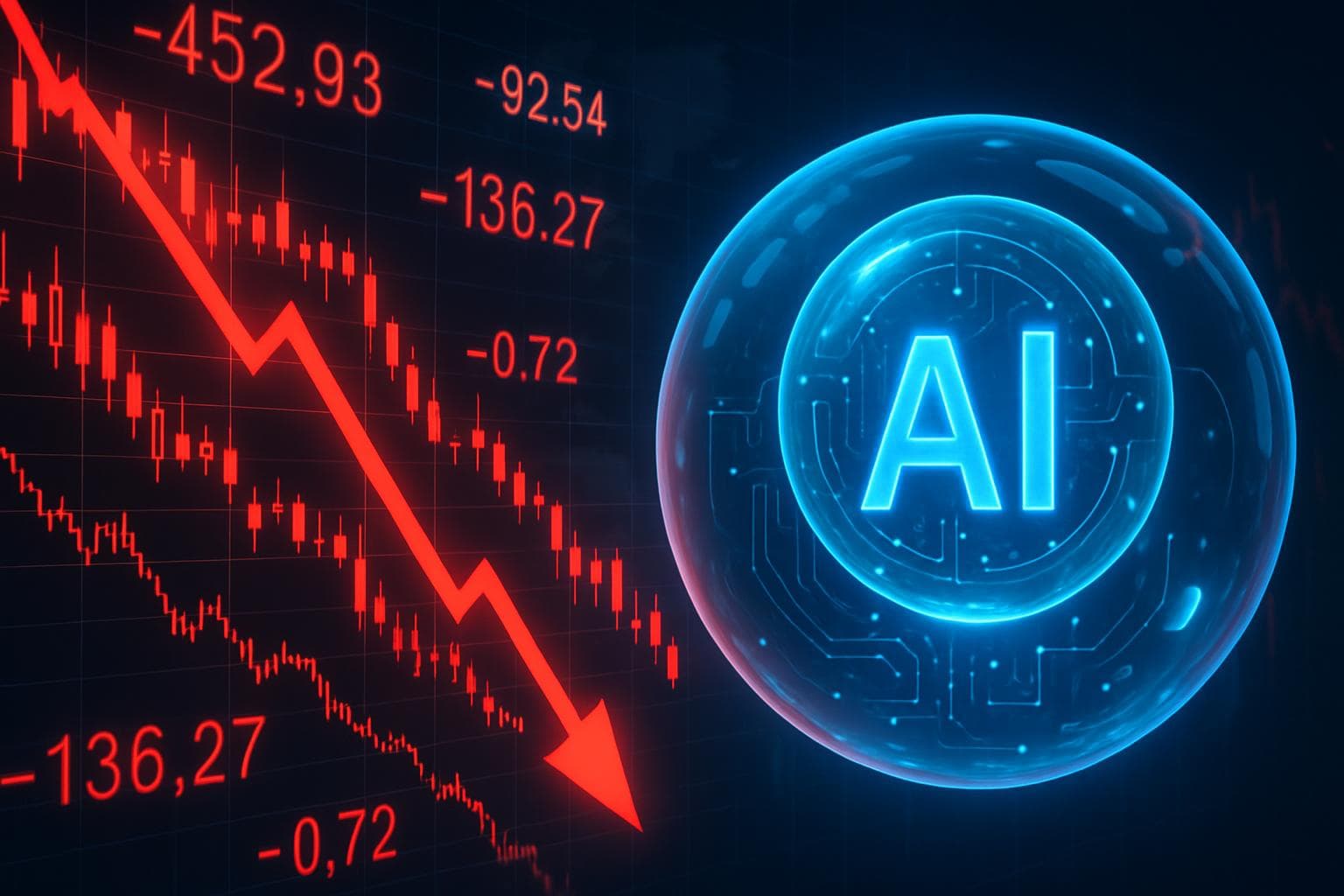
Global stock markets experienced a significant downturn on Thursday, as fears of an artificial intelligence (AI) bubble overshadowed positive earnings reports from major tech companies. Despite Nvidia's strong performance, which initially sparked a rally, the S&P 500 fell by 1.5%, the Dow Jones Industrial Average dropped 0.8%, and the tech-heavy Nasdaq declined by over 2%.
AI Bubble Fears Weigh on Markets
The recent volatility in stock markets has been largely attributed to concerns over an AI bubble. Nvidia, a leading player in AI chip manufacturing, reported robust demand for its products, momentarily boosting investor confidence. However, the rally was short-lived as apprehensions about overvaluation in the tech sector resurfaced. "The reaction is noteworthy, because what should have happened, didn't happen," commented James Stanley, a senior analyst at StoneX.
Asian Markets Follow US Decline
The impact of these concerns was felt globally, with major Asian markets also experiencing losses. Japan's Nikkei 225 fell by more than 2.5%, while South Korea's Kospi dropped around 4%. Shares in prominent tech firms like Softbank and Samsung saw significant declines, reflecting the broader unease about the sustainability of the AI-driven market surge.
Concentration of Tech Stocks Raises Concerns
Analysts have pointed to the concentration of tech stocks, particularly the so-called "magnificent seven," as a source of market vulnerability. These companies, including Alphabet, Apple, and Microsoft, account for a substantial portion of the S&P 500. "When momentum is going down, as we've seen over the last week plus, people get a bit nervous," explained Colleen McHugh, an investment consultant at Wealthify.
Federal Reserve's Interest Rate Outlook
Adding to the market's uncertainty, a mixed jobs report released on Thursday showed healthy labor market growth but a slight rise in unemployment. This has reinforced expectations that the Federal Reserve will likely keep interest rates on hold at its next meeting in December.
WHAT THIS MIGHT MEAN
Looking ahead, the persistence of AI bubble fears could continue to influence market dynamics, particularly if tech stocks remain overvalued. Analysts suggest that a correction in these valuations may be necessary to stabilize investor sentiment. Additionally, the Federal Reserve's upcoming decision on interest rates will be closely watched, as it could impact borrowing costs and investment strategies. If the central bank maintains its current stance, it may provide some relief to markets, although the underlying concerns about AI and tech sector valuations are likely to persist.
Related Articles
Japanese Stocks Surge as Takaichi Secures Historic Election Victory

Tech Giants Pledge to Cover AI Data Center Energy Costs Amid Rising Electricity Concerns

US Supreme Court Ruling Sparks Trade Uncertainty in Asia and Beyond
Trump's New Tariff Strategy Sparks Global Trade Uncertainty
US Economic Growth Slows Amid Government Shutdown and Inflation Concerns

Osaka's Water Infrastructure Boosted by Anonymous Gold Donation
Global Stock Markets Slide Amid Persistent AI Bubble Concerns
In This Article
 Daniel Rivera| Published
 HIGHLIGHTS
- US stock markets fell sharply on Thursday despite strong earnings from Nvidia, with the S&P 500 down 1.5% and Nasdaq dropping over 2%.
- Fears of an AI bubble persist, as Nvidia's robust demand for AI chips failed to alleviate concerns about overvaluation in the tech sector.
- Asian markets followed suit, with Japan's Nikkei 225 and South Korea's Kospi experiencing significant declines.
- Analysts remain cautious about the concentration of tech stocks, particularly the "magnificent seven," which heavily influence market movements.
- The Federal Reserve is expected to maintain interest rates, following a mixed jobs report showing both growth and rising unemployment.
Global stock markets experienced a significant downturn on Thursday, as fears of an artificial intelligence (AI) bubble overshadowed positive earnings reports from major tech companies. Despite Nvidia's strong performance, which initially sparked a rally, the S&P 500 fell by 1.5%, the Dow Jones Industrial Average dropped 0.8%, and the tech-heavy Nasdaq declined by over 2%.
AI Bubble Fears Weigh on Markets
The recent volatility in stock markets has been largely attributed to concerns over an AI bubble. Nvidia, a leading player in AI chip manufacturing, reported robust demand for its products, momentarily boosting investor confidence. However, the rally was short-lived as apprehensions about overvaluation in the tech sector resurfaced. "The reaction is noteworthy, because what should have happened, didn't happen," commented James Stanley, a senior analyst at StoneX.
Asian Markets Follow US Decline
The impact of these concerns was felt globally, with major Asian markets also experiencing losses. Japan's Nikkei 225 fell by more than 2.5%, while South Korea's Kospi dropped around 4%. Shares in prominent tech firms like Softbank and Samsung saw significant declines, reflecting the broader unease about the sustainability of the AI-driven market surge.
Concentration of Tech Stocks Raises Concerns
Analysts have pointed to the concentration of tech stocks, particularly the so-called "magnificent seven," as a source of market vulnerability. These companies, including Alphabet, Apple, and Microsoft, account for a substantial portion of the S&P 500. "When momentum is going down, as we've seen over the last week plus, people get a bit nervous," explained Colleen McHugh, an investment consultant at Wealthify.
Federal Reserve's Interest Rate Outlook
Adding to the market's uncertainty, a mixed jobs report released on Thursday showed healthy labor market growth but a slight rise in unemployment. This has reinforced expectations that the Federal Reserve will likely keep interest rates on hold at its next meeting in December.
WHAT THIS MIGHT MEAN
Looking ahead, the persistence of AI bubble fears could continue to influence market dynamics, particularly if tech stocks remain overvalued. Analysts suggest that a correction in these valuations may be necessary to stabilize investor sentiment. Additionally, the Federal Reserve's upcoming decision on interest rates will be closely watched, as it could impact borrowing costs and investment strategies. If the central bank maintains its current stance, it may provide some relief to markets, although the underlying concerns about AI and tech sector valuations are likely to persist.
Related Articles
Japanese Stocks Surge as Takaichi Secures Historic Election Victory
Tech Giants Pledge to Cover AI Data Center Energy Costs Amid Rising Electricity Concerns
US Supreme Court Ruling Sparks Trade Uncertainty in Asia and Beyond
Trump's New Tariff Strategy Sparks Global Trade Uncertainty
US Economic Growth Slows Amid Government Shutdown and Inflation Concerns
Osaka's Water Infrastructure Boosted by Anonymous Gold Donation