
Greenland's Future at Stake as US, Denmark, and Greenland Meet for High-Stakes Summit
In This Article
HIGHLIGHTS
- US Vice President JD Vance is hosting a critical summit with Danish and Greenlandic officials to discuss Greenland's future.
- Greenland's Prime Minister has reaffirmed allegiance to Denmark amidst US interest in acquiring the territory.
- Donald Trump's rhetoric on acquiring Greenland has caused anxiety among Greenland's residents.
- The potential US acquisition of Greenland could strain NATO and US-European relations.
- European nations, including the UK and Germany, are proposing increased NATO presence in the Arctic to counterbalance US moves.
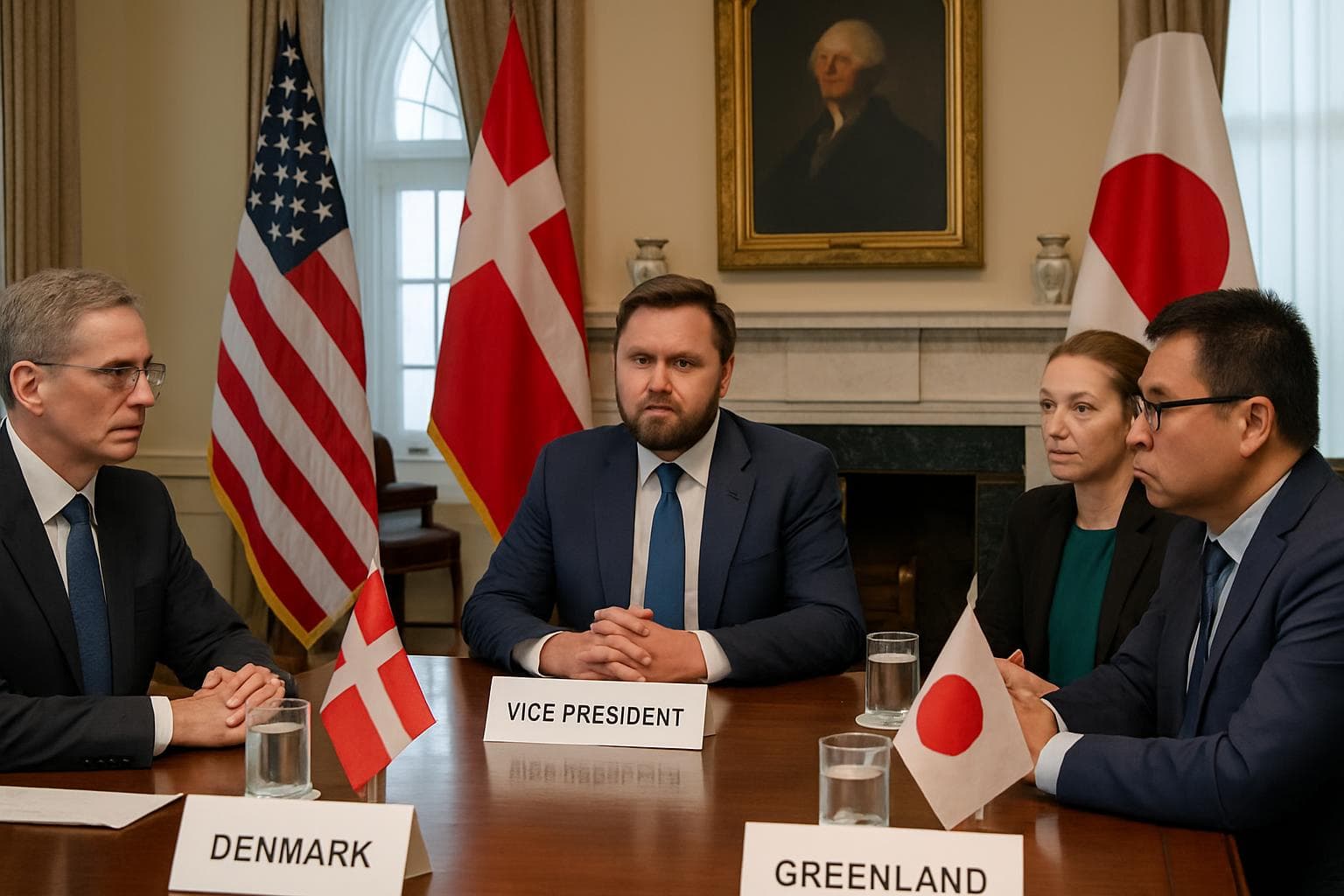
In a pivotal meeting at the White House, US Vice President JD Vance is set to host Danish and Greenlandic foreign ministers to deliberate on the future of Greenland, the world's largest island. This summit comes amid heightened tensions following US President Donald Trump's controversial remarks about acquiring Greenland, which have sparked widespread concern among its residents.
Greenland's Stance and Local Concerns
Greenland's Prime Minister has publicly declared the territory's preference to remain aligned with Denmark, rejecting the notion of US control. This sentiment was echoed by Greenland's business and mineral resources ministers, who described the US rhetoric as "offensive" and "bewildering," causing significant anxiety among the local population. Residents have expressed fears over the future, with some reporting sleep disturbances and heightened anxiety due to the uncertainty surrounding the talks.
Geopolitical Implications
The potential acquisition of Greenland by the US poses significant geopolitical ramifications. Denmark's Prime Minister, Mette Frederiksen, has warned that any forceful US action could jeopardize the transatlantic defense alliance, NATO, which has been a cornerstone of European security for decades. The situation is further complicated by Trump's assertion that Greenland is crucial for US national security, suggesting that if the US does not act, other powers like China or Russia might.
European Response and Arctic Security
In response to the US's aggressive stance, European powers, notably the UK and Germany, are advocating for an increased NATO presence in the Arctic. German Chancellor Friedrich Merz emphasized the need for enhanced protection of this Danish territory, aligning with US concerns but advocating for a more collaborative approach. This move underscores the broader strategic importance of the Arctic region in global geopolitics.
WHAT THIS MIGHT MEAN
The outcome of the Washington summit could significantly influence the geopolitical landscape of the Arctic. If the US pursues a more aggressive acquisition strategy, it risks alienating key European allies and destabilizing NATO. Conversely, a diplomatic resolution could strengthen transatlantic ties and set a precedent for cooperative Arctic governance. Experts suggest that Europe must strategically respond to any US actions, potentially imposing measures that resonate domestically within the US to counteract Trump's policies. As the world watches, the decisions made in these talks will likely shape the Arctic's future and international relations for years to come.
Related Articles
Spain's Sánchez Stands Firm Against Trump's Trade Threat Over Iran Stance

UK Faces Dilemmas Amid Iran Conflict and China Spying Allegations

Senate Blocks Resolution to Limit Trump's Military Actions in Iran
UK-Iran Tensions: Starmer Defends Cautious Approach Amid Trump Criticism
Iran Postpones Khamenei Funeral Amid Escalating US-Israeli Strikes
China Sets Lowest GDP Growth Target in Decades Amid Economic Challenges
Greenland's Future at Stake as US, Denmark, and Greenland Meet for High-Stakes Summit
In This Article
 Ethan Brooks| Published
 HIGHLIGHTS
- US Vice President JD Vance is hosting a critical summit with Danish and Greenlandic officials to discuss Greenland's future.
- Greenland's Prime Minister has reaffirmed allegiance to Denmark amidst US interest in acquiring the territory.
- Donald Trump's rhetoric on acquiring Greenland has caused anxiety among Greenland's residents.
- The potential US acquisition of Greenland could strain NATO and US-European relations.
- European nations, including the UK and Germany, are proposing increased NATO presence in the Arctic to counterbalance US moves.
In a pivotal meeting at the White House, US Vice President JD Vance is set to host Danish and Greenlandic foreign ministers to deliberate on the future of Greenland, the world's largest island. This summit comes amid heightened tensions following US President Donald Trump's controversial remarks about acquiring Greenland, which have sparked widespread concern among its residents.
Greenland's Stance and Local Concerns
Greenland's Prime Minister has publicly declared the territory's preference to remain aligned with Denmark, rejecting the notion of US control. This sentiment was echoed by Greenland's business and mineral resources ministers, who described the US rhetoric as "offensive" and "bewildering," causing significant anxiety among the local population. Residents have expressed fears over the future, with some reporting sleep disturbances and heightened anxiety due to the uncertainty surrounding the talks.
Geopolitical Implications
The potential acquisition of Greenland by the US poses significant geopolitical ramifications. Denmark's Prime Minister, Mette Frederiksen, has warned that any forceful US action could jeopardize the transatlantic defense alliance, NATO, which has been a cornerstone of European security for decades. The situation is further complicated by Trump's assertion that Greenland is crucial for US national security, suggesting that if the US does not act, other powers like China or Russia might.
European Response and Arctic Security
In response to the US's aggressive stance, European powers, notably the UK and Germany, are advocating for an increased NATO presence in the Arctic. German Chancellor Friedrich Merz emphasized the need for enhanced protection of this Danish territory, aligning with US concerns but advocating for a more collaborative approach. This move underscores the broader strategic importance of the Arctic region in global geopolitics.
WHAT THIS MIGHT MEAN
The outcome of the Washington summit could significantly influence the geopolitical landscape of the Arctic. If the US pursues a more aggressive acquisition strategy, it risks alienating key European allies and destabilizing NATO. Conversely, a diplomatic resolution could strengthen transatlantic ties and set a precedent for cooperative Arctic governance. Experts suggest that Europe must strategically respond to any US actions, potentially imposing measures that resonate domestically within the US to counteract Trump's policies. As the world watches, the decisions made in these talks will likely shape the Arctic's future and international relations for years to come.
Related Articles
Spain's Sánchez Stands Firm Against Trump's Trade Threat Over Iran Stance
UK Faces Dilemmas Amid Iran Conflict and China Spying Allegations
Senate Blocks Resolution to Limit Trump's Military Actions in Iran
UK-Iran Tensions: Starmer Defends Cautious Approach Amid Trump Criticism
Iran Postpones Khamenei Funeral Amid Escalating US-Israeli Strikes
China Sets Lowest GDP Growth Target in Decades Amid Economic Challenges