
Hong Kong Activists on Trial for Tiananmen Vigil Under National Security Law
In This Article
HIGHLIGHTS
- Three Hong Kong activists face trial under the national security law for organizing Tiananmen Square vigils, with potential 10-year sentences.
- Chow Hang-tung and Lee Cheuk-yan pleaded not guilty, while Albert Ho entered a guilty plea, possibly reducing his sentence.
- The trial highlights tensions over Hong Kong's autonomy and the impact of the Beijing-imposed national security law.
- The law, introduced in 2020, has a near-100% conviction rate and criminalizes acts like subversion and collusion with foreign forces.
- Critics argue the trial is an attempt to rewrite history and suppress remembrance of the 1989 Tiananmen crackdown.
The trial of three prominent Hong Kong activists, charged under the controversial national security law for organizing annual vigils commemorating the 1989 Tiananmen Square massacre, commenced on Thursday. Chow Hang-tung, Lee Cheuk-yan, and Albert Ho, all former members of the Hong Kong Alliance, face charges of inciting subversion, a serious offense under the Beijing-imposed law.
Background and Charges
The activists are accused of inciting others to subvert state power, a charge that carries a maximum penalty of 10 years in prison. While Chow and Lee have pleaded not guilty, Ho has entered a guilty plea, which may lead to a reduced sentence. The trial, expected to last 75 days, is one of the most significant cases since the national security law was enacted in 2020, a move that has been criticized for eroding Hong Kong's autonomy.
Historical Context and Legal Implications
The Hong Kong Alliance, founded in 1989, was instrumental in organizing vigils to honor the victims of the Tiananmen Square crackdown, a tragic event where estimates of the death toll range from hundreds to thousands. These vigils were banned in 2020, citing COVID-19 restrictions, and have not resumed since. The national security law, which criminalizes acts such as secession and collusion with foreign forces, has been criticized for stifling dissent and free expression in the city.
Public and International Reactions
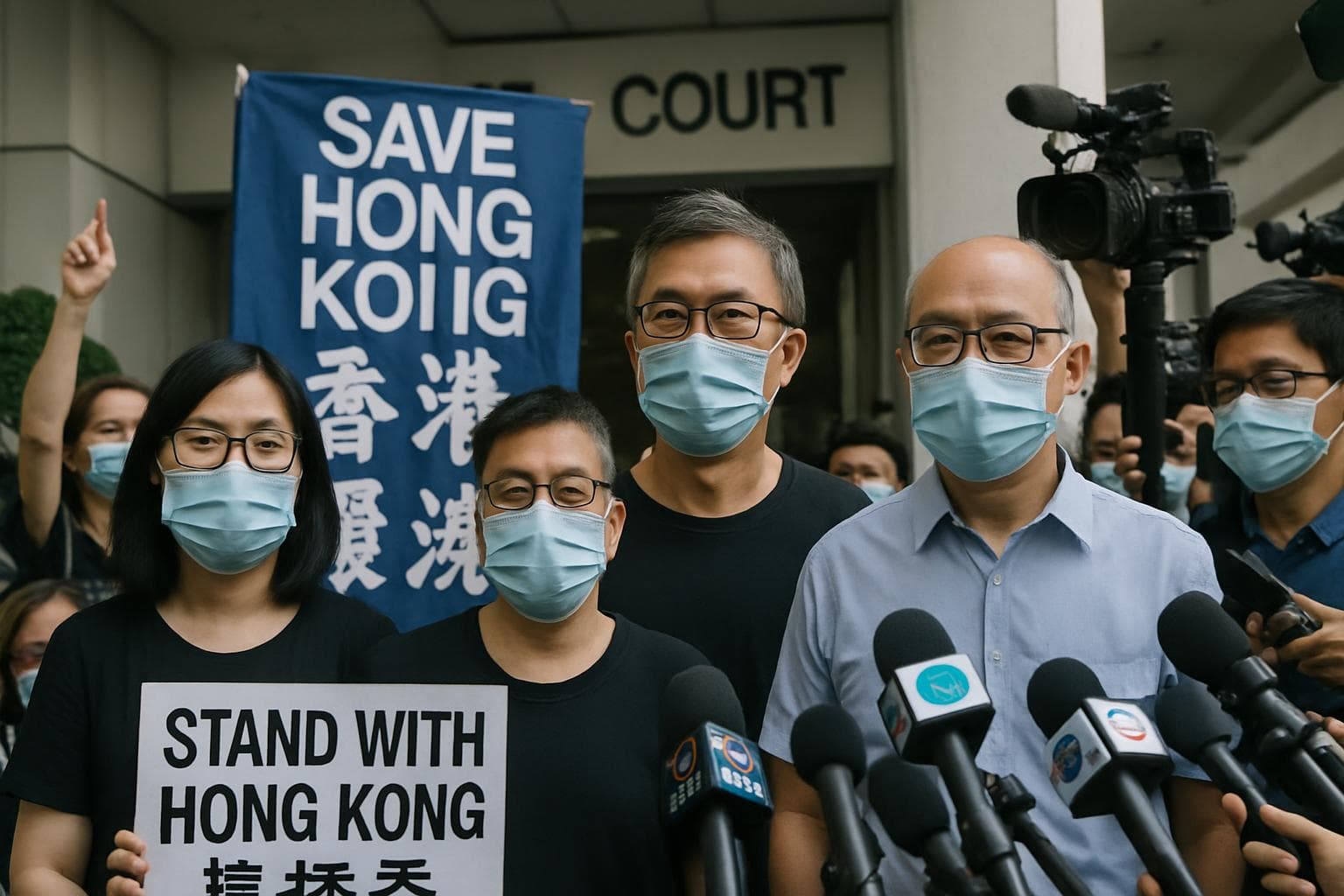
The trial has drawn significant attention, with supporters of the activists gathering outside the courtroom despite cold weather conditions. Amnesty International's Sarah Brooks remarked that the case is less about national security and more about punishing those who refuse to forget the Tiananmen victims. Critics argue that the trial exemplifies the diminishing civil liberties promised to Hong Kong when it was returned to Chinese rule in 1997.
WHAT THIS MIGHT MEAN
The outcome of this trial could have far-reaching implications for Hong Kong's legal landscape and its relationship with Beijing. A conviction could further entrench the national security law's reach, potentially deterring future pro-democracy activities. Conversely, a more lenient outcome might signal a willingness to balance legal enforcement with public sentiment. Experts suggest that the international community will closely monitor the trial, as it reflects broader concerns about human rights and autonomy in Hong Kong.
Related Articles

Barnsley Man Jailed for Rigging Homes with 'Home Alone' Booby Traps to Protect Drug Operation
China Sets Lowest GDP Growth Target in Decades Amid Economic Challenges

UK Faces Dilemmas Amid Iran Conflict and China Spying Allegations

Japan Seizes Chinese Fishing Vessel Amid Rising Diplomatic Tensions
Labour MP's Husband Arrested in UK-China Espionage Probe

US Supreme Court Ruling Sparks Trade Uncertainty in Asia and Beyond
Hong Kong Activists on Trial for Tiananmen Vigil Under National Security Law
In This Article
 Sofia Romano| Published
 HIGHLIGHTS
- Three Hong Kong activists face trial under the national security law for organizing Tiananmen Square vigils, with potential 10-year sentences.
- Chow Hang-tung and Lee Cheuk-yan pleaded not guilty, while Albert Ho entered a guilty plea, possibly reducing his sentence.
- The trial highlights tensions over Hong Kong's autonomy and the impact of the Beijing-imposed national security law.
- The law, introduced in 2020, has a near-100% conviction rate and criminalizes acts like subversion and collusion with foreign forces.
- Critics argue the trial is an attempt to rewrite history and suppress remembrance of the 1989 Tiananmen crackdown.
The trial of three prominent Hong Kong activists, charged under the controversial national security law for organizing annual vigils commemorating the 1989 Tiananmen Square massacre, commenced on Thursday. Chow Hang-tung, Lee Cheuk-yan, and Albert Ho, all former members of the Hong Kong Alliance, face charges of inciting subversion, a serious offense under the Beijing-imposed law.
Background and Charges
The activists are accused of inciting others to subvert state power, a charge that carries a maximum penalty of 10 years in prison. While Chow and Lee have pleaded not guilty, Ho has entered a guilty plea, which may lead to a reduced sentence. The trial, expected to last 75 days, is one of the most significant cases since the national security law was enacted in 2020, a move that has been criticized for eroding Hong Kong's autonomy.
Historical Context and Legal Implications
The Hong Kong Alliance, founded in 1989, was instrumental in organizing vigils to honor the victims of the Tiananmen Square crackdown, a tragic event where estimates of the death toll range from hundreds to thousands. These vigils were banned in 2020, citing COVID-19 restrictions, and have not resumed since. The national security law, which criminalizes acts such as secession and collusion with foreign forces, has been criticized for stifling dissent and free expression in the city.
Public and International Reactions
The trial has drawn significant attention, with supporters of the activists gathering outside the courtroom despite cold weather conditions. Amnesty International's Sarah Brooks remarked that the case is less about national security and more about punishing those who refuse to forget the Tiananmen victims. Critics argue that the trial exemplifies the diminishing civil liberties promised to Hong Kong when it was returned to Chinese rule in 1997.
WHAT THIS MIGHT MEAN
The outcome of this trial could have far-reaching implications for Hong Kong's legal landscape and its relationship with Beijing. A conviction could further entrench the national security law's reach, potentially deterring future pro-democracy activities. Conversely, a more lenient outcome might signal a willingness to balance legal enforcement with public sentiment. Experts suggest that the international community will closely monitor the trial, as it reflects broader concerns about human rights and autonomy in Hong Kong.
Related Articles
Barnsley Man Jailed for Rigging Homes with 'Home Alone' Booby Traps to Protect Drug Operation
China Sets Lowest GDP Growth Target in Decades Amid Economic Challenges
UK Faces Dilemmas Amid Iran Conflict and China Spying Allegations
Japan Seizes Chinese Fishing Vessel Amid Rising Diplomatic Tensions
Labour MP's Husband Arrested in UK-China Espionage Probe
US Supreme Court Ruling Sparks Trade Uncertainty in Asia and Beyond