
IMF Warns of Trade Tensions and AI Risks to Global Economic Growth
In This Article
HIGHLIGHTS
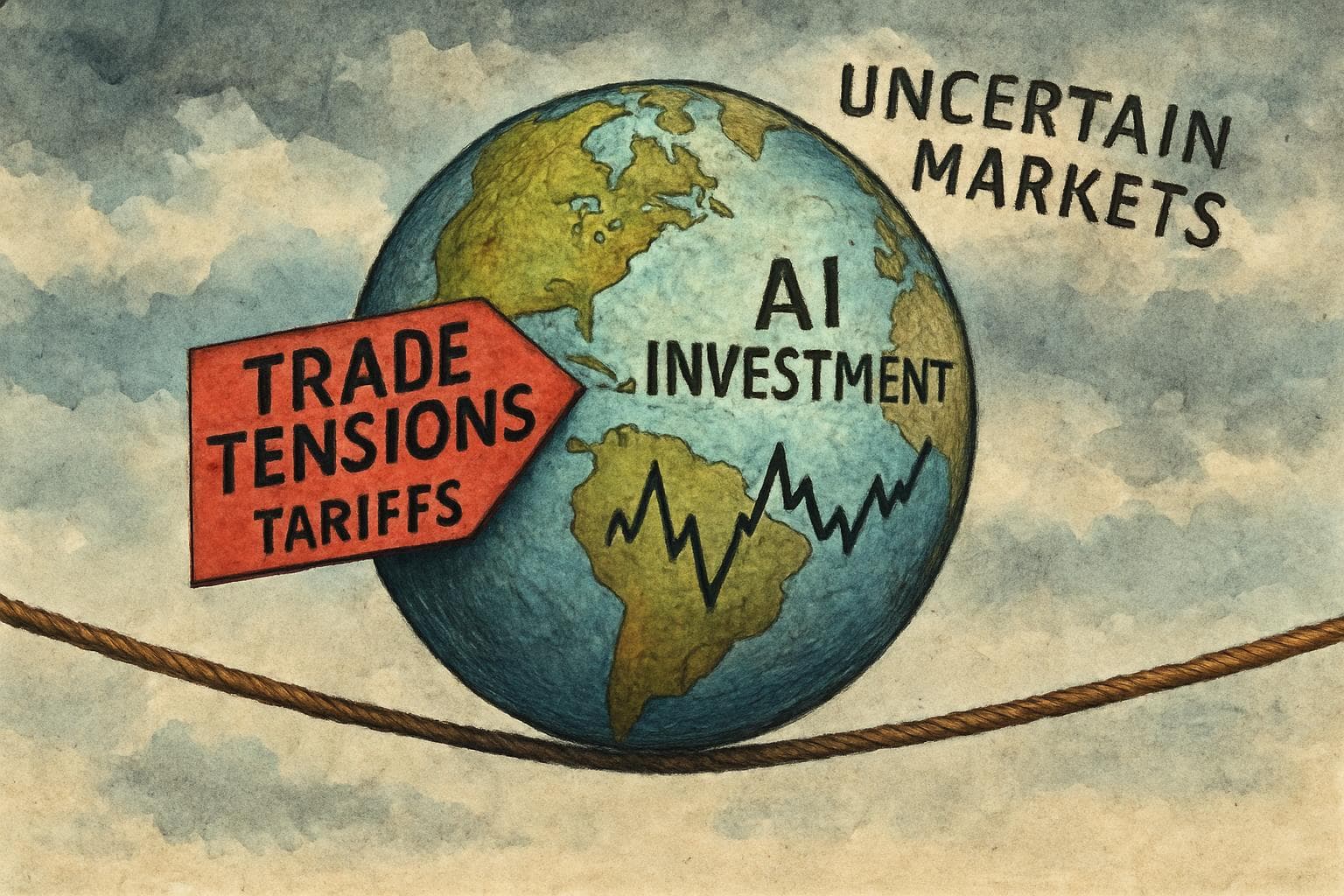
- The IMF warns that trade tensions and a potential reversal in the AI boom pose significant risks to global economic growth.
- Global growth is projected to be resilient at 3.3% in 2026, with a slight decrease to 3.2% in 2027.
- Trump's tariff threats over Greenland could trigger a "spiral of escalation," impacting financial markets and global trade.
- The IMF emphasizes the importance of central bank independence for economic stability.
- Surging AI investment has helped offset the negative impacts of trade tensions, but risks remain if AI growth expectations are overly optimistic.
The International Monetary Fund (IMF) has issued a cautionary note on the potential threats to global economic growth, highlighting trade tensions and a possible reversal in the artificial intelligence (AI) boom as key risks. In its latest World Economic Outlook, the IMF described the global economy as "steady" and projected growth to remain "resilient" at 3.3% this year, before slightly slowing to 3.2% in 2027.
Trade Tensions and Tariff Threats
The IMF's warning comes amid escalating trade tensions, particularly following former President Donald Trump's threats to impose tariffs on European countries opposing his Greenland ambitions. Pierre-Olivier Gourinchas, the IMF's chief economist, emphasized the potential for a "spiral of escalation" that could harm households and financial markets on both sides of the Atlantic. "We all know there are no winners in a trade war," Gourinchas stated, urging for an "amicable solution" to the geopolitical tensions.
AI Investment and Economic Resilience
Despite the challenges posed by trade disruptions, the global economy has benefited from significant investments in technology, particularly AI. These investments have provided a buffer against the adverse effects of trade tensions. However, the IMF cautioned that overly optimistic expectations about AI growth could lead to abrupt market corrections, impacting wealth and consumption patterns.
Central Bank Independence and Economic Stability
The IMF underscored the critical role of central bank independence in maintaining global economic stability. As geopolitical tensions rise, the fund's managing director, Kristalina Georgieva, is expected to engage in discussions at the World Economic Forum in Davos to mitigate tensions and promote international cooperation.
UK Economic Outlook
The IMF's report also highlighted the UK's economic performance, projecting a growth rate of 1.3% this year, making it the third fastest-growing economy in the G7. Chancellor Rachel Reeves noted the IMF's upgraded forecast for the UK, attributing it to robust economic policies.
WHAT THIS MIGHT MEAN
Looking ahead, the global economy faces a precarious balance between technological advancements and geopolitical uncertainties. If trade tensions escalate further, it could lead to a significant repricing in financial markets, affecting investment decisions worldwide. Experts suggest that maintaining open dialogue and cooperation among nations is crucial to avoiding a detrimental trade war. Additionally, the sustainability of AI-driven growth remains uncertain, and any abrupt market corrections could have far-reaching implications for global economic stability. As such, policymakers and business leaders must remain vigilant and adaptable to navigate these complex challenges.
Related Articles
Tech Giants Pledge to Cover AI Data Center Energy Costs Amid Rising Electricity Concerns
Middle East Conflict Drives UK Energy Prices to New Highs

UK Faces Dilemmas Amid Iran Conflict and China Spying Allegations
UK-Iran Tensions: Starmer Defends Cautious Approach Amid Trump Criticism
Diplomatic Tensions Rise as Trump Criticizes Starmer's Iran Policy
Canada and Australia Forge Strategic Partnership Amid Global Uncertainty
IMF Warns of Trade Tensions and AI Risks to Global Economic Growth
In This Article
 Daniel Rivera| Published
 HIGHLIGHTS
- The IMF warns that trade tensions and a potential reversal in the AI boom pose significant risks to global economic growth.
- Global growth is projected to be resilient at 3.3% in 2026, with a slight decrease to 3.2% in 2027.
- Trump's tariff threats over Greenland could trigger a "spiral of escalation," impacting financial markets and global trade.
- The IMF emphasizes the importance of central bank independence for economic stability.
- Surging AI investment has helped offset the negative impacts of trade tensions, but risks remain if AI growth expectations are overly optimistic.
The International Monetary Fund (IMF) has issued a cautionary note on the potential threats to global economic growth, highlighting trade tensions and a possible reversal in the artificial intelligence (AI) boom as key risks. In its latest World Economic Outlook, the IMF described the global economy as "steady" and projected growth to remain "resilient" at 3.3% this year, before slightly slowing to 3.2% in 2027.
Trade Tensions and Tariff Threats
The IMF's warning comes amid escalating trade tensions, particularly following former President Donald Trump's threats to impose tariffs on European countries opposing his Greenland ambitions. Pierre-Olivier Gourinchas, the IMF's chief economist, emphasized the potential for a "spiral of escalation" that could harm households and financial markets on both sides of the Atlantic. "We all know there are no winners in a trade war," Gourinchas stated, urging for an "amicable solution" to the geopolitical tensions.
AI Investment and Economic Resilience
Despite the challenges posed by trade disruptions, the global economy has benefited from significant investments in technology, particularly AI. These investments have provided a buffer against the adverse effects of trade tensions. However, the IMF cautioned that overly optimistic expectations about AI growth could lead to abrupt market corrections, impacting wealth and consumption patterns.
Central Bank Independence and Economic Stability
The IMF underscored the critical role of central bank independence in maintaining global economic stability. As geopolitical tensions rise, the fund's managing director, Kristalina Georgieva, is expected to engage in discussions at the World Economic Forum in Davos to mitigate tensions and promote international cooperation.
UK Economic Outlook
The IMF's report also highlighted the UK's economic performance, projecting a growth rate of 1.3% this year, making it the third fastest-growing economy in the G7. Chancellor Rachel Reeves noted the IMF's upgraded forecast for the UK, attributing it to robust economic policies.
WHAT THIS MIGHT MEAN
Looking ahead, the global economy faces a precarious balance between technological advancements and geopolitical uncertainties. If trade tensions escalate further, it could lead to a significant repricing in financial markets, affecting investment decisions worldwide. Experts suggest that maintaining open dialogue and cooperation among nations is crucial to avoiding a detrimental trade war. Additionally, the sustainability of AI-driven growth remains uncertain, and any abrupt market corrections could have far-reaching implications for global economic stability. As such, policymakers and business leaders must remain vigilant and adaptable to navigate these complex challenges.
Related Articles
Tech Giants Pledge to Cover AI Data Center Energy Costs Amid Rising Electricity Concerns
Middle East Conflict Drives UK Energy Prices to New Highs
UK Faces Dilemmas Amid Iran Conflict and China Spying Allegations
UK-Iran Tensions: Starmer Defends Cautious Approach Amid Trump Criticism
Diplomatic Tensions Rise as Trump Criticizes Starmer's Iran Policy
Canada and Australia Forge Strategic Partnership Amid Global Uncertainty