
Rising Tensions: India-Bangladesh Relations Strained Amid Escalating Violence
In This Article
HIGHLIGHTS
- The killing of Hindu garment worker Dipu Chandra Das in Bangladesh has intensified diplomatic tensions with India.
- Violent protests erupted following the assassination of Sharif Osman Hadi, with accusations against Hasina loyalists fleeing to India.
- Mob violence has surged in Bangladesh, with 184 deaths reported this year, raising concerns about political stability.
- Both India and Bangladesh have suspended visa services and summoned high commissioners amid escalating tensions.
- Attacks on media outlets in Bangladesh highlight the interim government's struggle to maintain order ahead of upcoming elections.
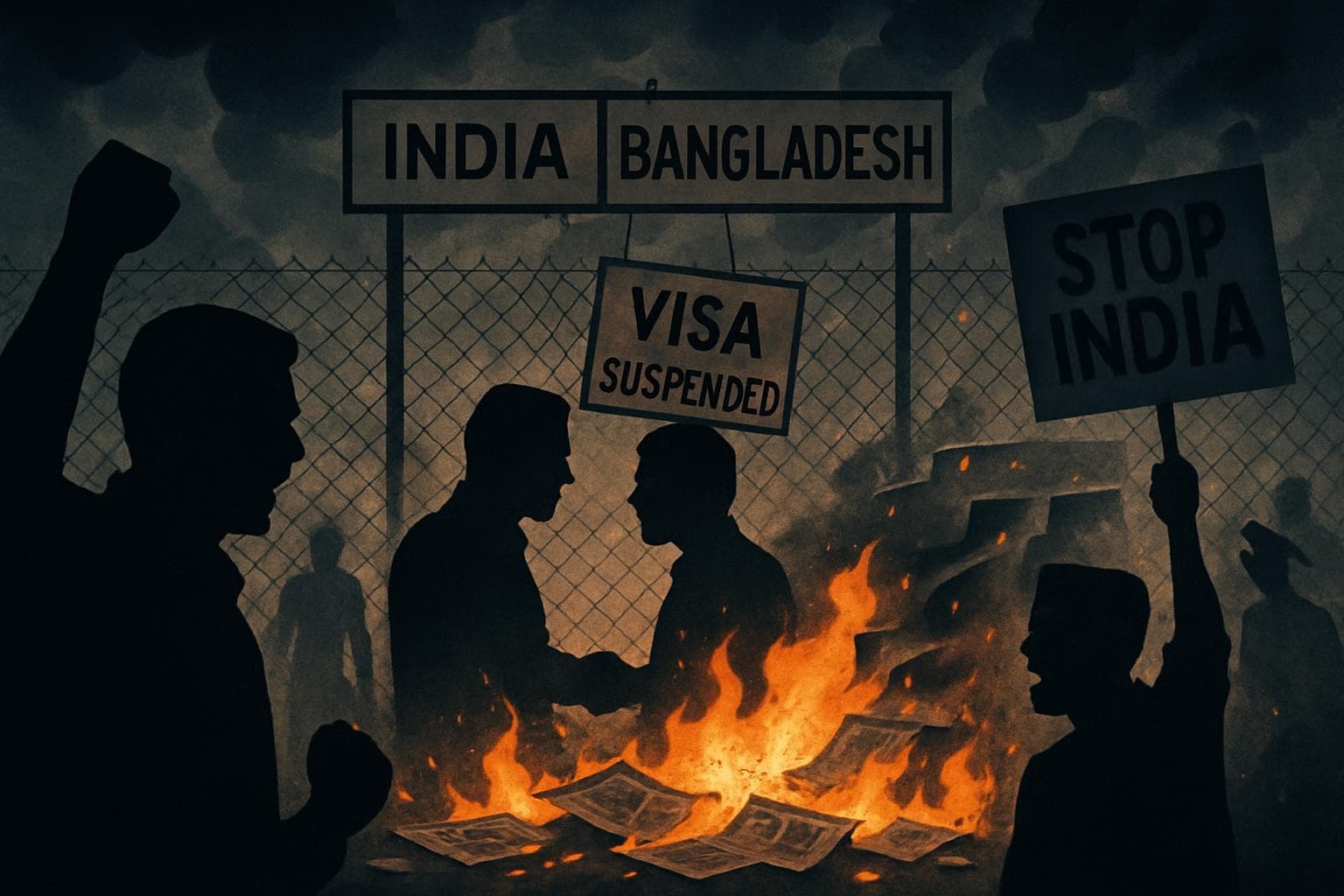
Diplomatic relations between India and Bangladesh have reached a critical juncture following the violent death of a Hindu garment worker in Bangladesh and the assassination of a prominent student leader. The incidents have sparked widespread protests and heightened anti-India sentiment in Bangladesh, further straining the historically close ties between the two South Asian nations.
Escalating Violence and Diplomatic Strains
The recent lynching of Dipu Chandra Das, a member of Bangladesh's Hindu minority, has ignited outrage in India. Das was accused of blasphemy and killed by a mob in Mymensingh, northern Bangladesh. This incident coincided with protests over the murder of Sharif Osman Hadi, a student leader whose death has been linked to loyalists of former Prime Minister Sheikh Hasina. Allegations that the suspects fled to India have fueled anti-India rhetoric in Bangladesh, a sentiment that has simmered under Hasina's 15-year rule.
Suspended Diplomatic Services
In response to the escalating tensions, both countries have suspended visa services in several cities, including Delhi. High commissioners have been summoned to address security concerns, as both nations accuse each other of failing to protect diplomatic missions. Riva Ganguly Das, a former Indian high commissioner to Dhaka, expressed hope that tensions would not escalate further, acknowledging the volatile situation in Bangladesh.
Media Under Siege
The violence has not spared the media, with attacks on prominent newspapers like the Daily Star and Prothom Alo. Zyma Islam, a reporter for the Daily Star, recounted the harrowing night when mobs set fire to their offices. The attacks have raised alarms about the interim government's ability to maintain order, especially with elections looming in February.
A Surge in Mob Violence
According to Ain o Salish Kendra, a human rights organization, mob violence has claimed 184 lives in Bangladesh this year, a significant increase from 51 deaths in 2023. The interim government faces mounting pressure to address the unrest and ensure a peaceful election process.
WHAT THIS MIGHT MEAN
The current diplomatic rift between India and Bangladesh could have far-reaching implications for regional stability. If tensions continue to escalate, both countries may face increased domestic unrest and international scrutiny. Experts suggest that diplomatic engagement and confidence-building measures are crucial to de-escalating the situation. The upcoming elections in Bangladesh will be a critical test for the interim government, as it navigates the challenges of maintaining order and addressing public grievances. The international community will be closely watching how both nations manage this delicate period, with hopes for a peaceful resolution that preserves the longstanding ties between India and Bangladesh.
Related Articles
Bangladesh Nationalist Party Wins Historic Election Amidst Political Transformation
Tarique Rahman Set to Lead Bangladesh Amid Promises of Reform
Sanae Takaichi Secures Landslide Victory in Japan's Snap Election
India Considers Social Media Ban for Under-16s Amid Global Trend

Bill Gates Withdraws from India AI Summit Amid Epstein Controversy

India's AI Impact Summit Faces Logistical Hurdles Amid Global AI Discussions
Rising Tensions: India-Bangladesh Relations Strained Amid Escalating Violence
In This Article
 Alex Carter| Published
 HIGHLIGHTS
- The killing of Hindu garment worker Dipu Chandra Das in Bangladesh has intensified diplomatic tensions with India.
- Violent protests erupted following the assassination of Sharif Osman Hadi, with accusations against Hasina loyalists fleeing to India.
- Mob violence has surged in Bangladesh, with 184 deaths reported this year, raising concerns about political stability.
- Both India and Bangladesh have suspended visa services and summoned high commissioners amid escalating tensions.
- Attacks on media outlets in Bangladesh highlight the interim government's struggle to maintain order ahead of upcoming elections.
Diplomatic relations between India and Bangladesh have reached a critical juncture following the violent death of a Hindu garment worker in Bangladesh and the assassination of a prominent student leader. The incidents have sparked widespread protests and heightened anti-India sentiment in Bangladesh, further straining the historically close ties between the two South Asian nations.
Escalating Violence and Diplomatic Strains
The recent lynching of Dipu Chandra Das, a member of Bangladesh's Hindu minority, has ignited outrage in India. Das was accused of blasphemy and killed by a mob in Mymensingh, northern Bangladesh. This incident coincided with protests over the murder of Sharif Osman Hadi, a student leader whose death has been linked to loyalists of former Prime Minister Sheikh Hasina. Allegations that the suspects fled to India have fueled anti-India rhetoric in Bangladesh, a sentiment that has simmered under Hasina's 15-year rule.
Suspended Diplomatic Services
In response to the escalating tensions, both countries have suspended visa services in several cities, including Delhi. High commissioners have been summoned to address security concerns, as both nations accuse each other of failing to protect diplomatic missions. Riva Ganguly Das, a former Indian high commissioner to Dhaka, expressed hope that tensions would not escalate further, acknowledging the volatile situation in Bangladesh.
Media Under Siege
The violence has not spared the media, with attacks on prominent newspapers like the Daily Star and Prothom Alo. Zyma Islam, a reporter for the Daily Star, recounted the harrowing night when mobs set fire to their offices. The attacks have raised alarms about the interim government's ability to maintain order, especially with elections looming in February.
A Surge in Mob Violence
According to Ain o Salish Kendra, a human rights organization, mob violence has claimed 184 lives in Bangladesh this year, a significant increase from 51 deaths in 2023. The interim government faces mounting pressure to address the unrest and ensure a peaceful election process.
WHAT THIS MIGHT MEAN
The current diplomatic rift between India and Bangladesh could have far-reaching implications for regional stability. If tensions continue to escalate, both countries may face increased domestic unrest and international scrutiny. Experts suggest that diplomatic engagement and confidence-building measures are crucial to de-escalating the situation. The upcoming elections in Bangladesh will be a critical test for the interim government, as it navigates the challenges of maintaining order and addressing public grievances. The international community will be closely watching how both nations manage this delicate period, with hopes for a peaceful resolution that preserves the longstanding ties between India and Bangladesh.
Related Articles
Bangladesh Nationalist Party Wins Historic Election Amidst Political Transformation
Tarique Rahman Set to Lead Bangladesh Amid Promises of Reform
Sanae Takaichi Secures Landslide Victory in Japan's Snap Election
India Considers Social Media Ban for Under-16s Amid Global Trend
Bill Gates Withdraws from India AI Summit Amid Epstein Controversy
India's AI Impact Summit Faces Logistical Hurdles Amid Global AI Discussions