
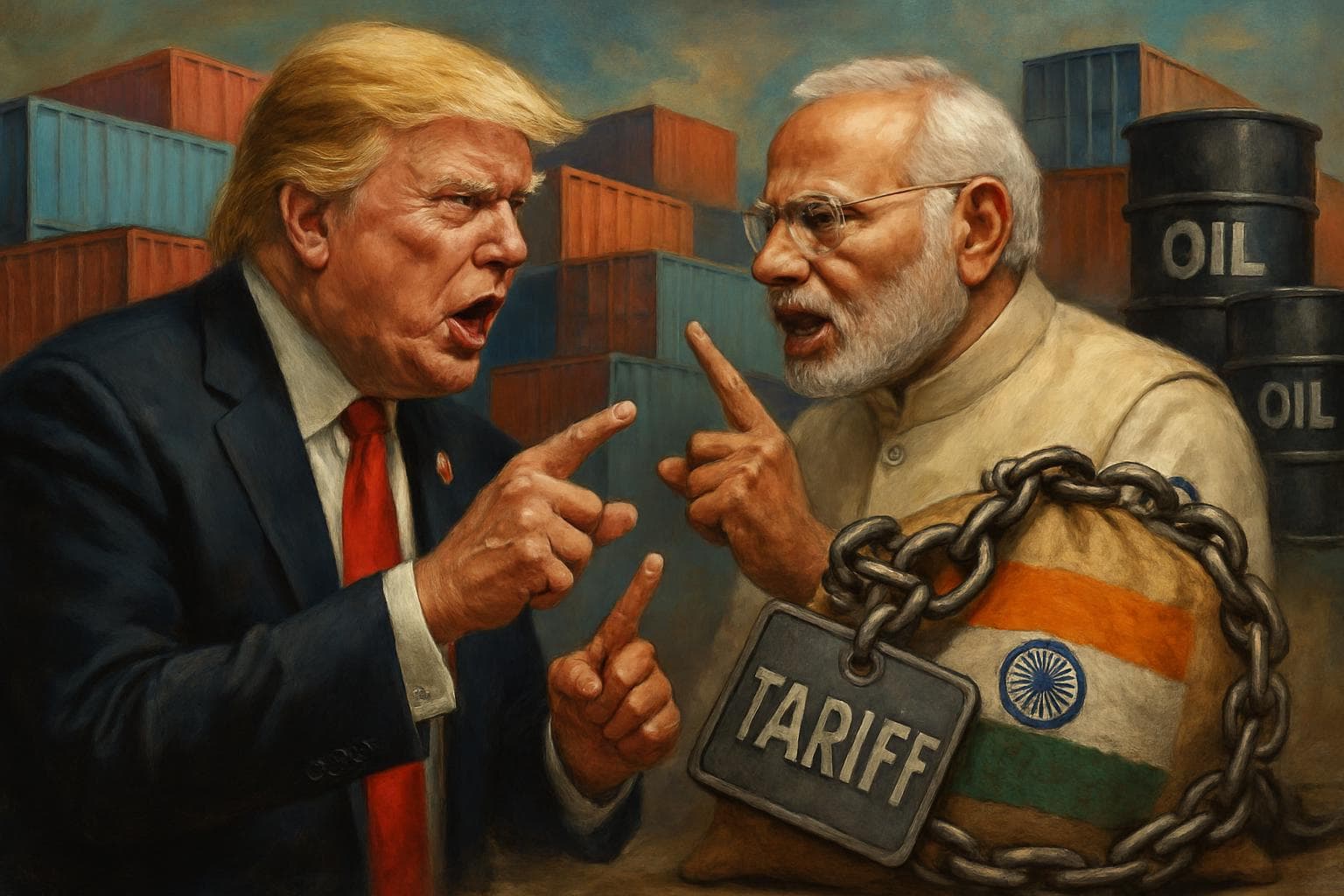
India Faces Economic Strain as Trump Imposes 50% Tariffs Over Russian Oil Imports
In This Article
HIGHLIGHTS
- President Trump has imposed a 50% tariff on Indian exports, effective 27 August, penalizing India for purchasing Russian oil.
- India, which exports $86.5 billion in goods to the US annually, risks significant economic impact, with potential GDP reduction by 0.2-0.4%.
- Prime Minister Narendra Modi has vowed to resist US pressure, emphasizing the protection of Indian farmers and strategic autonomy.
- The tariffs have sparked tensions, with Indian officials calling them "unfair" and "unjustified," while opposition leaders criticize the US's coercive tactics.
- The next 20 days are crucial for negotiations, as India decides whether to alter its trade ties with Russia or face economic repercussions.
In a bold move that has escalated tensions between Washington and New Delhi, President Donald Trump has announced a 50% tariff on Indian exports, effective from 27 August. This decision, aimed at penalizing India for its continued purchase of Russian oil, has been met with strong opposition from Indian officials who have labeled the tariffs as "unfair" and "unjustified."
Economic Impact and Trade Relations
The tariffs pose a significant threat to India's economy, which exports approximately $86.5 billion in goods to the United States each year. With the US being India's largest export market, accounting for 18% of its exports and 2.2% of GDP, the economic impact could be severe. Analysts predict a potential GDP reduction of 0.2-0.4%, risking growth slipping below 6% this year. While electronics and pharmaceuticals remain exempt, labor-intensive sectors like textiles and jewelry could suffer greatly.
Modi's Defiant Stance
Prime Minister Narendra Modi has taken a firm stance against the US's attempts to influence India's trade policies. In a recent speech, Modi emphasized the importance of protecting India's farmers and maintaining strategic autonomy, even if it means paying a "heavy price." Indian officials have also resisted US demands to import genetically modified crops and duty-free American farm products, citing the need to safeguard domestic agriculture.
Political Reactions and Future Negotiations
The tariffs have sparked a wave of criticism from Indian political leaders. Shashi Tharoor, an opposition MP, suggested retaliatory tariffs on US goods, while Congress party president Mallikarjun Kharge condemned the US's coercive tactics. The opposition has also criticized Modi's government for its handling of the situation, with accusations of yielding to American pressure.
As the 27 August deadline approaches, the next 20 days are critical for negotiations. The key question remains whether India will alter its trade ties with Russia or stand firm against the US, potentially facing significant economic repercussions.
WHAT THIS MIGHT MEAN
The imposition of these tariffs could lead to a significant shift in India-US trade relations. If India chooses to maintain its current stance, it risks a prolonged trade conflict with the US, which could have lasting economic consequences. Alternatively, India may seek to negotiate a compromise, potentially reducing its reliance on Russian oil in exchange for tariff relief. Experts suggest that the outcome of these negotiations could set a precedent for future trade policies and influence global economic dynamics. As both nations navigate this complex situation, the international community will be watching closely to see how these developments unfold.
Related Articles
China Sets Lowest GDP Growth Target in Decades Amid Economic Challenges
Canada Calls for De-escalation Amid US-Israel Strikes on Iran

Tech Giants Pledge to Cover AI Data Center Energy Costs Amid Rising Electricity Concerns
Cuba Faces Widespread Blackout Amid Deepening Fuel Crisis

UK Faces Dilemmas Amid Iran Conflict and China Spying Allegations
Iran Postpones Khamenei Funeral Amid Escalating US-Israeli Strikes
India Faces Economic Strain as Trump Imposes 50% Tariffs Over Russian Oil Imports
In This Article
 Daniel Rivera| Published
 HIGHLIGHTS
- President Trump has imposed a 50% tariff on Indian exports, effective 27 August, penalizing India for purchasing Russian oil.
- India, which exports $86.5 billion in goods to the US annually, risks significant economic impact, with potential GDP reduction by 0.2-0.4%.
- Prime Minister Narendra Modi has vowed to resist US pressure, emphasizing the protection of Indian farmers and strategic autonomy.
- The tariffs have sparked tensions, with Indian officials calling them "unfair" and "unjustified," while opposition leaders criticize the US's coercive tactics.
- The next 20 days are crucial for negotiations, as India decides whether to alter its trade ties with Russia or face economic repercussions.
In a bold move that has escalated tensions between Washington and New Delhi, President Donald Trump has announced a 50% tariff on Indian exports, effective from 27 August. This decision, aimed at penalizing India for its continued purchase of Russian oil, has been met with strong opposition from Indian officials who have labeled the tariffs as "unfair" and "unjustified."
Economic Impact and Trade Relations
The tariffs pose a significant threat to India's economy, which exports approximately $86.5 billion in goods to the United States each year. With the US being India's largest export market, accounting for 18% of its exports and 2.2% of GDP, the economic impact could be severe. Analysts predict a potential GDP reduction of 0.2-0.4%, risking growth slipping below 6% this year. While electronics and pharmaceuticals remain exempt, labor-intensive sectors like textiles and jewelry could suffer greatly.
Modi's Defiant Stance
Prime Minister Narendra Modi has taken a firm stance against the US's attempts to influence India's trade policies. In a recent speech, Modi emphasized the importance of protecting India's farmers and maintaining strategic autonomy, even if it means paying a "heavy price." Indian officials have also resisted US demands to import genetically modified crops and duty-free American farm products, citing the need to safeguard domestic agriculture.
Political Reactions and Future Negotiations
The tariffs have sparked a wave of criticism from Indian political leaders. Shashi Tharoor, an opposition MP, suggested retaliatory tariffs on US goods, while Congress party president Mallikarjun Kharge condemned the US's coercive tactics. The opposition has also criticized Modi's government for its handling of the situation, with accusations of yielding to American pressure.
As the 27 August deadline approaches, the next 20 days are critical for negotiations. The key question remains whether India will alter its trade ties with Russia or stand firm against the US, potentially facing significant economic repercussions.
WHAT THIS MIGHT MEAN
The imposition of these tariffs could lead to a significant shift in India-US trade relations. If India chooses to maintain its current stance, it risks a prolonged trade conflict with the US, which could have lasting economic consequences. Alternatively, India may seek to negotiate a compromise, potentially reducing its reliance on Russian oil in exchange for tariff relief. Experts suggest that the outcome of these negotiations could set a precedent for future trade policies and influence global economic dynamics. As both nations navigate this complex situation, the international community will be watching closely to see how these developments unfold.
Related Articles
China Sets Lowest GDP Growth Target in Decades Amid Economic Challenges
Canada Calls for De-escalation Amid US-Israel Strikes on Iran
Tech Giants Pledge to Cover AI Data Center Energy Costs Amid Rising Electricity Concerns
Cuba Faces Widespread Blackout Amid Deepening Fuel Crisis
UK Faces Dilemmas Amid Iran Conflict and China Spying Allegations
Iran Postpones Khamenei Funeral Amid Escalating US-Israeli Strikes