
India and UK Sign Landmark Trade Deal Amid Progress in US Negotiations
In This Article
HIGHLIGHTS
- India and the US are making "fantastic progress" in trade deal talks, according to Commerce Minister Piyush Goyal.
- The UK and India have signed a £4.8bn trade agreement, marking a significant economic partnership post-Brexit.
- US President Trump has set a deadline of 1 August for a trade deal with India, threatening tariffs if unmet.
- The UK-India deal was achieved through strong personal rapport between negotiators, despite initial skepticism.
- Key sticking points in the India-US talks include tariffs on agriculture and dairy products, with both sides seeking a comprehensive agreement.
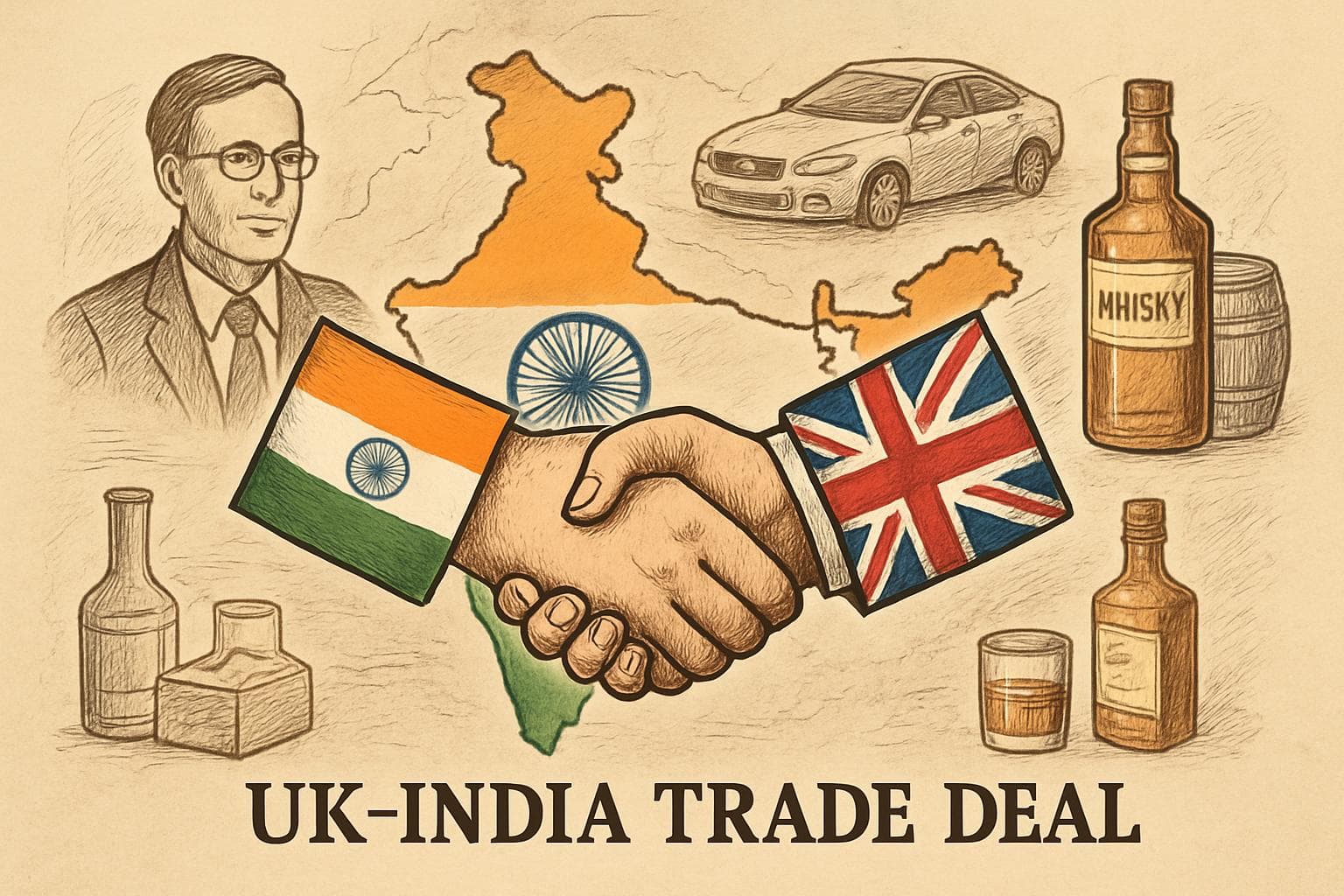
India has achieved a significant milestone in its international trade relations by signing a £4.8bn trade agreement with the United Kingdom, while also making notable progress in ongoing trade negotiations with the United States. The UK-India deal, concluded after three and a half years of negotiations, promises to enhance trade in sectors such as automobiles, whisky, clothing, and food products. This agreement is seen as a testament to the UK's ability to navigate the global trade landscape post-Brexit and signals India's openness to international investors.
The negotiations, led by UK Trade Secretary Jonathan Reynolds and Indian Commerce Minister Piyush Goyal, were characterized by a focus on building trust and personal rapport. "Negotiating with India is not the same as negotiating with Australia, the USA, or Canada," noted a senior UK official, emphasizing the importance of relationship-building in the process. The deal was finalized after creative diplomatic efforts, including a handwritten note from a co-creator of the British sitcom Yes Minister, which Goyal is a fan of.
Simultaneously, India is making "fantastic progress" in its trade talks with the US, according to Goyal. Despite missing several deadlines, both nations aim to finalize a bilateral trade agreement by the end of the year. President Donald Trump has set a 1 August deadline for India to sign a deal or face steep tariffs, initially announced at 26% on Indian goods. The US seeks greater access to India's agricultural sector, a point of contention due to India's protective stance on food security and small farmers' livelihoods.
The US was previously India's largest trading partner, with bilateral trade reaching $190bn. Both countries aim to double this figure to $500bn. While India has reduced tariffs on goods like Bourbon whiskey and motorcycles, the US continues to run a $45bn trade deficit with India, which Trump is eager to address.
WHAT THIS MIGHT MEAN
Looking ahead, the successful UK-India trade agreement could serve as a model for India's negotiations with the US, demonstrating the potential of relationship-based diplomacy. If India and the US can overcome their differences on agricultural tariffs, a comprehensive trade deal could significantly boost bilateral trade and economic growth for both nations.
However, failure to meet the 1 August deadline could result in increased tariffs, potentially straining US-India relations. Experts suggest that resolving these trade issues could pave the way for stronger geopolitical ties, enhancing cooperation in areas such as technology and defense. As both countries navigate these complex negotiations, the outcomes will likely have far-reaching implications for global trade dynamics.
Related Articles
China Sets Lowest GDP Growth Target in Decades Amid Economic Challenges
Tech Giants Pledge to Cover AI Data Center Energy Costs Amid Rising Electricity Concerns

Cuba Faces Widespread Blackout Amid Deepening Fuel Crisis

UK Faces Dilemmas Amid Iran Conflict and China Spying Allegations

Iran Postpones Khamenei Funeral Amid Escalating US-Israeli Strikes
Canada Calls for De-escalation Amid US-Israel Strikes on Iran
India and UK Sign Landmark Trade Deal Amid Progress in US Negotiations
In This Article
 Daniel Rivera| Published
 HIGHLIGHTS
- India and the US are making "fantastic progress" in trade deal talks, according to Commerce Minister Piyush Goyal.
- The UK and India have signed a £4.8bn trade agreement, marking a significant economic partnership post-Brexit.
- US President Trump has set a deadline of 1 August for a trade deal with India, threatening tariffs if unmet.
- The UK-India deal was achieved through strong personal rapport between negotiators, despite initial skepticism.
- Key sticking points in the India-US talks include tariffs on agriculture and dairy products, with both sides seeking a comprehensive agreement.
India has achieved a significant milestone in its international trade relations by signing a £4.8bn trade agreement with the United Kingdom, while also making notable progress in ongoing trade negotiations with the United States. The UK-India deal, concluded after three and a half years of negotiations, promises to enhance trade in sectors such as automobiles, whisky, clothing, and food products. This agreement is seen as a testament to the UK's ability to navigate the global trade landscape post-Brexit and signals India's openness to international investors.
The negotiations, led by UK Trade Secretary Jonathan Reynolds and Indian Commerce Minister Piyush Goyal, were characterized by a focus on building trust and personal rapport. "Negotiating with India is not the same as negotiating with Australia, the USA, or Canada," noted a senior UK official, emphasizing the importance of relationship-building in the process. The deal was finalized after creative diplomatic efforts, including a handwritten note from a co-creator of the British sitcom Yes Minister, which Goyal is a fan of.
Simultaneously, India is making "fantastic progress" in its trade talks with the US, according to Goyal. Despite missing several deadlines, both nations aim to finalize a bilateral trade agreement by the end of the year. President Donald Trump has set a 1 August deadline for India to sign a deal or face steep tariffs, initially announced at 26% on Indian goods. The US seeks greater access to India's agricultural sector, a point of contention due to India's protective stance on food security and small farmers' livelihoods.
The US was previously India's largest trading partner, with bilateral trade reaching $190bn. Both countries aim to double this figure to $500bn. While India has reduced tariffs on goods like Bourbon whiskey and motorcycles, the US continues to run a $45bn trade deficit with India, which Trump is eager to address.
WHAT THIS MIGHT MEAN
Looking ahead, the successful UK-India trade agreement could serve as a model for India's negotiations with the US, demonstrating the potential of relationship-based diplomacy. If India and the US can overcome their differences on agricultural tariffs, a comprehensive trade deal could significantly boost bilateral trade and economic growth for both nations.
However, failure to meet the 1 August deadline could result in increased tariffs, potentially straining US-India relations. Experts suggest that resolving these trade issues could pave the way for stronger geopolitical ties, enhancing cooperation in areas such as technology and defense. As both countries navigate these complex negotiations, the outcomes will likely have far-reaching implications for global trade dynamics.
Related Articles
China Sets Lowest GDP Growth Target in Decades Amid Economic Challenges
Tech Giants Pledge to Cover AI Data Center Energy Costs Amid Rising Electricity Concerns
Cuba Faces Widespread Blackout Amid Deepening Fuel Crisis
UK Faces Dilemmas Amid Iran Conflict and China Spying Allegations
Iran Postpones Khamenei Funeral Amid Escalating US-Israeli Strikes
Canada Calls for De-escalation Amid US-Israel Strikes on Iran