
Historic Victory for Indian Women's Cricket Team Marks New Era for Gender Equality
In This Article
HIGHLIGHTS
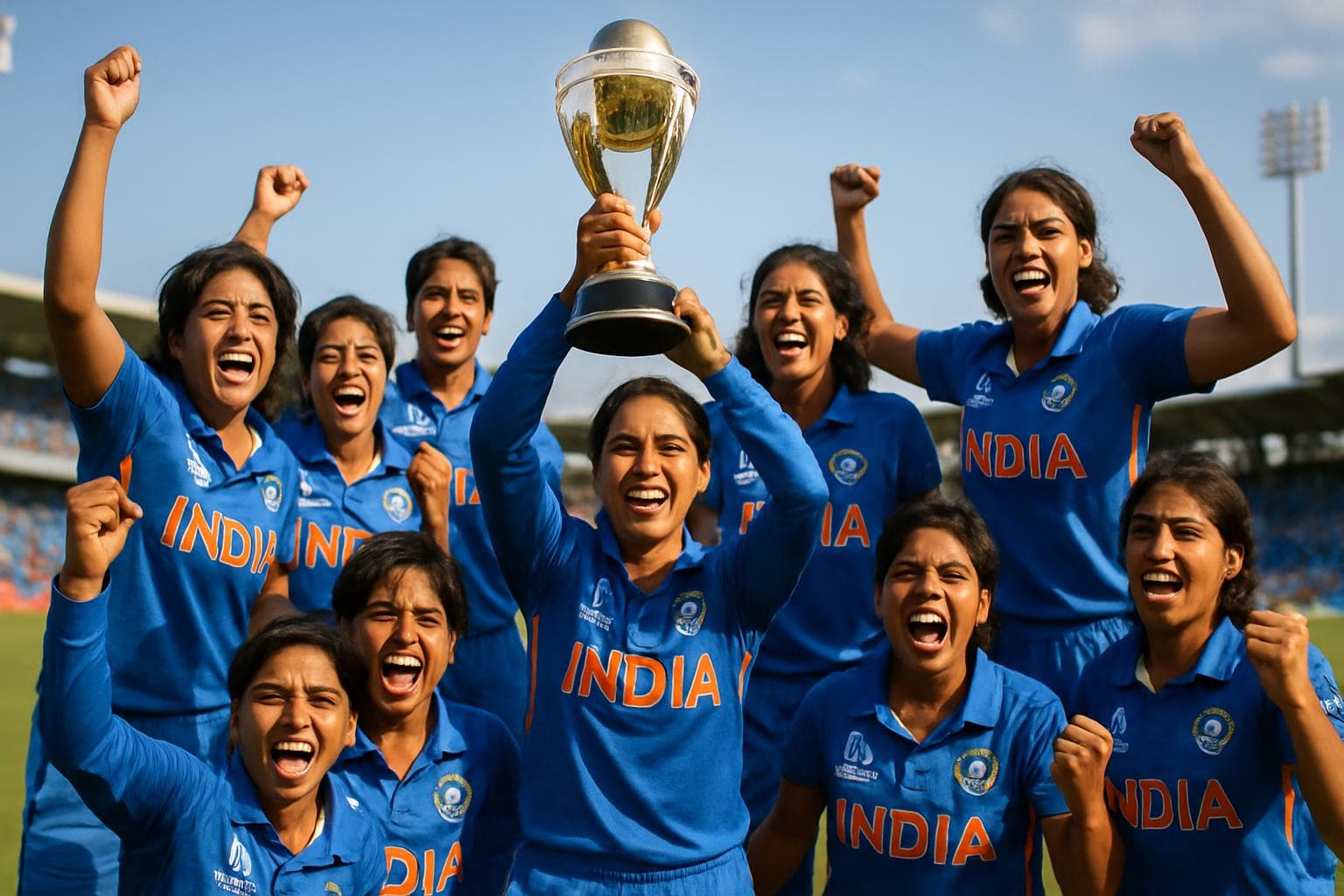
- The Indian women's cricket team won its first World Cup title, marking a historic achievement nearly 50 years after their first international match.
- Captain Harmanpreet Kaur and her teammates overcame significant challenges, including a three-match losing streak, to defeat Australia and South Africa.
- Players like Shafali Verma and Amanjot Kaur have inspiring personal stories of overcoming societal and financial barriers to pursue cricket.
- The victory is seen as a pivotal moment for gender equality in sports, inspiring many young women across India.
- The win comes at a time when women's cricket in India is gaining recognition, with the establishment of the Women's Premier League in 2023.
Earlier this week, the Indian women's cricket team etched its name in history by clinching its first-ever World Cup title. This monumental victory comes nearly five decades after the team played its inaugural international match, symbolizing not just a sporting triumph but a significant stride towards gender equality in sports.
Overcoming Challenges on and off the Field
The journey to the World Cup was fraught with challenges. After a rocky start with a three-match losing streak in the round-robin stage, the team displayed remarkable resilience. They defeated the previously unbeaten Australian side in the semi-final and overcame a determined South African team in the final. The grit and determination shown on the field mirrored the personal struggles many players faced off the field.
Inspiring Stories of Perseverance
Captain Harmanpreet Kaur's story is one of perseverance and familial support. Growing up in Moga, Punjab, Kaur's father, a former club cricketer, supported her ambitions despite societal skepticism. Similarly, Amanjot Kaur's father crafted her first bat from leftover wood, encouraging her to pursue her passion despite financial constraints. These narratives highlight the sacrifices and determination that fueled their success.
Shafali Verma's journey is equally inspiring. As a child in Rohtak, Haryana, she disguised herself as a boy to play in local tournaments, eventually making her debut for the national team at just 15. Her story underscores the societal barriers women face in pursuing sports in India.
A Turning Point for Women's Cricket
The victory is more than just a sporting achievement; it is a beacon of hope for gender equality in India. Varnika Choudhary, a player from Uttar Pradesh, noted the excitement in her village, where the Women's World Cup final was watched with enthusiasm. This win is seen as a catalyst for change, inspiring young women across the country to pursue sports and challenge societal norms.
The establishment of the Women's Premier League in 2023 and the provision of full-time professional contracts for female cricketers in 2017 are steps towards recognizing and promoting women's cricket in India. The team's success is a testament to the growing acceptance and support for women in sports.
WHAT THIS MIGHT MEAN
The Indian women's cricket team's World Cup victory could have far-reaching implications for gender equality in sports. It may lead to increased investment in women's cricket, providing better facilities and opportunities for aspiring female athletes. This win could also inspire policy changes to support women's sports at the grassroots level, encouraging more young girls to participate.
Experts suggest that this victory could challenge traditional gender roles in India, promoting a broader acceptance of women in sports and other male-dominated fields. As more women take up cricket and other sports, it could lead to a cultural shift, fostering a more inclusive and equitable society.
Images from the Web
Related Articles
Canada and Australia Forge Strategic Partnership Amid Global Uncertainty
Canada Calls for De-escalation Amid US-Israel Strikes on Iran
Trump's New Tariff Strategy Sparks Global Trade Uncertainty
Trump Raises Import Tariffs to 15% After Supreme Court Setback

Anna Murdoch-Mann: Influential Figure in Media and Philanthropy Dies at 81

Prince Andrew's Arrest Raises Questions About Royal Succession and Monarchy's Future
Historic Victory for Indian Women's Cricket Team Marks New Era for Gender Equality
In This Article
 Marcus Blake| Published
 HIGHLIGHTS
- The Indian women's cricket team won its first World Cup title, marking a historic achievement nearly 50 years after their first international match.
- Captain Harmanpreet Kaur and her teammates overcame significant challenges, including a three-match losing streak, to defeat Australia and South Africa.
- Players like Shafali Verma and Amanjot Kaur have inspiring personal stories of overcoming societal and financial barriers to pursue cricket.
- The victory is seen as a pivotal moment for gender equality in sports, inspiring many young women across India.
- The win comes at a time when women's cricket in India is gaining recognition, with the establishment of the Women's Premier League in 2023.
Earlier this week, the Indian women's cricket team etched its name in history by clinching its first-ever World Cup title. This monumental victory comes nearly five decades after the team played its inaugural international match, symbolizing not just a sporting triumph but a significant stride towards gender equality in sports.
Overcoming Challenges on and off the Field
The journey to the World Cup was fraught with challenges. After a rocky start with a three-match losing streak in the round-robin stage, the team displayed remarkable resilience. They defeated the previously unbeaten Australian side in the semi-final and overcame a determined South African team in the final. The grit and determination shown on the field mirrored the personal struggles many players faced off the field.
Inspiring Stories of Perseverance
Captain Harmanpreet Kaur's story is one of perseverance and familial support. Growing up in Moga, Punjab, Kaur's father, a former club cricketer, supported her ambitions despite societal skepticism. Similarly, Amanjot Kaur's father crafted her first bat from leftover wood, encouraging her to pursue her passion despite financial constraints. These narratives highlight the sacrifices and determination that fueled their success.
Shafali Verma's journey is equally inspiring. As a child in Rohtak, Haryana, she disguised herself as a boy to play in local tournaments, eventually making her debut for the national team at just 15. Her story underscores the societal barriers women face in pursuing sports in India.
A Turning Point for Women's Cricket
The victory is more than just a sporting achievement; it is a beacon of hope for gender equality in India. Varnika Choudhary, a player from Uttar Pradesh, noted the excitement in her village, where the Women's World Cup final was watched with enthusiasm. This win is seen as a catalyst for change, inspiring young women across the country to pursue sports and challenge societal norms.
The establishment of the Women's Premier League in 2023 and the provision of full-time professional contracts for female cricketers in 2017 are steps towards recognizing and promoting women's cricket in India. The team's success is a testament to the growing acceptance and support for women in sports.
WHAT THIS MIGHT MEAN
The Indian women's cricket team's World Cup victory could have far-reaching implications for gender equality in sports. It may lead to increased investment in women's cricket, providing better facilities and opportunities for aspiring female athletes. This win could also inspire policy changes to support women's sports at the grassroots level, encouraging more young girls to participate.
Experts suggest that this victory could challenge traditional gender roles in India, promoting a broader acceptance of women in sports and other male-dominated fields. As more women take up cricket and other sports, it could lead to a cultural shift, fostering a more inclusive and equitable society.
Images from the Web
Related Articles
Canada and Australia Forge Strategic Partnership Amid Global Uncertainty
Canada Calls for De-escalation Amid US-Israel Strikes on Iran
Trump's New Tariff Strategy Sparks Global Trade Uncertainty
Trump Raises Import Tariffs to 15% After Supreme Court Setback
Anna Murdoch-Mann: Influential Figure in Media and Philanthropy Dies at 81
Prince Andrew's Arrest Raises Questions About Royal Succession and Monarchy's Future