
Indiana Republicans Defy Trump, Reject Controversial Voting Map
In This Article
HIGHLIGHTS
- Indiana Republicans rejected a proposed voting map, defying pressure from Donald Trump to favor the GOP in upcoming midterm elections.
- The redistricting plan was defeated by a 31-19 vote, with 21 Republicans joining 10 Democrats in opposition.
- The proposed map aimed to split Democratic strongholds, potentially flipping two Democratic-held congressional seats.
- Trump and Vice-President JD Vance lobbied heavily for the map, with Trump warning Republicans of potential political consequences.
- The decision marks a setback for Trump amidst broader national efforts to redraw district lines favoring Republicans.
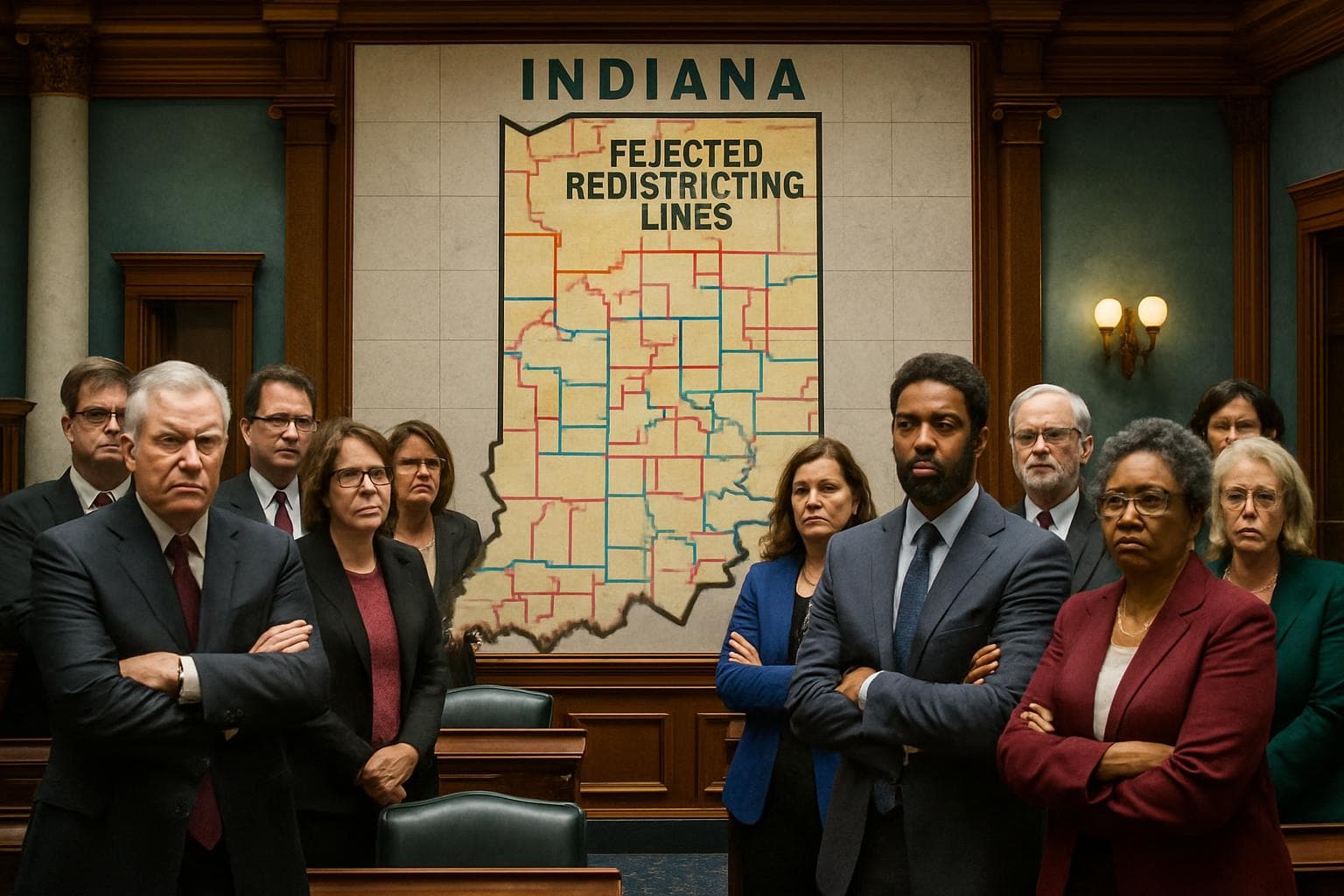
In a surprising political twist, Indiana Republicans have rebuffed former President Donald Trump's push to redraw the state's congressional map in favor of the GOP. The proposed redistricting plan, which aimed to bolster Republican representation by altering district boundaries, was defeated in the state Senate by a 31-19 vote. Notably, 21 Republicans joined all 10 Democrats in opposing the measure, signaling a significant intra-party division.
Redistricting Plan and Its Implications
The rejected map sought to carve up Indianapolis, a Democratic stronghold, into multiple districts, potentially flipping two Democratic-held seats. Currently, Republicans control seven of Indiana's nine congressional districts. The plan's failure underscores the contentious nature of gerrymandering efforts nationwide, as both parties vie for advantageous district configurations ahead of the midterm elections.
Political Pressure and Backlash
Trump's campaign to influence Indiana's redistricting was marked by intense lobbying, including hosting state lawmakers at the White House and dispatching Vice-President JD Vance to Indiana. On his social media platform, Truth Social, Trump criticized Indiana Senate leader Rodric Bray, accusing him of hindering Republican gains. Despite these efforts, the plan's defeat reflects a broader resistance to mid-cycle gerrymandering, as articulated by Republican state Senator Spencer Deery, who emphasized his conservative principles in opposing the map.
Reactions and Consequences
The decision has been met with mixed reactions. Indiana Governor Mike Braun expressed disappointment, vowing to challenge those who opposed the map. Conversely, activists like Keith "Wildstyle" Paschall celebrated the outcome, viewing it as a victory for fair representation. The rejection also highlights the risks faced by Indiana Republicans, who reported receiving death threats and swatting attempts related to the vote.
WHAT THIS MIGHT MEAN
The defeat of the redistricting plan in Indiana could have significant implications for the GOP's strategy in the upcoming midterm elections. With Republicans holding a narrow majority in the House, the inability to secure additional seats in Indiana may prompt a reevaluation of tactics in other states. Legal challenges could arise as both parties continue to navigate the complex landscape of gerrymandering.
Politically, the decision may embolden other Republican lawmakers to resist similar pressures, potentially leading to a more fragmented party stance on redistricting. Experts suggest that this development could influence future legislative efforts, as states grapple with balancing partisan interests and fair representation.
Related Articles
Congress Subpoenas Attorney General Bondi in Epstein Investigation
Senate Blocks Resolution to Limit Trump's Military Actions in Iran

Greenland Politely Declines Trump's Hospital Ship Offer Amid Healthcare Debate

Tech Giants Pledge to Cover AI Data Center Energy Costs Amid Rising Electricity Concerns

Cuba Faces Widespread Blackout Amid Deepening Fuel Crisis

UK Faces Dilemmas Amid Iran Conflict and China Spying Allegations
Indiana Republicans Defy Trump, Reject Controversial Voting Map
In This Article
 Alex Carter| Published
 HIGHLIGHTS
- Indiana Republicans rejected a proposed voting map, defying pressure from Donald Trump to favor the GOP in upcoming midterm elections.
- The redistricting plan was defeated by a 31-19 vote, with 21 Republicans joining 10 Democrats in opposition.
- The proposed map aimed to split Democratic strongholds, potentially flipping two Democratic-held congressional seats.
- Trump and Vice-President JD Vance lobbied heavily for the map, with Trump warning Republicans of potential political consequences.
- The decision marks a setback for Trump amidst broader national efforts to redraw district lines favoring Republicans.
In a surprising political twist, Indiana Republicans have rebuffed former President Donald Trump's push to redraw the state's congressional map in favor of the GOP. The proposed redistricting plan, which aimed to bolster Republican representation by altering district boundaries, was defeated in the state Senate by a 31-19 vote. Notably, 21 Republicans joined all 10 Democrats in opposing the measure, signaling a significant intra-party division.
Redistricting Plan and Its Implications
The rejected map sought to carve up Indianapolis, a Democratic stronghold, into multiple districts, potentially flipping two Democratic-held seats. Currently, Republicans control seven of Indiana's nine congressional districts. The plan's failure underscores the contentious nature of gerrymandering efforts nationwide, as both parties vie for advantageous district configurations ahead of the midterm elections.
Political Pressure and Backlash
Trump's campaign to influence Indiana's redistricting was marked by intense lobbying, including hosting state lawmakers at the White House and dispatching Vice-President JD Vance to Indiana. On his social media platform, Truth Social, Trump criticized Indiana Senate leader Rodric Bray, accusing him of hindering Republican gains. Despite these efforts, the plan's defeat reflects a broader resistance to mid-cycle gerrymandering, as articulated by Republican state Senator Spencer Deery, who emphasized his conservative principles in opposing the map.
Reactions and Consequences
The decision has been met with mixed reactions. Indiana Governor Mike Braun expressed disappointment, vowing to challenge those who opposed the map. Conversely, activists like Keith "Wildstyle" Paschall celebrated the outcome, viewing it as a victory for fair representation. The rejection also highlights the risks faced by Indiana Republicans, who reported receiving death threats and swatting attempts related to the vote.
WHAT THIS MIGHT MEAN
The defeat of the redistricting plan in Indiana could have significant implications for the GOP's strategy in the upcoming midterm elections. With Republicans holding a narrow majority in the House, the inability to secure additional seats in Indiana may prompt a reevaluation of tactics in other states. Legal challenges could arise as both parties continue to navigate the complex landscape of gerrymandering.
Politically, the decision may embolden other Republican lawmakers to resist similar pressures, potentially leading to a more fragmented party stance on redistricting. Experts suggest that this development could influence future legislative efforts, as states grapple with balancing partisan interests and fair representation.
Related Articles
Congress Subpoenas Attorney General Bondi in Epstein Investigation
Senate Blocks Resolution to Limit Trump's Military Actions in Iran
Greenland Politely Declines Trump's Hospital Ship Offer Amid Healthcare Debate
Tech Giants Pledge to Cover AI Data Center Energy Costs Amid Rising Electricity Concerns
Cuba Faces Widespread Blackout Amid Deepening Fuel Crisis
UK Faces Dilemmas Amid Iran Conflict and China Spying Allegations