
India's Supreme Court Revises Plan for Delhi's Stray Dogs Amid Protests
In This Article
HIGHLIGHTS
- India's Supreme Court revised its order to shelter all stray dogs in Delhi, allowing non-aggressive, vaccinated dogs to return to their capture sites.
- The court's decision followed protests from animal welfare groups advocating for humane solutions like vaccination and sterilization.
- Delhi's stray dog population is estimated at one million, contributing to India's high rabies-related death rate.
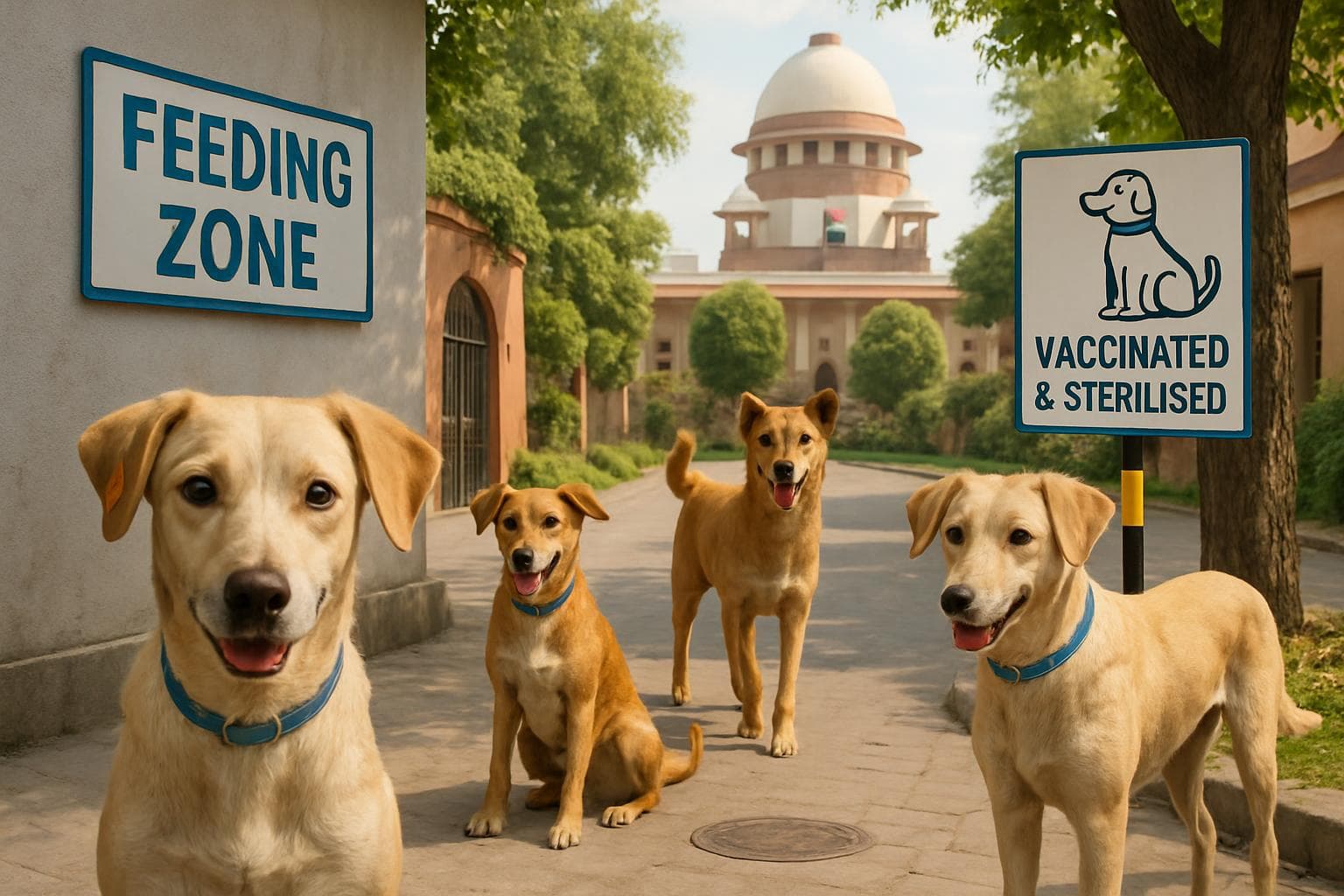
- The court banned feeding stray dogs in public spaces, directing municipalities to create designated feeding areas.
- A national policy on stray dogs is being considered, with input from ongoing cases in various states.
India's Supreme Court has adjusted its earlier directive to confine all stray dogs in Delhi and its suburbs to shelters, following significant backlash from animal welfare groups. The revised ruling, issued on Friday, permits the release of non-aggressive, vaccinated, and sterilized dogs back to their original locations, while those exhibiting aggression or rabies symptoms are to remain in shelters.
Background and Initial Ruling
The initial order, issued on August 11 by a two-judge bench, aimed to address the "menace of dog bites leading to rabies" in the capital region. With Delhi's stray dog population estimated at one million, the court had mandated the construction of shelters within eight weeks to house these animals. However, this directive clashed with existing regulations that advocate for the sterilization and release of stray dogs, sparking protests and legal challenges from animal rights advocates.
Revised Court Decision
The Supreme Court's latest decision, made by a three-judge bench, reflects a more balanced approach. It emphasizes sterilization and vaccination as primary strategies, aligning with the views of animal welfare organizations. Alokparna Sengupta, director of Humane World for Animals India, praised the ruling as "balanced, structured and compassionate," but stressed the need for clear criteria to identify aggressive dogs to prevent misuse of the order.
Public Safety and Rabies Concerns
India accounts for 36% of global rabies-related deaths, according to the World Health Organization, underscoring the urgency of addressing the stray dog issue. The court has also prohibited feeding stray dogs in public areas, instructing municipalities to establish designated feeding zones to minimize human-animal conflicts.
Future Policy Considerations
The Supreme Court has indicated plans to develop a national policy on stray dogs, considering similar cases pending in other states. This move aims to create a cohesive strategy that balances public safety with animal welfare concerns.
WHAT THIS MIGHT MEAN
The Supreme Court's decision to revise its initial order marks a significant shift towards a more humane approach to managing Delhi's stray dog population. As the court considers a national policy, it will need to address the logistical challenges of implementing sterilization and vaccination programs across the country. Experts suggest that collaboration between municipal authorities, animal welfare groups, and public health officials will be crucial in crafting effective solutions. The outcome of this case could set a precedent for how India handles similar issues in other urban areas, potentially influencing global discussions on stray animal management.
Related Articles

Iran Postpones Khamenei Funeral Amid Escalating US-Israeli Strikes

Trump's New Tariff Strategy Sparks Global Trade Uncertainty

High Court Upholds Guidance on Single-Sex Spaces Amidst Transgender Rights Debate

Canada Calls for De-escalation Amid US-Israel Strikes on Iran

US Supreme Court Ruling Sparks Trade Uncertainty in Asia and Beyond

Trump Raises Import Tariffs to 15% After Supreme Court Setback
India's Supreme Court Revises Plan for Delhi's Stray Dogs Amid Protests
In This Article
 Ethan Brooks| Published
 HIGHLIGHTS
- India's Supreme Court revised its order to shelter all stray dogs in Delhi, allowing non-aggressive, vaccinated dogs to return to their capture sites.
- The court's decision followed protests from animal welfare groups advocating for humane solutions like vaccination and sterilization.
- Delhi's stray dog population is estimated at one million, contributing to India's high rabies-related death rate.
- The court banned feeding stray dogs in public spaces, directing municipalities to create designated feeding areas.
- A national policy on stray dogs is being considered, with input from ongoing cases in various states.
India's Supreme Court has adjusted its earlier directive to confine all stray dogs in Delhi and its suburbs to shelters, following significant backlash from animal welfare groups. The revised ruling, issued on Friday, permits the release of non-aggressive, vaccinated, and sterilized dogs back to their original locations, while those exhibiting aggression or rabies symptoms are to remain in shelters.
Background and Initial Ruling
The initial order, issued on August 11 by a two-judge bench, aimed to address the "menace of dog bites leading to rabies" in the capital region. With Delhi's stray dog population estimated at one million, the court had mandated the construction of shelters within eight weeks to house these animals. However, this directive clashed with existing regulations that advocate for the sterilization and release of stray dogs, sparking protests and legal challenges from animal rights advocates.
Revised Court Decision
The Supreme Court's latest decision, made by a three-judge bench, reflects a more balanced approach. It emphasizes sterilization and vaccination as primary strategies, aligning with the views of animal welfare organizations. Alokparna Sengupta, director of Humane World for Animals India, praised the ruling as "balanced, structured and compassionate," but stressed the need for clear criteria to identify aggressive dogs to prevent misuse of the order.
Public Safety and Rabies Concerns
India accounts for 36% of global rabies-related deaths, according to the World Health Organization, underscoring the urgency of addressing the stray dog issue. The court has also prohibited feeding stray dogs in public areas, instructing municipalities to establish designated feeding zones to minimize human-animal conflicts.
Future Policy Considerations
The Supreme Court has indicated plans to develop a national policy on stray dogs, considering similar cases pending in other states. This move aims to create a cohesive strategy that balances public safety with animal welfare concerns.
WHAT THIS MIGHT MEAN
The Supreme Court's decision to revise its initial order marks a significant shift towards a more humane approach to managing Delhi's stray dog population. As the court considers a national policy, it will need to address the logistical challenges of implementing sterilization and vaccination programs across the country. Experts suggest that collaboration between municipal authorities, animal welfare groups, and public health officials will be crucial in crafting effective solutions. The outcome of this case could set a precedent for how India handles similar issues in other urban areas, potentially influencing global discussions on stray animal management.
Related Articles
Iran Postpones Khamenei Funeral Amid Escalating US-Israeli Strikes
Trump's New Tariff Strategy Sparks Global Trade Uncertainty
High Court Upholds Guidance on Single-Sex Spaces Amidst Transgender Rights Debate
Canada Calls for De-escalation Amid US-Israel Strikes on Iran
US Supreme Court Ruling Sparks Trade Uncertainty in Asia and Beyond
Trump Raises Import Tariffs to 15% After Supreme Court Setback