
Indonesia Protests Escalate Amid Rising Tensions and Calls for Reform
In This Article
HIGHLIGHTS
- Mass protests erupted in Indonesia on August 25, driven by anger over lawmakers' perks and a cost-of-living crisis.
- The death of 21-year-old delivery driver Affan Kurniawan, killed by police, intensified public outrage.
- At least seven people have died, and 20 remain missing amid violent clashes and widespread unrest.
- President Prabowo Subianto has promised to cut lawmakers' perks and investigate police actions.
- The UN has called for an investigation into the alleged use of excessive force by Indonesian security forces.
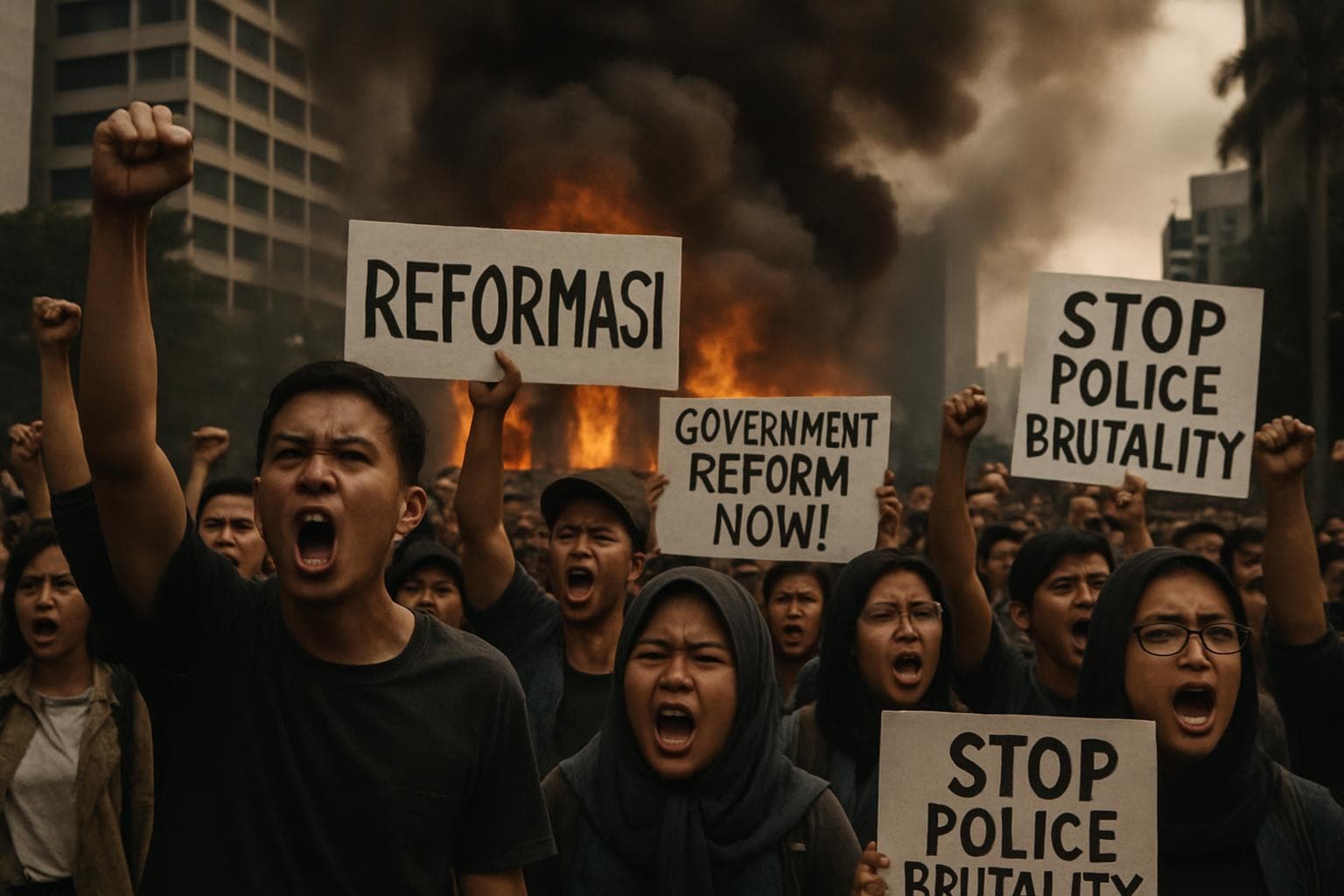
Protests have engulfed Indonesia following the death of a young delivery driver, sparking widespread unrest and calls for government reform. The demonstrations, which began on August 25 in Jakarta, have since spread across the archipelago, fueled by public anger over lawmakers' benefits and a deepening cost-of-living crisis.
Origins of the Unrest
The protests were initially triggered by revelations of substantial housing allowances for parliamentarians, which stood in stark contrast to the austerity measures affecting ordinary Indonesians. Reports indicated that lawmakers received upwards of 100 million rupiah monthly, more than 30 times the average national income. This disparity, coupled with economic struggles, ignited public fury.
The Death of Affan Kurniawan
Tensions escalated dramatically after the death of Affan Kurniawan, a 21-year-old motorcycle rideshare driver, who was run over by police during a protest in Jakarta. His death became a symbol of police brutality and further fueled the protests, which have since claimed at least seven lives and left 20 people missing, according to human rights group KontraS.
Government Response and Public Reaction
President Prabowo Subianto, facing one of the most significant challenges of his presidency, has attempted to quell the unrest by announcing cuts to lawmakers' perks. However, critics argue that these measures do not address the root causes of discontent, such as political corruption and social inequality. The UN has urged an investigation into the alleged excessive use of force by security forces during the protests.
Nationwide Impact and Future Implications
The protests have led to significant damage, with government buildings and police headquarters set ablaze in cities like Makassar and Yogyakarta. Authorities have detained over 1,240 individuals, and the economic toll is estimated at 55 billion rupiah. Despite increased security measures, including city patrols and checkpoints, the unrest shows no signs of abating.
WHAT THIS MIGHT MEAN
The ongoing protests in Indonesia highlight deep-seated issues of inequality and governance that require comprehensive reform. While President Prabowo's concessions may offer temporary relief, they fall short of addressing systemic problems. If the government fails to implement meaningful changes, the unrest could persist, potentially destabilizing the region further. Experts suggest that a focus on transparency, accountability, and equitable economic policies will be crucial in restoring public trust and preventing future conflicts. The international community, including the UN, will likely continue to monitor the situation closely, urging adherence to human rights standards and accountability for any abuses.
Related Articles
Cambodia's Crackdown on Scam Operations Intensifies Amid International Pressure
Jimmy Lai's 20-Year Sentence Sparks Global Outcry Over Hong Kong's National Security Law
US Supreme Court Ruling Sparks Trade Uncertainty in Asia and Beyond

US-Iran Tensions Escalate Amid Renewed Nuclear Talks and Protests

Russia-Ukraine Conflict: Four Years of Unyielding Struggle and Human Resilience

Palestinian-American Teen Killed by Israeli Settlers in West Bank Sparks Calls for Accountability
Indonesia Protests Escalate Amid Rising Tensions and Calls for Reform
In This Article
 Sofia Romano| Published
 HIGHLIGHTS
- Mass protests erupted in Indonesia on August 25, driven by anger over lawmakers' perks and a cost-of-living crisis.
- The death of 21-year-old delivery driver Affan Kurniawan, killed by police, intensified public outrage.
- At least seven people have died, and 20 remain missing amid violent clashes and widespread unrest.
- President Prabowo Subianto has promised to cut lawmakers' perks and investigate police actions.
- The UN has called for an investigation into the alleged use of excessive force by Indonesian security forces.
Protests have engulfed Indonesia following the death of a young delivery driver, sparking widespread unrest and calls for government reform. The demonstrations, which began on August 25 in Jakarta, have since spread across the archipelago, fueled by public anger over lawmakers' benefits and a deepening cost-of-living crisis.
Origins of the Unrest
The protests were initially triggered by revelations of substantial housing allowances for parliamentarians, which stood in stark contrast to the austerity measures affecting ordinary Indonesians. Reports indicated that lawmakers received upwards of 100 million rupiah monthly, more than 30 times the average national income. This disparity, coupled with economic struggles, ignited public fury.
The Death of Affan Kurniawan
Tensions escalated dramatically after the death of Affan Kurniawan, a 21-year-old motorcycle rideshare driver, who was run over by police during a protest in Jakarta. His death became a symbol of police brutality and further fueled the protests, which have since claimed at least seven lives and left 20 people missing, according to human rights group KontraS.
Government Response and Public Reaction
President Prabowo Subianto, facing one of the most significant challenges of his presidency, has attempted to quell the unrest by announcing cuts to lawmakers' perks. However, critics argue that these measures do not address the root causes of discontent, such as political corruption and social inequality. The UN has urged an investigation into the alleged excessive use of force by security forces during the protests.
Nationwide Impact and Future Implications
The protests have led to significant damage, with government buildings and police headquarters set ablaze in cities like Makassar and Yogyakarta. Authorities have detained over 1,240 individuals, and the economic toll is estimated at 55 billion rupiah. Despite increased security measures, including city patrols and checkpoints, the unrest shows no signs of abating.
WHAT THIS MIGHT MEAN
The ongoing protests in Indonesia highlight deep-seated issues of inequality and governance that require comprehensive reform. While President Prabowo's concessions may offer temporary relief, they fall short of addressing systemic problems. If the government fails to implement meaningful changes, the unrest could persist, potentially destabilizing the region further. Experts suggest that a focus on transparency, accountability, and equitable economic policies will be crucial in restoring public trust and preventing future conflicts. The international community, including the UN, will likely continue to monitor the situation closely, urging adherence to human rights standards and accountability for any abuses.
Related Articles
Cambodia's Crackdown on Scam Operations Intensifies Amid International Pressure
Jimmy Lai's 20-Year Sentence Sparks Global Outcry Over Hong Kong's National Security Law
US Supreme Court Ruling Sparks Trade Uncertainty in Asia and Beyond
US-Iran Tensions Escalate Amid Renewed Nuclear Talks and Protests
Russia-Ukraine Conflict: Four Years of Unyielding Struggle and Human Resilience
Palestinian-American Teen Killed by Israeli Settlers in West Bank Sparks Calls for Accountability