
New START Treaty Expiry Sparks Fears of Renewed Nuclear Arms Race
In This Article
HIGHLIGHTS
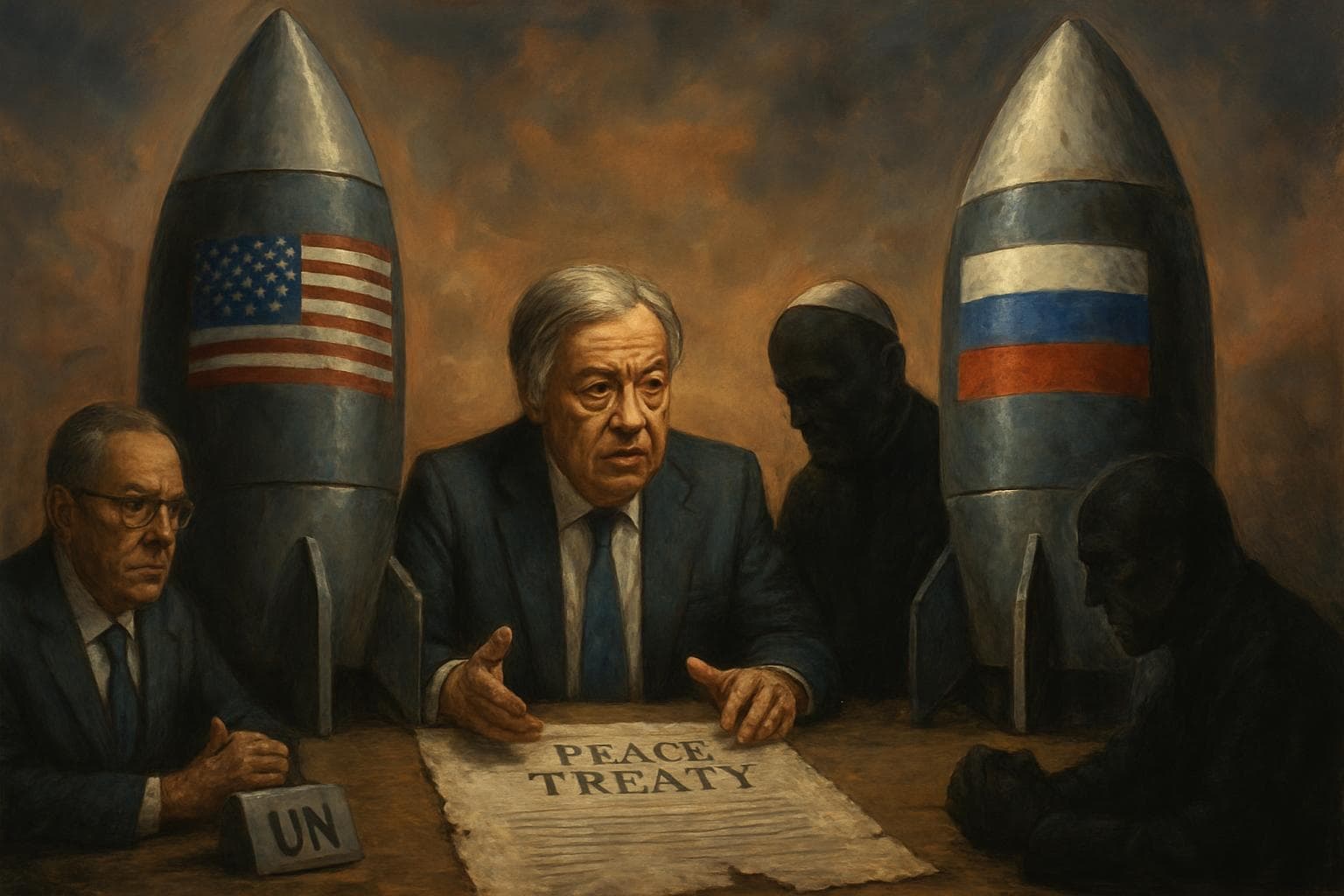
- The New START treaty between the US and Russia expired, raising fears of a renewed nuclear arms race.
- UN Secretary General António Guterres called the expiry a "grave moment" for global security and urged immediate negotiations for a new agreement.
- The treaty's end leaves the world without binding limits on the nuclear arsenals of the two largest nuclear powers.
- The expiration could impact the 1970 Nuclear Non-Proliferation Treaty, which is up for review this year.
- Former agreements like the Intermediate-Range Nuclear Forces Treaty have also lapsed, contributing to global instability.
The expiration of the New START treaty, the last remaining nuclear arms control agreement between the United States and Russia, has heightened concerns about a potential new arms race. Signed in 2010, the treaty was a cornerstone of efforts to prevent nuclear proliferation and maintain global security. Its expiry marks the end of a significant era of arms control cooperation between Washington and Moscow, a collaboration that had roots in the Cold War's conclusion.
A Grave Moment for Global Security
UN Secretary General António Guterres described the treaty's expiration as a "grave moment for international peace and security," emphasizing the urgent need for the US and Russia to negotiate a successor framework. "For the first time in more than half a century, we face a world without any binding limits on the strategic nuclear arsenals of the two states that possess the overwhelming majority of the global stockpile of nuclear weapons," Guterres stated. He urged both nations to return to the negotiating table without delay.
Historical Context and Recent Developments
The New START treaty, signed in Prague by then-presidents Barack Obama and Dmitry Medvedev, limited each country's nuclear arsenal to 1,550 deployed strategic warheads. This represented a nearly 30% reduction from previous limits. Despite tensions, both countries were believed to be adhering to the treaty until its recent expiration. The treaty's end follows the dissolution of other key arms control agreements, such as the Intermediate-Range Nuclear Forces Treaty and the Open Skies Treaty, further destabilizing global security frameworks.
Implications for Future Arms Control
The expiration of New START could have significant implications for the 1970 Nuclear Non-Proliferation Treaty (NPT), which is due for review this year. The NPT is a critical international agreement under which non-nuclear states pledged not to acquire nuclear weapons, while nuclear-armed states committed to disarmament efforts. The lapse of New START raises concerns about the future of such commitments.
Calls for Renewed Negotiations
Global leaders, including Pope Leo, have echoed Guterres' call for renewed negotiations to prevent an unchecked arms race. Former US President Barack Obama warned that the treaty's expiry could spark another arms race, making the world less safe. The need for a new arms control regime that addresses the rapidly evolving global context is more pressing than ever.
WHAT THIS MIGHT MEAN
The expiration of the New START treaty could lead to increased nuclear proliferation and heightened global tensions. Without a binding agreement, the US and Russia may expand their nuclear arsenals, potentially prompting other nations to follow suit. This scenario could undermine decades of progress in arms control and non-proliferation efforts. Experts suggest that renewed diplomatic engagement is crucial to prevent a destabilizing arms race. The upcoming review of the Nuclear Non-Proliferation Treaty presents an opportunity for the international community to reinforce its commitment to nuclear disarmament and global security.
Related Articles

US-Iran Tensions Escalate Amid Renewed Nuclear Talks and Protests
Iranian Students Lead Major Protests Amid Rising US-Iran Tensions
Israeli Airstrikes in Lebanon's Bekaa Valley Leave 10 Dead Amid Rising Tensions
Russia-Ukraine Conflict: Four Years of Unyielding Struggle and Human Resilience

Palestinian-American Teen Killed by Israeli Settlers in West Bank Sparks Calls for Accountability
China Sets Lowest GDP Growth Target in Decades Amid Economic Challenges
New START Treaty Expiry Sparks Fears of Renewed Nuclear Arms Race
In This Article
 James Okoro| Published
 HIGHLIGHTS
- The New START treaty between the US and Russia expired, raising fears of a renewed nuclear arms race.
- UN Secretary General António Guterres called the expiry a "grave moment" for global security and urged immediate negotiations for a new agreement.
- The treaty's end leaves the world without binding limits on the nuclear arsenals of the two largest nuclear powers.
- The expiration could impact the 1970 Nuclear Non-Proliferation Treaty, which is up for review this year.
- Former agreements like the Intermediate-Range Nuclear Forces Treaty have also lapsed, contributing to global instability.
The expiration of the New START treaty, the last remaining nuclear arms control agreement between the United States and Russia, has heightened concerns about a potential new arms race. Signed in 2010, the treaty was a cornerstone of efforts to prevent nuclear proliferation and maintain global security. Its expiry marks the end of a significant era of arms control cooperation between Washington and Moscow, a collaboration that had roots in the Cold War's conclusion.
A Grave Moment for Global Security
UN Secretary General António Guterres described the treaty's expiration as a "grave moment for international peace and security," emphasizing the urgent need for the US and Russia to negotiate a successor framework. "For the first time in more than half a century, we face a world without any binding limits on the strategic nuclear arsenals of the two states that possess the overwhelming majority of the global stockpile of nuclear weapons," Guterres stated. He urged both nations to return to the negotiating table without delay.
Historical Context and Recent Developments
The New START treaty, signed in Prague by then-presidents Barack Obama and Dmitry Medvedev, limited each country's nuclear arsenal to 1,550 deployed strategic warheads. This represented a nearly 30% reduction from previous limits. Despite tensions, both countries were believed to be adhering to the treaty until its recent expiration. The treaty's end follows the dissolution of other key arms control agreements, such as the Intermediate-Range Nuclear Forces Treaty and the Open Skies Treaty, further destabilizing global security frameworks.
Implications for Future Arms Control
The expiration of New START could have significant implications for the 1970 Nuclear Non-Proliferation Treaty (NPT), which is due for review this year. The NPT is a critical international agreement under which non-nuclear states pledged not to acquire nuclear weapons, while nuclear-armed states committed to disarmament efforts. The lapse of New START raises concerns about the future of such commitments.
Calls for Renewed Negotiations
Global leaders, including Pope Leo, have echoed Guterres' call for renewed negotiations to prevent an unchecked arms race. Former US President Barack Obama warned that the treaty's expiry could spark another arms race, making the world less safe. The need for a new arms control regime that addresses the rapidly evolving global context is more pressing than ever.
WHAT THIS MIGHT MEAN
The expiration of the New START treaty could lead to increased nuclear proliferation and heightened global tensions. Without a binding agreement, the US and Russia may expand their nuclear arsenals, potentially prompting other nations to follow suit. This scenario could undermine decades of progress in arms control and non-proliferation efforts. Experts suggest that renewed diplomatic engagement is crucial to prevent a destabilizing arms race. The upcoming review of the Nuclear Non-Proliferation Treaty presents an opportunity for the international community to reinforce its commitment to nuclear disarmament and global security.
Related Articles
US-Iran Tensions Escalate Amid Renewed Nuclear Talks and Protests
Iranian Students Lead Major Protests Amid Rising US-Iran Tensions
Israeli Airstrikes in Lebanon's Bekaa Valley Leave 10 Dead Amid Rising Tensions
Russia-Ukraine Conflict: Four Years of Unyielding Struggle and Human Resilience
Palestinian-American Teen Killed by Israeli Settlers in West Bank Sparks Calls for Accountability
China Sets Lowest GDP Growth Target in Decades Amid Economic Challenges