
Iran Protests Escalate Amid Currency Crisis and Deadly Clashes
In This Article
HIGHLIGHTS
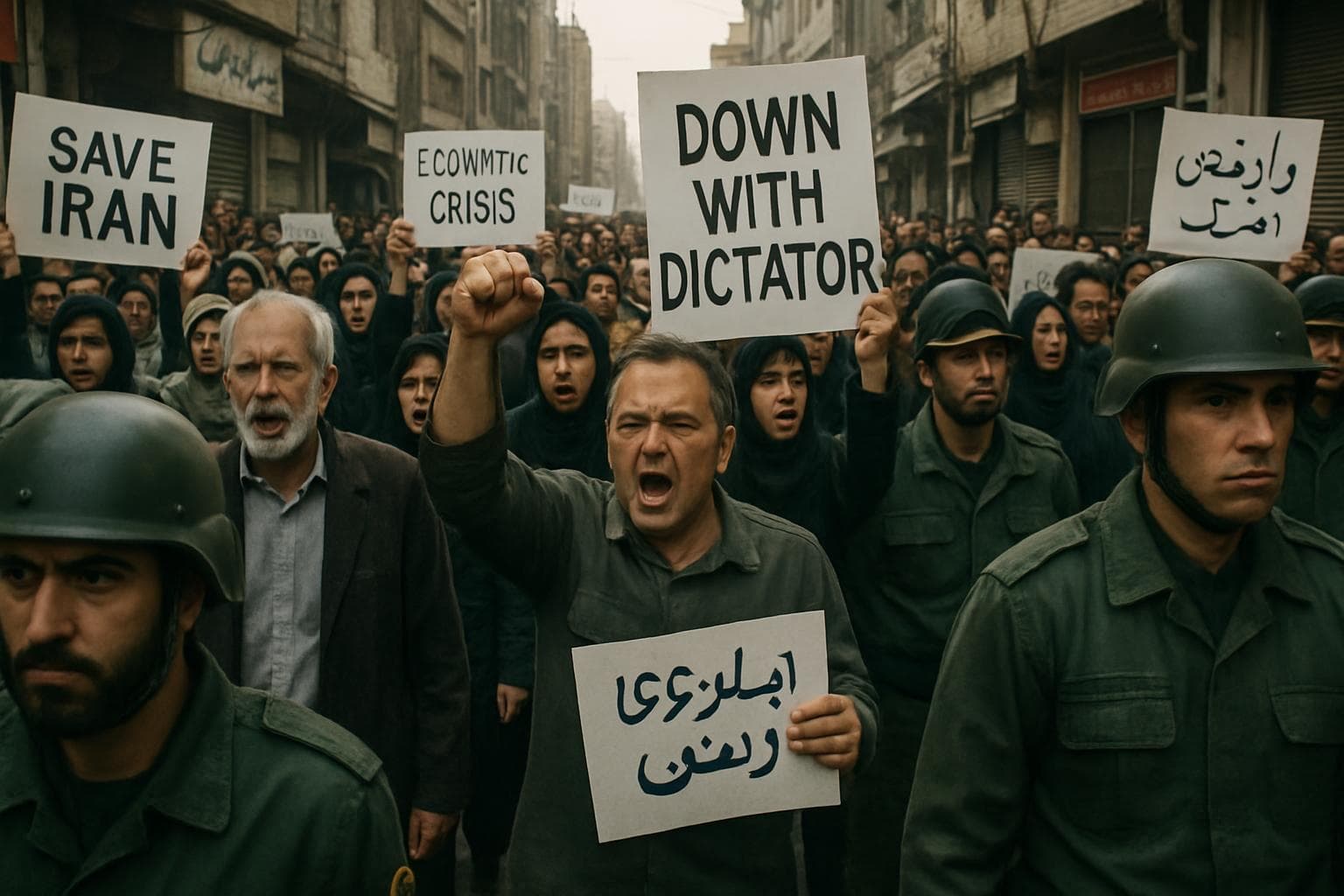
- Protests in Iran have entered their fifth day, sparked by a sharp decline in the national currency's value.
- At least two people have been confirmed dead in Lordegan, with reports of further casualties in Azna and Kouhdasht.
- Human rights groups warn of a brutal crackdown by Iranian security forces, with eyewitnesses describing the situation as a "battlefield."
- The unrest, initially centered in Tehran, has spread nationwide, with demonstrators calling for economic justice and political change.
- Authorities have arrested 30 individuals in Tehran for allegedly disturbing public order amid the ongoing protests.
Protests in Iran have intensified, entering their fifth day as citizens voice their discontent over the plummeting value of the national currency and the rising cost of living. The unrest, which began in Tehran, has spread to multiple cities, including Lordegan, Azna, and Kouhdasht, resulting in deadly confrontations between protesters and security forces.
Casualties and Clashes
Reports confirm that at least two individuals have died in the southwestern city of Lordegan, with additional fatalities in Azna and Kouhdasht. The semi-official Fars news agency and human rights organization Hengaw have identified the deceased in Lordegan as Ahmad Jalil and Sajjad Valamanesh, though the exact circumstances of their deaths remain unclear. Eyewitnesses and social media footage depict a chaotic scene, with security forces allegedly using live ammunition against demonstrators.
Nationwide Unrest
The protests, initially sparked by the collapse of the Iranian currency, have seen citizens from various cities rallying against the government. Demonstrators are demanding economic justice and an end to the current regime, with some calling for the return of the monarchy. The protests are the most significant since the 2022 uprising following the death of Mahsa Amini, though they have not yet reached the same scale.
Government Response
In response to the escalating unrest, Iranian authorities have taken measures to suppress the protests. Schools, universities, and public institutions were closed on Wednesday, ostensibly to conserve energy amid cold weather, but many view this as an attempt to curb the demonstrations. In Tehran, 30 individuals have been arrested for allegedly disturbing public order, according to the Tasnim news agency.
Human Rights Concerns
Human rights organizations have expressed alarm over the government's heavy-handed response, warning of a potential escalation in violence. Roya Boroumand, managing director of the Abdorrahman Boroumand Center for Human Rights in Iran, highlighted the dire economic conditions driving the protests, noting widespread poverty and dissatisfaction with state policies.
WHAT THIS MIGHT MEAN
As the protests continue, the Iranian government faces mounting pressure to address the economic grievances fueling public discontent. Should the unrest persist, it could lead to further crackdowns by security forces, potentially resulting in more casualties and arrests. International attention may increase, with human rights organizations and foreign governments likely to scrutinize Iran's handling of the situation. In the long term, the protests could either force the government to implement economic reforms or further entrench existing power structures, depending on the regime's response and the protesters' resilience.
Related Articles

UK Faces Dilemmas Amid Iran Conflict and China Spying Allegations
UK Reinforces Military Presence in Cyprus Amid Middle East Tensions
UK-Iran Tensions: Starmer Defends Cautious Approach Amid Trump Criticism
Diplomatic Tensions Rise as Trump Criticizes Starmer's Iran Policy
Intensified US-Israel Strikes on Iran Spark Global Outcry
Iran Postpones Khamenei Funeral Amid Escalating US-Israeli Strikes
Iran Protests Escalate Amid Currency Crisis and Deadly Clashes
In This Article
 Ethan Brooks| Published
 HIGHLIGHTS
- Protests in Iran have entered their fifth day, sparked by a sharp decline in the national currency's value.
- At least two people have been confirmed dead in Lordegan, with reports of further casualties in Azna and Kouhdasht.
- Human rights groups warn of a brutal crackdown by Iranian security forces, with eyewitnesses describing the situation as a "battlefield."
- The unrest, initially centered in Tehran, has spread nationwide, with demonstrators calling for economic justice and political change.
- Authorities have arrested 30 individuals in Tehran for allegedly disturbing public order amid the ongoing protests.
Protests in Iran have intensified, entering their fifth day as citizens voice their discontent over the plummeting value of the national currency and the rising cost of living. The unrest, which began in Tehran, has spread to multiple cities, including Lordegan, Azna, and Kouhdasht, resulting in deadly confrontations between protesters and security forces.
Casualties and Clashes
Reports confirm that at least two individuals have died in the southwestern city of Lordegan, with additional fatalities in Azna and Kouhdasht. The semi-official Fars news agency and human rights organization Hengaw have identified the deceased in Lordegan as Ahmad Jalil and Sajjad Valamanesh, though the exact circumstances of their deaths remain unclear. Eyewitnesses and social media footage depict a chaotic scene, with security forces allegedly using live ammunition against demonstrators.
Nationwide Unrest
The protests, initially sparked by the collapse of the Iranian currency, have seen citizens from various cities rallying against the government. Demonstrators are demanding economic justice and an end to the current regime, with some calling for the return of the monarchy. The protests are the most significant since the 2022 uprising following the death of Mahsa Amini, though they have not yet reached the same scale.
Government Response
In response to the escalating unrest, Iranian authorities have taken measures to suppress the protests. Schools, universities, and public institutions were closed on Wednesday, ostensibly to conserve energy amid cold weather, but many view this as an attempt to curb the demonstrations. In Tehran, 30 individuals have been arrested for allegedly disturbing public order, according to the Tasnim news agency.
Human Rights Concerns
Human rights organizations have expressed alarm over the government's heavy-handed response, warning of a potential escalation in violence. Roya Boroumand, managing director of the Abdorrahman Boroumand Center for Human Rights in Iran, highlighted the dire economic conditions driving the protests, noting widespread poverty and dissatisfaction with state policies.
WHAT THIS MIGHT MEAN
As the protests continue, the Iranian government faces mounting pressure to address the economic grievances fueling public discontent. Should the unrest persist, it could lead to further crackdowns by security forces, potentially resulting in more casualties and arrests. International attention may increase, with human rights organizations and foreign governments likely to scrutinize Iran's handling of the situation. In the long term, the protests could either force the government to implement economic reforms or further entrench existing power structures, depending on the regime's response and the protesters' resilience.
Related Articles
UK Faces Dilemmas Amid Iran Conflict and China Spying Allegations
UK Reinforces Military Presence in Cyprus Amid Middle East Tensions
UK-Iran Tensions: Starmer Defends Cautious Approach Amid Trump Criticism
Diplomatic Tensions Rise as Trump Criticizes Starmer's Iran Policy
Intensified US-Israel Strikes on Iran Spark Global Outcry
Iran Postpones Khamenei Funeral Amid Escalating US-Israeli Strikes