
Iran Turns to Cloud Seeding Amidst Severe Drought Crisis
In This Article
HIGHLIGHTS
- Iran has initiated cloud seeding to combat its worst drought in decades, with operations starting over the Urmia lake basin.
- Rainfall in Iran has decreased by 89% this year, leading to critically low water levels in reservoirs and potential water rationing in Tehran.
- The drought has sparked national debates, with some attributing it to climate change and others to divine disapproval.
- Iranian authorities are considering penalties for excessive water consumption amid the ongoing water crisis.
- Despite some localized rainfall, the drought persists, with snow cover decreasing by 98.6% compared to last year.
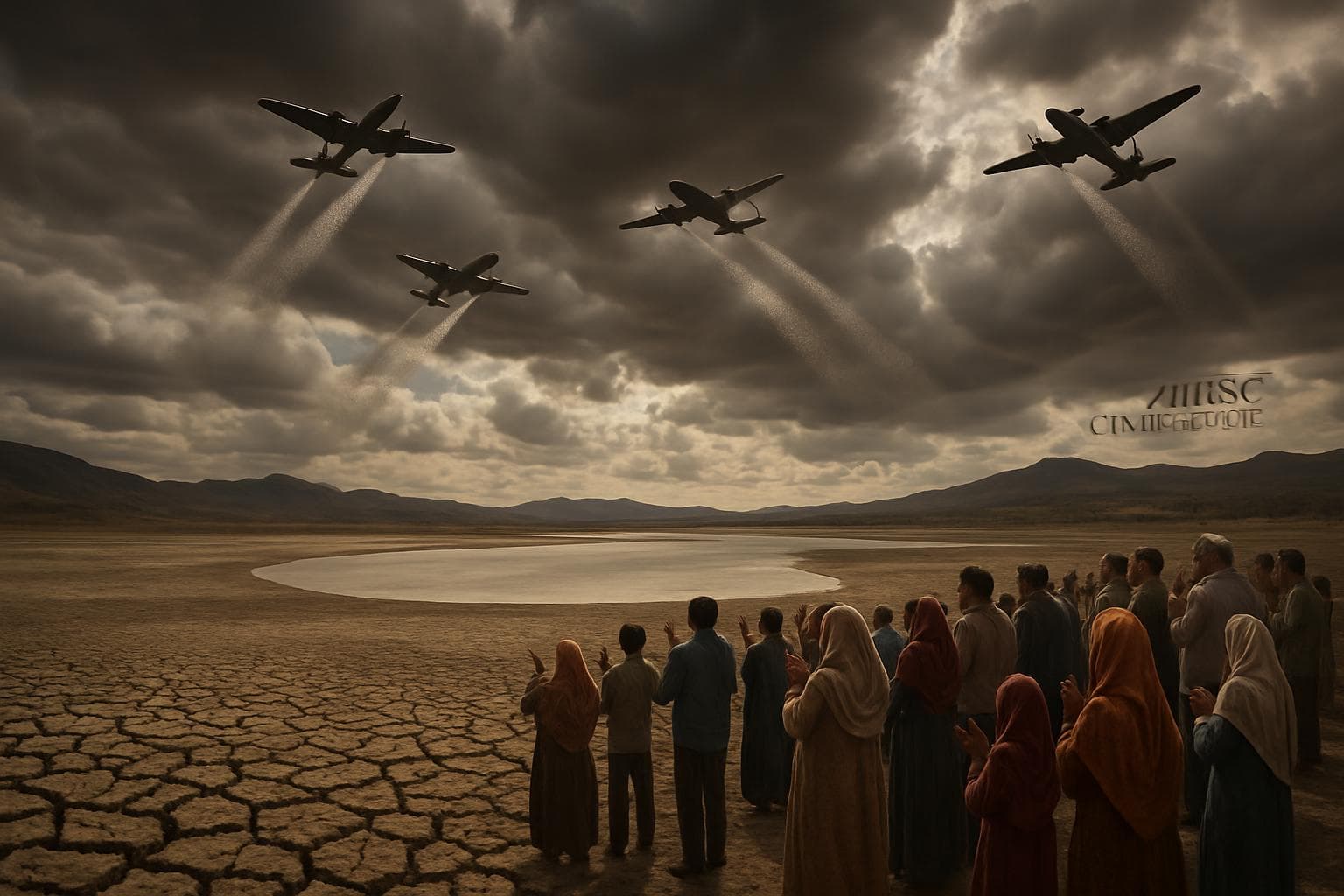
Iran is grappling with one of its most severe droughts in decades, prompting authorities to resort to cloud seeding in a bid to induce rainfall. The operation, which began over the Urmia lake basin, aims to address the critical water shortages affecting the nation. Urmia, once Iran's largest lake, has largely dried up, leaving a vast salt bed in its wake.
Water Crisis Intensifies
The Iranian Meteorological Organization reports a staggering 89% decrease in rainfall this year compared to the long-term average. This has led to alarmingly low water levels in reservoirs, with some dams holding less than 5% of their capacity. Tehran, the capital, faces the possibility of water rationing if conditions do not improve soon. President Masoud Pezeshkian has warned of potential evacuations if the situation persists.
Cloud Seeding: A Controversial Solution
Cloud seeding, a technique involving the dispersal of chemical salts like silver iodide into clouds, is being employed to stimulate precipitation. While this method has been used in other countries, such as the UAE, its effectiveness remains a topic of debate. Ahmad Vazifeh, head of Iran's National Centre for Climate and Drought Crisis Management, highlighted the dire state of dams in Tehran and other provinces.
National Debate and Religious Interpretations
The drought has sparked a national conversation, with some attributing the crisis to climate change, while others see it as a divine warning. Ayatollah Mohsen Araki, a conservative cleric, has linked the drought to moral decay, while Grand Ayatollah Javadi Amoli suggests that social and cultural issues may be to blame. This debate has even extended to the enforcement of hijab laws, with some questioning the correlation between religious observance and rainfall.
Community Responses and Prayers
Across Iran, communities have turned to prayer, recalling historical instances where collective prayers were believed to have brought rain. In Tehran, organized rain prayers have become a common sight, with residents hoping for a repeat of past miracles. Despite some localized rainfall and snowfall in the northwest, the drought's impact remains severe, with snow cover decreasing by 98.6% compared to last year.
WHAT THIS MIGHT MEAN
As Iran continues to battle its water crisis, the effectiveness of cloud seeding remains uncertain. Should the drought persist, Tehran may face significant water rationing, impacting millions of residents. The ongoing debate over the causes of the drought could influence future policy decisions, potentially leading to stricter water conservation measures or increased investment in alternative water sources. Experts suggest that a comprehensive approach, addressing both environmental and infrastructural challenges, will be crucial in mitigating the long-term effects of climate change on Iran's water resources.
Related Articles
Intensified US-Israel Strikes on Iran Spark Global Outcry

US-Iran Tensions Escalate Amid Renewed Nuclear Talks and Protests
Iranian Students Lead Major Protests Amid Rising US-Iran Tensions

Canada and Australia Forge Strategic Partnership Amid Global Uncertainty

Middle East Conflict Drives UK Energy Prices to New Highs

UK Faces Dilemmas Amid Iran Conflict and China Spying Allegations
Iran Turns to Cloud Seeding Amidst Severe Drought Crisis
In This Article
 Leila Hassan| Published
 HIGHLIGHTS
- Iran has initiated cloud seeding to combat its worst drought in decades, with operations starting over the Urmia lake basin.
- Rainfall in Iran has decreased by 89% this year, leading to critically low water levels in reservoirs and potential water rationing in Tehran.
- The drought has sparked national debates, with some attributing it to climate change and others to divine disapproval.
- Iranian authorities are considering penalties for excessive water consumption amid the ongoing water crisis.
- Despite some localized rainfall, the drought persists, with snow cover decreasing by 98.6% compared to last year.
Iran is grappling with one of its most severe droughts in decades, prompting authorities to resort to cloud seeding in a bid to induce rainfall. The operation, which began over the Urmia lake basin, aims to address the critical water shortages affecting the nation. Urmia, once Iran's largest lake, has largely dried up, leaving a vast salt bed in its wake.
Water Crisis Intensifies
The Iranian Meteorological Organization reports a staggering 89% decrease in rainfall this year compared to the long-term average. This has led to alarmingly low water levels in reservoirs, with some dams holding less than 5% of their capacity. Tehran, the capital, faces the possibility of water rationing if conditions do not improve soon. President Masoud Pezeshkian has warned of potential evacuations if the situation persists.
Cloud Seeding: A Controversial Solution
Cloud seeding, a technique involving the dispersal of chemical salts like silver iodide into clouds, is being employed to stimulate precipitation. While this method has been used in other countries, such as the UAE, its effectiveness remains a topic of debate. Ahmad Vazifeh, head of Iran's National Centre for Climate and Drought Crisis Management, highlighted the dire state of dams in Tehran and other provinces.
National Debate and Religious Interpretations
The drought has sparked a national conversation, with some attributing the crisis to climate change, while others see it as a divine warning. Ayatollah Mohsen Araki, a conservative cleric, has linked the drought to moral decay, while Grand Ayatollah Javadi Amoli suggests that social and cultural issues may be to blame. This debate has even extended to the enforcement of hijab laws, with some questioning the correlation between religious observance and rainfall.
Community Responses and Prayers
Across Iran, communities have turned to prayer, recalling historical instances where collective prayers were believed to have brought rain. In Tehran, organized rain prayers have become a common sight, with residents hoping for a repeat of past miracles. Despite some localized rainfall and snowfall in the northwest, the drought's impact remains severe, with snow cover decreasing by 98.6% compared to last year.
WHAT THIS MIGHT MEAN
As Iran continues to battle its water crisis, the effectiveness of cloud seeding remains uncertain. Should the drought persist, Tehran may face significant water rationing, impacting millions of residents. The ongoing debate over the causes of the drought could influence future policy decisions, potentially leading to stricter water conservation measures or increased investment in alternative water sources. Experts suggest that a comprehensive approach, addressing both environmental and infrastructural challenges, will be crucial in mitigating the long-term effects of climate change on Iran's water resources.
Related Articles
Intensified US-Israel Strikes on Iran Spark Global Outcry
US-Iran Tensions Escalate Amid Renewed Nuclear Talks and Protests
Iranian Students Lead Major Protests Amid Rising US-Iran Tensions
Canada and Australia Forge Strategic Partnership Amid Global Uncertainty
Middle East Conflict Drives UK Energy Prices to New Highs
UK Faces Dilemmas Amid Iran Conflict and China Spying Allegations