
Intensified Israeli Airstrikes in Gaza Amid Ceasefire Negotiations
In This Article
HIGHLIGHTS
- At least 69 people were killed in Gaza on Thursday due to intensified Israeli airstrikes, with significant casualties reported at a school-turned-shelter.
- Israel claims it targeted key Hamas operatives, while Hamas accuses Israel of indiscriminate attacks on civilians.
- A proposed 60-day ceasefire deal, backed by the US, is under negotiation, with Israel and Hamas showing tentative interest.
- Humanitarian conditions in Gaza remain dire, with limited aid reaching the most vulnerable populations.
- Israeli Prime Minister Netanyahu is set to discuss the ceasefire and regional issues with US President Trump in Washington.
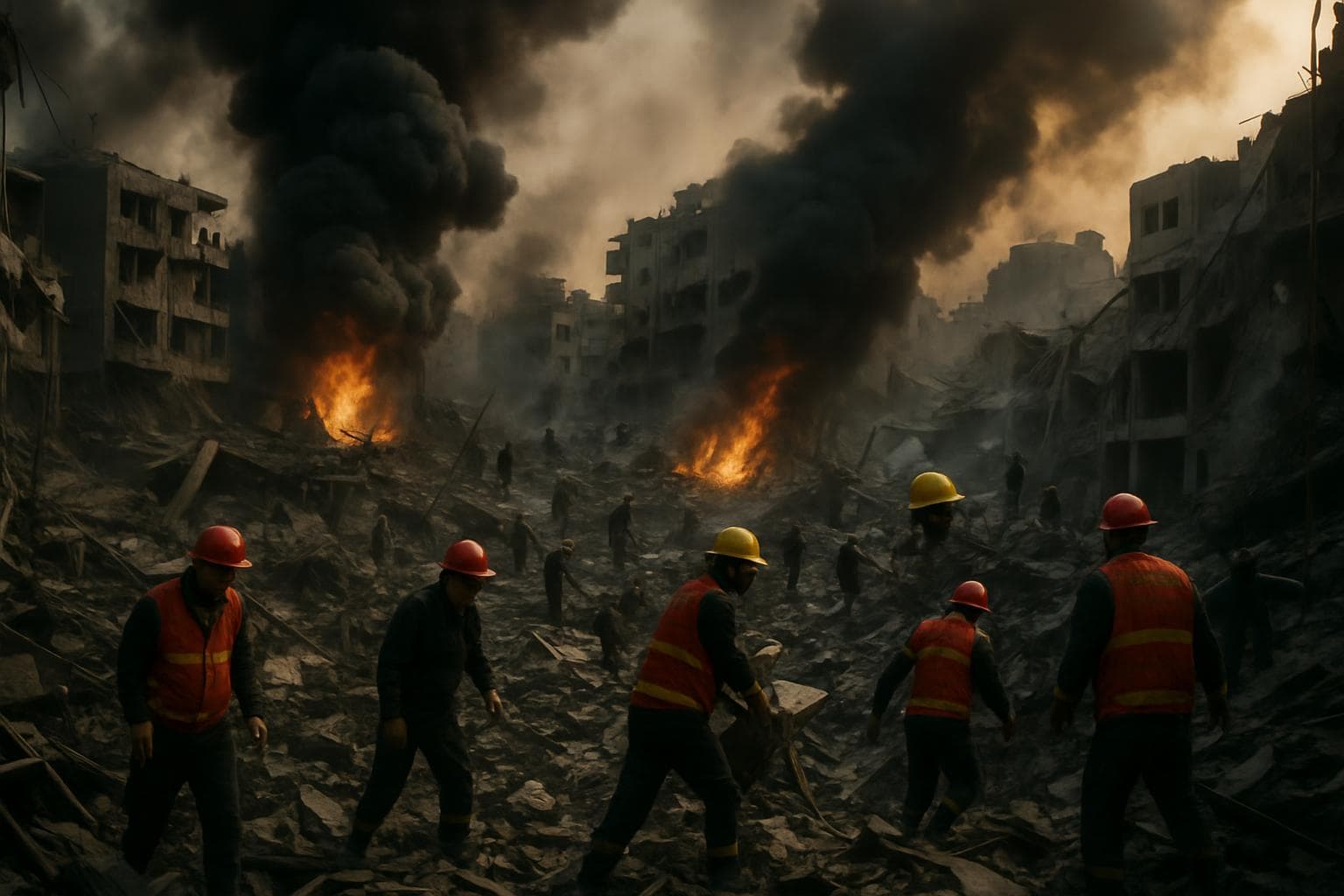
The ongoing conflict in Gaza escalated on Thursday as Israeli forces intensified their bombardment, resulting in at least 69 Palestinian deaths, according to local rescue teams. The strikes, which Israel claims targeted key Hamas operatives, have drawn international attention as ceasefire negotiations gain momentum.
Escalation of Violence
The Israeli military reported striking approximately 150 "terror targets" across Gaza, including tunnels and weapons caches. However, the Hamas-run Civil Defence agency reported that many of the casualties were civilians, including 15 people killed at a school-turned-shelter in Gaza City. Witnesses described scenes of devastation, with one resident, Wafaa al-Arqan, recounting how a tent collapsed amid the chaos, leaving children and women dead.
Ceasefire Talks Underway
Amid the violence, efforts to broker a ceasefire are intensifying. US President Donald Trump announced that Israel had agreed to the conditions for a 60-day ceasefire, which includes a partial withdrawal of Israeli forces and the release of hostages held by Hamas. Israeli Prime Minister Benjamin Netanyahu is scheduled to meet with Trump in Washington to discuss the ceasefire and broader regional issues.
Humanitarian Crisis Deepens
The humanitarian situation in Gaza continues to deteriorate, with limited aid reaching those in need. Reports indicate that dozens of Palestinians were killed while attempting to access humanitarian aid. The blockade on Gaza, though partially lifted, still restricts essential supplies, exacerbating the crisis.
Political Dynamics
Within Hamas, there is a division regarding the ceasefire proposal. While the political leadership outside Gaza appears open to negotiations, hardline factions within the territory remain resistant. The group's response to the ceasefire proposal is expected soon, with potential implications for the region's stability.
WHAT THIS MIGHT MEAN
The outcome of the ceasefire negotiations could significantly impact the region's future. If a ceasefire is agreed upon, it may lead to a temporary reduction in hostilities and provide a window for humanitarian aid to reach Gaza. However, the deep-seated mistrust between Israel and Hamas poses a challenge to achieving a lasting peace. Experts suggest that any agreement must address the underlying issues, including the blockade and the political status of Gaza, to prevent a recurrence of violence. As Netanyahu prepares for talks in Washington, the international community watches closely, hoping for a breakthrough that could pave the way for broader Middle East peace efforts.
Related Articles
Senate Blocks Resolution to Limit Trump's Military Actions in Iran
Iran Postpones Khamenei Funeral Amid Escalating US-Israeli Strikes

UK Faces Dilemmas Amid Iran Conflict and China Spying Allegations

US and Israel Intensify Military Campaign as Iran's Capabilities Dwindle

Intensified US-Israel Strikes on Iran Spark Global Outcry

Spain's Sánchez Stands Firm Against Trump's Trade Threat Over Iran Stance
Intensified Israeli Airstrikes in Gaza Amid Ceasefire Negotiations
In This Article
 Ethan Brooks| Published
 HIGHLIGHTS
- At least 69 people were killed in Gaza on Thursday due to intensified Israeli airstrikes, with significant casualties reported at a school-turned-shelter.
- Israel claims it targeted key Hamas operatives, while Hamas accuses Israel of indiscriminate attacks on civilians.
- A proposed 60-day ceasefire deal, backed by the US, is under negotiation, with Israel and Hamas showing tentative interest.
- Humanitarian conditions in Gaza remain dire, with limited aid reaching the most vulnerable populations.
- Israeli Prime Minister Netanyahu is set to discuss the ceasefire and regional issues with US President Trump in Washington.
The ongoing conflict in Gaza escalated on Thursday as Israeli forces intensified their bombardment, resulting in at least 69 Palestinian deaths, according to local rescue teams. The strikes, which Israel claims targeted key Hamas operatives, have drawn international attention as ceasefire negotiations gain momentum.
Escalation of Violence
The Israeli military reported striking approximately 150 "terror targets" across Gaza, including tunnels and weapons caches. However, the Hamas-run Civil Defence agency reported that many of the casualties were civilians, including 15 people killed at a school-turned-shelter in Gaza City. Witnesses described scenes of devastation, with one resident, Wafaa al-Arqan, recounting how a tent collapsed amid the chaos, leaving children and women dead.
Ceasefire Talks Underway
Amid the violence, efforts to broker a ceasefire are intensifying. US President Donald Trump announced that Israel had agreed to the conditions for a 60-day ceasefire, which includes a partial withdrawal of Israeli forces and the release of hostages held by Hamas. Israeli Prime Minister Benjamin Netanyahu is scheduled to meet with Trump in Washington to discuss the ceasefire and broader regional issues.
Humanitarian Crisis Deepens
The humanitarian situation in Gaza continues to deteriorate, with limited aid reaching those in need. Reports indicate that dozens of Palestinians were killed while attempting to access humanitarian aid. The blockade on Gaza, though partially lifted, still restricts essential supplies, exacerbating the crisis.
Political Dynamics
Within Hamas, there is a division regarding the ceasefire proposal. While the political leadership outside Gaza appears open to negotiations, hardline factions within the territory remain resistant. The group's response to the ceasefire proposal is expected soon, with potential implications for the region's stability.
WHAT THIS MIGHT MEAN
The outcome of the ceasefire negotiations could significantly impact the region's future. If a ceasefire is agreed upon, it may lead to a temporary reduction in hostilities and provide a window for humanitarian aid to reach Gaza. However, the deep-seated mistrust between Israel and Hamas poses a challenge to achieving a lasting peace. Experts suggest that any agreement must address the underlying issues, including the blockade and the political status of Gaza, to prevent a recurrence of violence. As Netanyahu prepares for talks in Washington, the international community watches closely, hoping for a breakthrough that could pave the way for broader Middle East peace efforts.
Related Articles
Senate Blocks Resolution to Limit Trump's Military Actions in Iran
Iran Postpones Khamenei Funeral Amid Escalating US-Israeli Strikes
UK Faces Dilemmas Amid Iran Conflict and China Spying Allegations
US and Israel Intensify Military Campaign as Iran's Capabilities Dwindle
Intensified US-Israel Strikes on Iran Spark Global Outcry
Spain's Sánchez Stands Firm Against Trump's Trade Threat Over Iran Stance