
Israel's Planned Gaza City Offensive Sparks Humanitarian Concerns and Global Condemnation
In This Article
HIGHLIGHTS
- Israel has warned medical and aid groups to prepare for the evacuation of Gaza City's one million residents ahead of a planned military offensive.
- The UN and Red Cross have warned of a potential humanitarian catastrophe if Israel proceeds with its Gaza City offensive.
- Israeli Prime Minister Benjamin Netanyahu has approved plans for the military takeover of Gaza City, despite international opposition and calls for a ceasefire.
- Gaza's health ministry has rejected the evacuation plan, citing risks to over a million people's access to medical treatment.
- International condemnation has grown against Israel's actions, with countries like the UK condemning new settlement plans as violations of international law.
Israel's military has issued warnings to medical officials and international aid organizations to prepare for the evacuation of Gaza City's one million residents, as it gears up for a significant military offensive. This move has drawn sharp criticism from global humanitarian bodies, including the United Nations and the International Red Cross, who have cautioned against the severe humanitarian impact such an operation could entail.
Military Preparations and Humanitarian Concerns
The Israeli military has communicated with medical personnel and aid groups, indicating that adjustments are being made to accommodate patients in southern Gaza hospitals. However, Gaza's health ministry has strongly opposed the evacuation, arguing that it would deprive over a million people of essential medical care and endanger lives. The UN has echoed these concerns, warning that hospitals in southern Gaza are already operating beyond capacity.
International Reactions and Political Implications
Prime Minister Benjamin Netanyahu has confirmed plans for the military takeover of Gaza City, a move that has been met with widespread international disapproval. The UK, alongside 20 other nations, has condemned Israel's concurrent settlement expansion in the West Bank as a breach of international law. Meanwhile, Netanyahu has maintained that the defeat of Hamas and the release of Israeli hostages are intertwined objectives, despite calls for an immediate ceasefire from the UN Secretary-General António Guterres.
On-the-Ground Realities and Civilian Impact
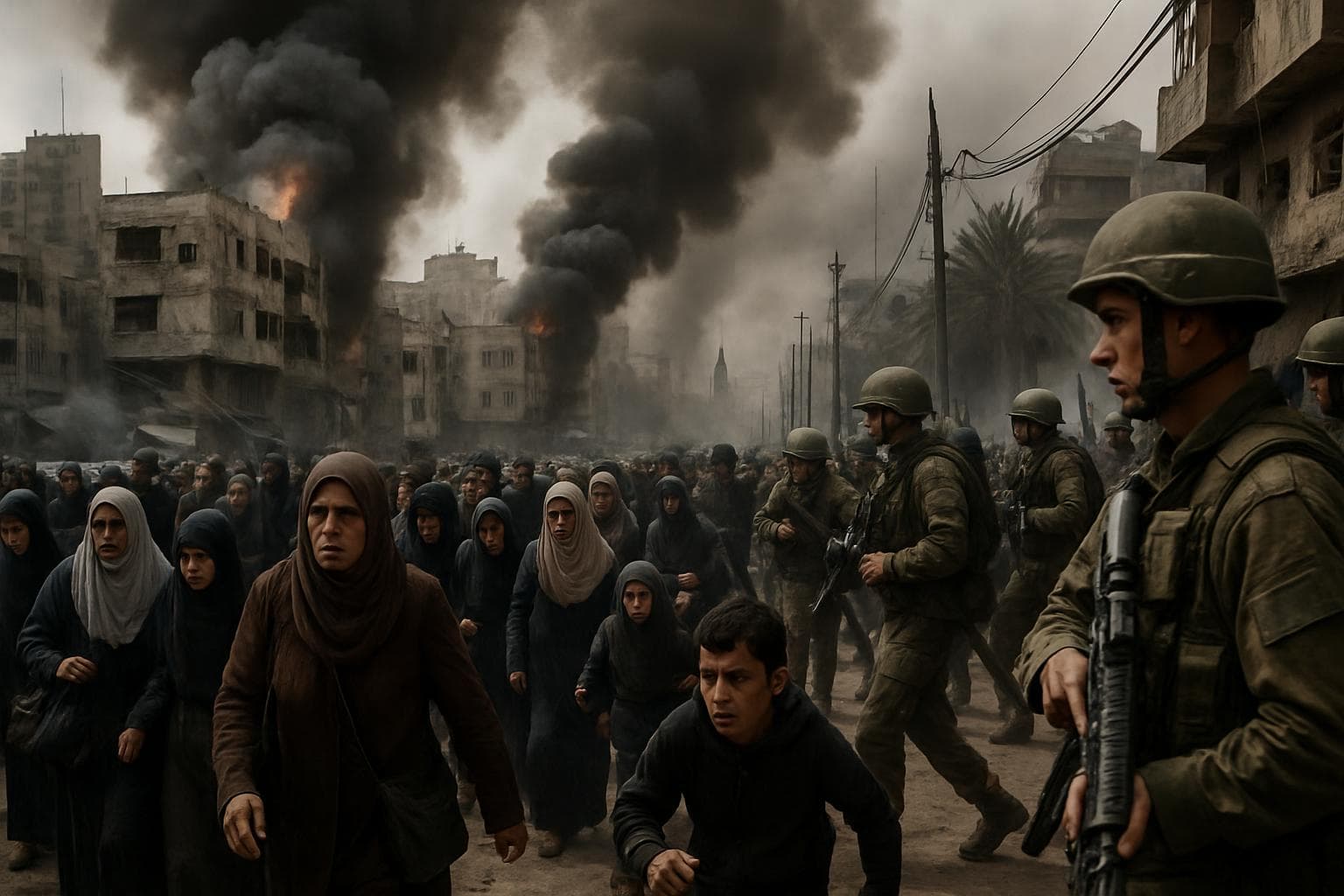
Reports from Gaza City describe relentless bombardments, with residents facing dire conditions. Many are unable to evacuate due to frailty or lack of resources, exacerbating the humanitarian crisis. Journalists in the area have witnessed ongoing airstrikes, further heightening fears of an impending catastrophe.
WHAT THIS MIGHT MEAN
As Israel advances its military plans, the humanitarian situation in Gaza is likely to deteriorate further, with potential for significant civilian casualties and displacement. The international community's response could intensify, potentially leading to diplomatic interventions or sanctions. Experts suggest that without a negotiated ceasefire, the conflict could escalate, further destabilizing the region. The situation remains fluid, with the potential for shifts in international alliances and policy responses as the crisis unfolds.
Images from the Web


Related Articles

UK Faces Dilemmas Amid Iran Conflict and China Spying Allegations

UK Government to Reform Asylum Seeker Support and Employment Policies

UK Reinforces Military Presence in Cyprus Amid Middle East Tensions

UK-Iran Tensions: Starmer Defends Cautious Approach Amid Trump Criticism

Persistent Safety Concerns in Nottingham Maternity Services Amidst Calls for Systemic Reform

Diplomatic Tensions Rise as Trump Criticizes Starmer's Iran Policy
Israel's Planned Gaza City Offensive Sparks Humanitarian Concerns and Global Condemnation
In This Article
 Ethan Brooks| Published
 HIGHLIGHTS
- Israel has warned medical and aid groups to prepare for the evacuation of Gaza City's one million residents ahead of a planned military offensive.
- The UN and Red Cross have warned of a potential humanitarian catastrophe if Israel proceeds with its Gaza City offensive.
- Israeli Prime Minister Benjamin Netanyahu has approved plans for the military takeover of Gaza City, despite international opposition and calls for a ceasefire.
- Gaza's health ministry has rejected the evacuation plan, citing risks to over a million people's access to medical treatment.
- International condemnation has grown against Israel's actions, with countries like the UK condemning new settlement plans as violations of international law.
Israel's military has issued warnings to medical officials and international aid organizations to prepare for the evacuation of Gaza City's one million residents, as it gears up for a significant military offensive. This move has drawn sharp criticism from global humanitarian bodies, including the United Nations and the International Red Cross, who have cautioned against the severe humanitarian impact such an operation could entail.
Military Preparations and Humanitarian Concerns
The Israeli military has communicated with medical personnel and aid groups, indicating that adjustments are being made to accommodate patients in southern Gaza hospitals. However, Gaza's health ministry has strongly opposed the evacuation, arguing that it would deprive over a million people of essential medical care and endanger lives. The UN has echoed these concerns, warning that hospitals in southern Gaza are already operating beyond capacity.
International Reactions and Political Implications
Prime Minister Benjamin Netanyahu has confirmed plans for the military takeover of Gaza City, a move that has been met with widespread international disapproval. The UK, alongside 20 other nations, has condemned Israel's concurrent settlement expansion in the West Bank as a breach of international law. Meanwhile, Netanyahu has maintained that the defeat of Hamas and the release of Israeli hostages are intertwined objectives, despite calls for an immediate ceasefire from the UN Secretary-General António Guterres.
On-the-Ground Realities and Civilian Impact
Reports from Gaza City describe relentless bombardments, with residents facing dire conditions. Many are unable to evacuate due to frailty or lack of resources, exacerbating the humanitarian crisis. Journalists in the area have witnessed ongoing airstrikes, further heightening fears of an impending catastrophe.
WHAT THIS MIGHT MEAN
As Israel advances its military plans, the humanitarian situation in Gaza is likely to deteriorate further, with potential for significant civilian casualties and displacement. The international community's response could intensify, potentially leading to diplomatic interventions or sanctions. Experts suggest that without a negotiated ceasefire, the conflict could escalate, further destabilizing the region. The situation remains fluid, with the potential for shifts in international alliances and policy responses as the crisis unfolds.
Images from the Web
Related Articles
UK Faces Dilemmas Amid Iran Conflict and China Spying Allegations
UK Government to Reform Asylum Seeker Support and Employment Policies
UK Reinforces Military Presence in Cyprus Amid Middle East Tensions
UK-Iran Tensions: Starmer Defends Cautious Approach Amid Trump Criticism
Persistent Safety Concerns in Nottingham Maternity Services Amidst Calls for Systemic Reform
Diplomatic Tensions Rise as Trump Criticizes Starmer's Iran Policy