
Italy Greenlights World's Longest Suspension Bridge to Connect Sicily and Mainland
In This Article
HIGHLIGHTS
- Italy's government has approved a €13.5bn project to build the world's longest suspension bridge, connecting Sicily to Calabria.
- The Messina Bridge, spanning 3.3km, aims to withstand seismic activity and is expected to be completed by 2032-33.
- The project faces opposition due to concerns over cost, environmental impact, and potential Mafia involvement.
- Transport Minister Matteo Salvini claims the bridge will create 120,000 jobs annually and boost the economy of southern Italy.
- The project still requires approval from Italy's Court of Auditors and environmental agencies, with local residents potentially challenging the decision.
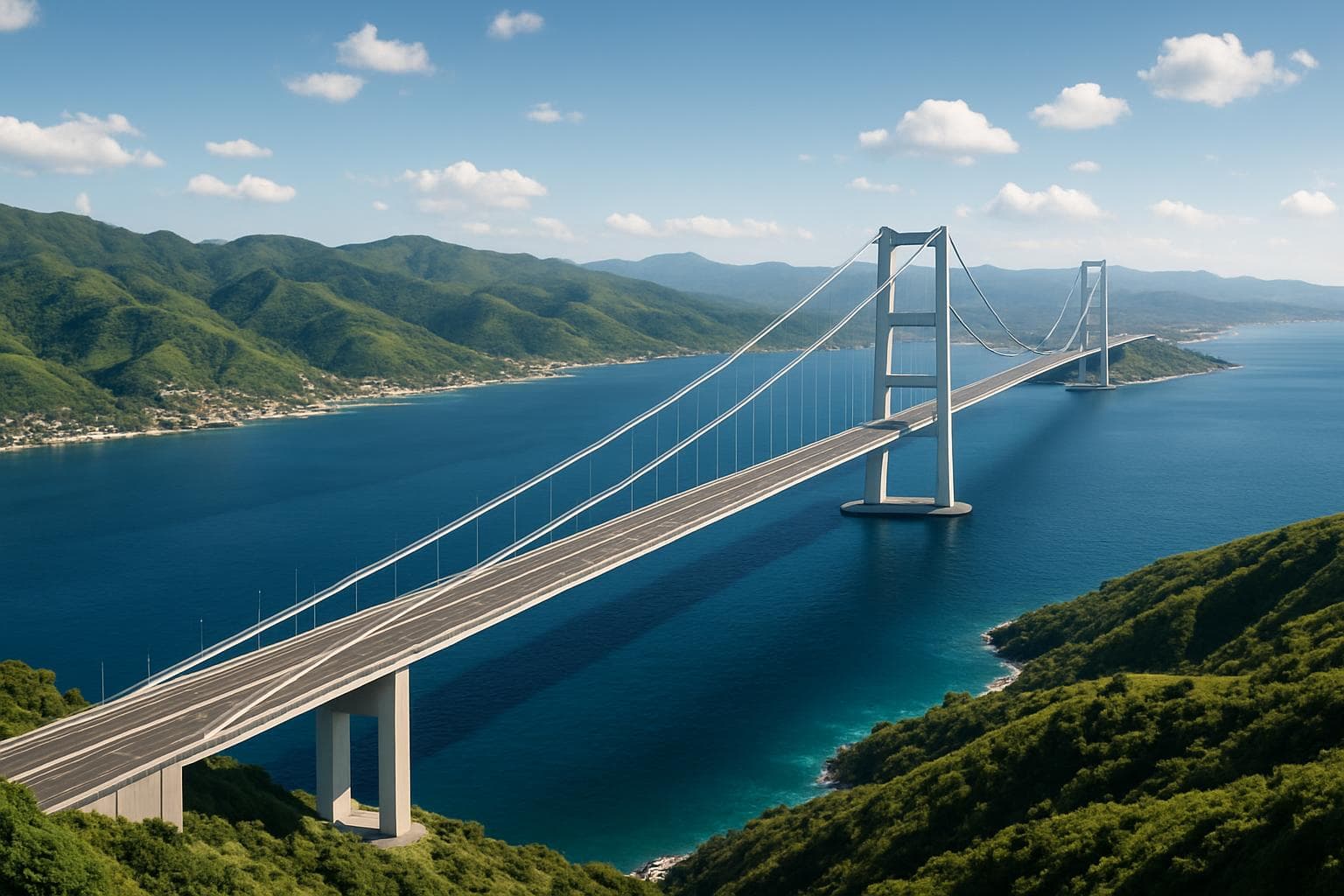
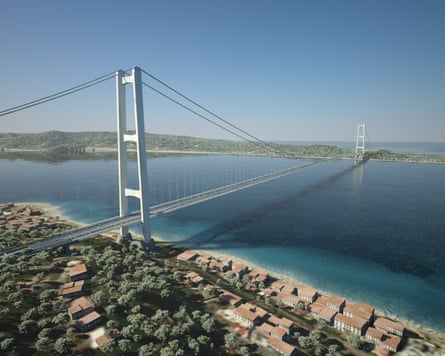
The Italian government has granted final approval for the construction of a monumental suspension bridge linking Sicily to the mainland region of Calabria. This ambitious €13.5 billion project, which has been in discussion since the late 1960s, aims to create the world's longest single-span bridge, spanning 3.3 kilometers over the Strait of Messina. The bridge is designed to withstand seismic activity, a significant consideration given the region's geological volatility.
A Long-Awaited Infrastructure Project
Prime Minister Giorgia Meloni's administration has revived this long-debated project, which was a vision of the late former Prime Minister Silvio Berlusconi. The bridge is expected to take a decade to complete, with a target finish date between 2032 and 2033. Transport Minister Matteo Salvini, a key proponent, described the bridge as "a metro over the strait" and emphasized its potential to transform Italy's economically challenged southern regions by creating 120,000 jobs annually.
Challenges and Controversies
Despite the government's enthusiasm, the Messina Bridge project has faced significant opposition. Concerns over the project's cost, environmental impact, and potential Mafia infiltration have been longstanding. Local politicians and environmental groups have voiced strong objections, with some filing complaints with the EU over environmental risks. Additionally, the project requires further validation from Italy's Court of Auditors and environmental agencies, and local residents affected by expropriation plans may legally challenge the decision.
Economic and Security Considerations
The Italian government hopes to classify the bridge as a military expenditure, contributing to NATO's defense spending targets. Salvini has assured that rigorous monitoring will be in place to prevent criminal infiltration, a concern given the Mafia's historical influence in the region. The construction will be led by a consortium including Italy's Webuild Group, Spain's Sacyr, and Japan's IHI.
WHAT THIS MIGHT MEAN
The approval of the Messina Bridge project marks a significant milestone in Italy's infrastructure ambitions, but its future remains uncertain. Legal challenges from local residents and environmental groups could delay or halt construction. If the project proceeds, it could provide a substantial economic boost to southern Italy, potentially reducing regional disparities. However, the government must address environmental concerns and ensure robust measures against Mafia involvement to maintain public trust and project viability. As construction progresses, the project's impact on local communities and the environment will be closely scrutinized, shaping Italy's infrastructure landscape for years to come.
Images from the Web
Related Articles

UK PM Keir Starmer Calls for Stronger European Defence Ties at Munich Conference
German Chancellor Warns of Eroding Global Order at Munich Security Conference

Sicilian Man Trains Dog for Illegal Rubbish Dumping, Faces Fine
Rai Sport Chief Resigns Amid Olympic Commentary Controversy
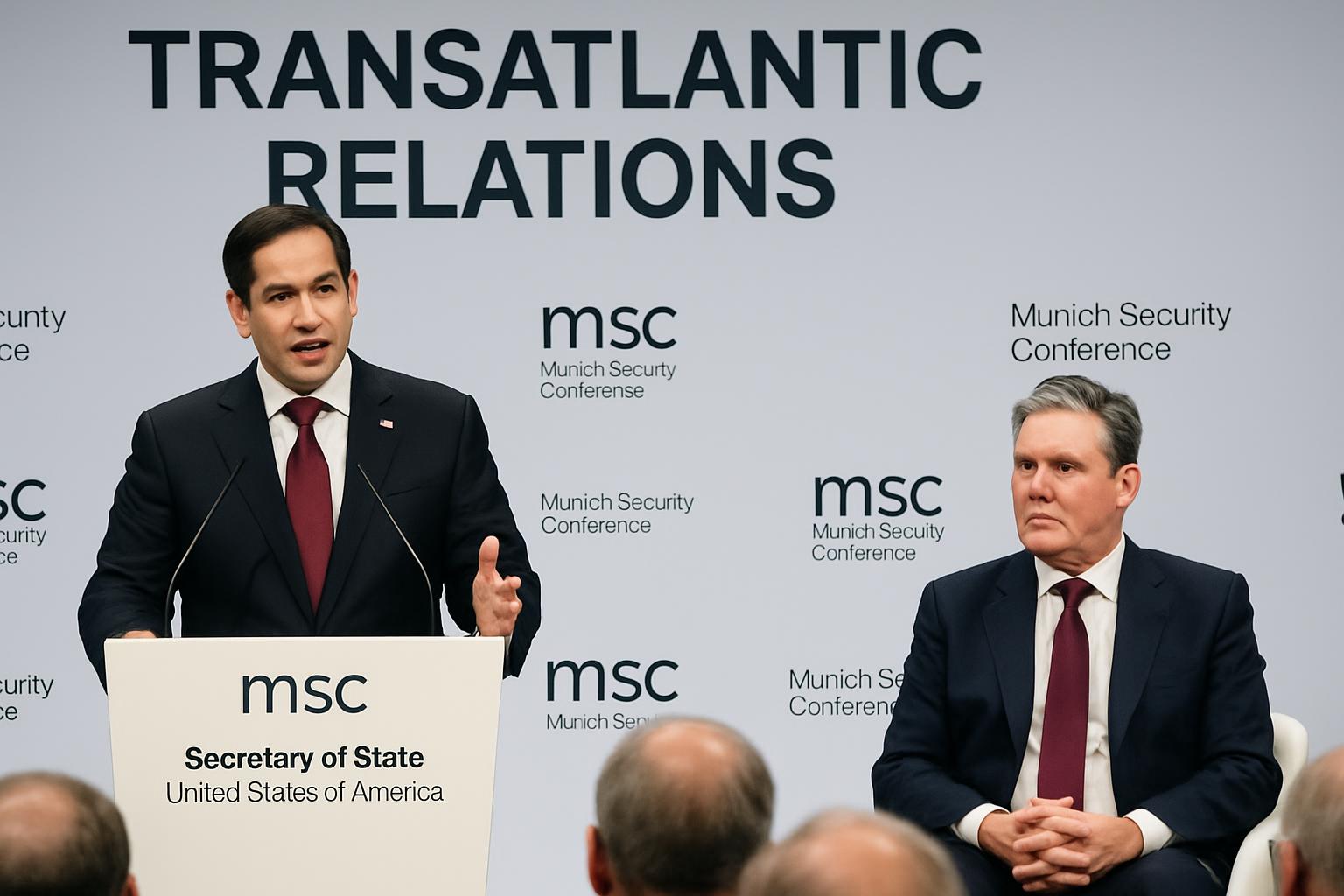
Munich Security Conference: A New Era in Transatlantic Relations

UK-Iran Tensions: Starmer Defends Cautious Approach Amid Trump Criticism
Italy Greenlights World's Longest Suspension Bridge to Connect Sicily and Mainland
In This Article
 Alex Carter| Published
 HIGHLIGHTS
- Italy's government has approved a €13.5bn project to build the world's longest suspension bridge, connecting Sicily to Calabria.
- The Messina Bridge, spanning 3.3km, aims to withstand seismic activity and is expected to be completed by 2032-33.
- The project faces opposition due to concerns over cost, environmental impact, and potential Mafia involvement.
- Transport Minister Matteo Salvini claims the bridge will create 120,000 jobs annually and boost the economy of southern Italy.
- The project still requires approval from Italy's Court of Auditors and environmental agencies, with local residents potentially challenging the decision.
The Italian government has granted final approval for the construction of a monumental suspension bridge linking Sicily to the mainland region of Calabria. This ambitious €13.5 billion project, which has been in discussion since the late 1960s, aims to create the world's longest single-span bridge, spanning 3.3 kilometers over the Strait of Messina. The bridge is designed to withstand seismic activity, a significant consideration given the region's geological volatility.
A Long-Awaited Infrastructure Project
Prime Minister Giorgia Meloni's administration has revived this long-debated project, which was a vision of the late former Prime Minister Silvio Berlusconi. The bridge is expected to take a decade to complete, with a target finish date between 2032 and 2033. Transport Minister Matteo Salvini, a key proponent, described the bridge as "a metro over the strait" and emphasized its potential to transform Italy's economically challenged southern regions by creating 120,000 jobs annually.
Challenges and Controversies
Despite the government's enthusiasm, the Messina Bridge project has faced significant opposition. Concerns over the project's cost, environmental impact, and potential Mafia infiltration have been longstanding. Local politicians and environmental groups have voiced strong objections, with some filing complaints with the EU over environmental risks. Additionally, the project requires further validation from Italy's Court of Auditors and environmental agencies, and local residents affected by expropriation plans may legally challenge the decision.
Economic and Security Considerations
The Italian government hopes to classify the bridge as a military expenditure, contributing to NATO's defense spending targets. Salvini has assured that rigorous monitoring will be in place to prevent criminal infiltration, a concern given the Mafia's historical influence in the region. The construction will be led by a consortium including Italy's Webuild Group, Spain's Sacyr, and Japan's IHI.
WHAT THIS MIGHT MEAN
The approval of the Messina Bridge project marks a significant milestone in Italy's infrastructure ambitions, but its future remains uncertain. Legal challenges from local residents and environmental groups could delay or halt construction. If the project proceeds, it could provide a substantial economic boost to southern Italy, potentially reducing regional disparities. However, the government must address environmental concerns and ensure robust measures against Mafia involvement to maintain public trust and project viability. As construction progresses, the project's impact on local communities and the environment will be closely scrutinized, shaping Italy's infrastructure landscape for years to come.
Images from the Web
Related Articles
UK PM Keir Starmer Calls for Stronger European Defence Ties at Munich Conference
German Chancellor Warns of Eroding Global Order at Munich Security Conference
Sicilian Man Trains Dog for Illegal Rubbish Dumping, Faces Fine
Rai Sport Chief Resigns Amid Olympic Commentary Controversy
Munich Security Conference: A New Era in Transatlantic Relations
UK-Iran Tensions: Starmer Defends Cautious Approach Amid Trump Criticism