
Marco Rubio Highlights New Geopolitical Era at Munich Security Conference Amid Rising Tensions
In This Article
HIGHLIGHTS
- US Secretary of State Marco Rubio emphasizes a "new era" in geopolitics at the Munich Security Conference, highlighting the need for re-examining roles in global politics.
- The conference agenda includes the Ukraine conflict, NATO's future, and US-Europe relations amid tensions over Greenland and Russian threats.
- French President Emmanuel Macron calls for European independence from the US, while NATO Secretary General Mark Rutte stresses the importance of transatlantic bonds.
- Russian strikes have left thousands in Ukraine without power, with significant damage reported in Kyiv, Odesa, and Dnipro.
- Former US ambassadors urge Washington to maintain support for NATO, describing it as a "force-multiplier" for US influence.
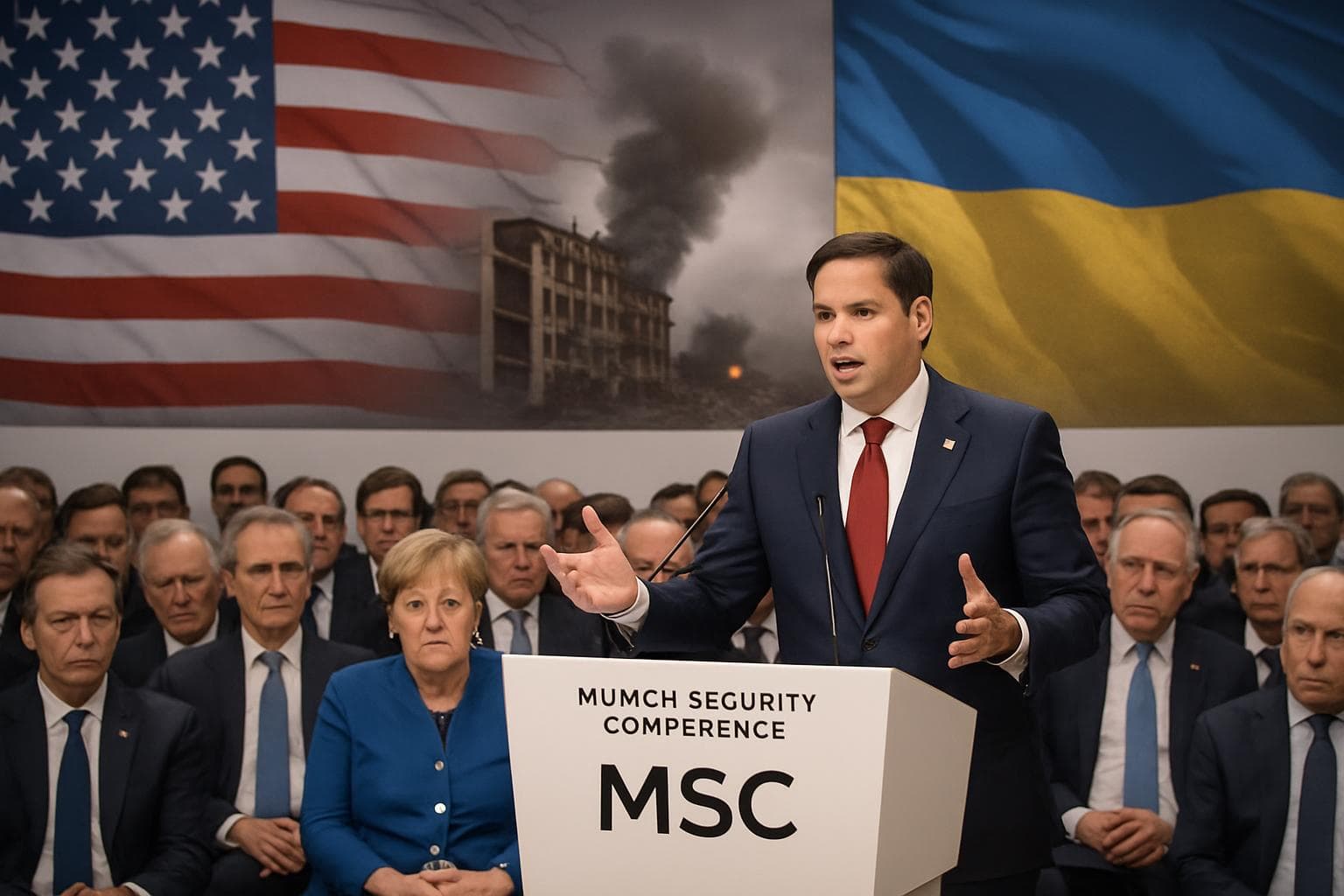
US Secretary of State Marco Rubio has underscored a pivotal shift in global politics, marking a "new era" as he leads the US delegation at the Munich Security Conference. This annual event, a key forum for discussing international security, comes at a time of heightened geopolitical tensions, including the ongoing conflict in Ukraine and strained US-Europe relations.
A New Geopolitical Landscape
Speaking to reporters, Rubio emphasized the necessity for all nations to reassess their roles in this evolving geopolitical landscape. "The world is changing very fast right in front of us," he stated, urging a collective re-evaluation of global roles. His comments come as the US faces criticism over its stance on Greenland and its broader foreign policy approach.
European Independence and Transatlantic Bonds
The conference, attended by over 50 world leaders, also sees French President Emmanuel Macron advocating for European independence from the US. Meanwhile, NATO Secretary General Mark Rutte reaffirmed the enduring importance of transatlantic bonds. German Chancellor Friedrich Merz called for repairing and reviving trust between the US and Europe, revealing ongoing confidential talks with Macron about a joint European nuclear deterrent.
Ukraine Conflict and Russian Aggression
The Ukraine conflict remains a central topic, with Russian strikes recently leaving thousands without power in cities like Kyiv, Odesa, and Dnipro. Ukrainian officials report significant damage to energy infrastructure, exacerbating the humanitarian crisis. French President Macron expressed hopes for renewed talks with Russian President Vladimir Putin, though he noted that European nations must first align their expectations.
Calls for Continued US Support for NATO
Amid these discussions, former US ambassadors and military leaders have issued an open letter urging Washington to maintain its commitment to NATO. They argue that the alliance is a crucial "force-multiplier" for US influence, enabling it to project power more effectively and economically.
WHAT THIS MIGHT MEAN
As the Munich Security Conference unfolds, the implications of Rubio's remarks and the broader discussions could shape future US-Europe relations. The call for European independence may lead to increased defense collaboration within the EU, potentially reducing reliance on US military support. However, the enduring importance of NATO suggests that transatlantic ties will remain a cornerstone of Western security strategy.
The ongoing conflict in Ukraine continues to test international diplomacy, with potential for escalated tensions if Russian aggression persists. The outcome of Macron's proposed talks with Putin could significantly influence the trajectory of the conflict and Europe's security landscape.
Ultimately, the conference highlights the complexities of modern geopolitics, where traditional alliances are being re-evaluated in light of new global challenges. The decisions made here could have lasting impacts on international relations and security dynamics.
Related Articles
Geneva Peace Talks Between Russia and Ukraine End Without Breakthrough
Russian LNG Tanker Sinks in Mediterranean Amid Accusations of Ukrainian Drone Attack
Senate Blocks Resolution to Limit Trump's Military Actions in Iran
Spain's Sánchez Stands Firm Against Trump's Trade Threat Over Iran Stance
Greenland Politely Declines Trump's Hospital Ship Offer Amid Healthcare Debate
Trump Raises Import Tariffs to 15% After Supreme Court Setback
Marco Rubio Highlights New Geopolitical Era at Munich Security Conference Amid Rising Tensions
In This Article
 Ethan Brooks| Published
 HIGHLIGHTS
- US Secretary of State Marco Rubio emphasizes a "new era" in geopolitics at the Munich Security Conference, highlighting the need for re-examining roles in global politics.
- The conference agenda includes the Ukraine conflict, NATO's future, and US-Europe relations amid tensions over Greenland and Russian threats.
- French President Emmanuel Macron calls for European independence from the US, while NATO Secretary General Mark Rutte stresses the importance of transatlantic bonds.
- Russian strikes have left thousands in Ukraine without power, with significant damage reported in Kyiv, Odesa, and Dnipro.
- Former US ambassadors urge Washington to maintain support for NATO, describing it as a "force-multiplier" for US influence.
US Secretary of State Marco Rubio has underscored a pivotal shift in global politics, marking a "new era" as he leads the US delegation at the Munich Security Conference. This annual event, a key forum for discussing international security, comes at a time of heightened geopolitical tensions, including the ongoing conflict in Ukraine and strained US-Europe relations.
A New Geopolitical Landscape
Speaking to reporters, Rubio emphasized the necessity for all nations to reassess their roles in this evolving geopolitical landscape. "The world is changing very fast right in front of us," he stated, urging a collective re-evaluation of global roles. His comments come as the US faces criticism over its stance on Greenland and its broader foreign policy approach.
European Independence and Transatlantic Bonds
The conference, attended by over 50 world leaders, also sees French President Emmanuel Macron advocating for European independence from the US. Meanwhile, NATO Secretary General Mark Rutte reaffirmed the enduring importance of transatlantic bonds. German Chancellor Friedrich Merz called for repairing and reviving trust between the US and Europe, revealing ongoing confidential talks with Macron about a joint European nuclear deterrent.
Ukraine Conflict and Russian Aggression
The Ukraine conflict remains a central topic, with Russian strikes recently leaving thousands without power in cities like Kyiv, Odesa, and Dnipro. Ukrainian officials report significant damage to energy infrastructure, exacerbating the humanitarian crisis. French President Macron expressed hopes for renewed talks with Russian President Vladimir Putin, though he noted that European nations must first align their expectations.
Calls for Continued US Support for NATO
Amid these discussions, former US ambassadors and military leaders have issued an open letter urging Washington to maintain its commitment to NATO. They argue that the alliance is a crucial "force-multiplier" for US influence, enabling it to project power more effectively and economically.
WHAT THIS MIGHT MEAN
As the Munich Security Conference unfolds, the implications of Rubio's remarks and the broader discussions could shape future US-Europe relations. The call for European independence may lead to increased defense collaboration within the EU, potentially reducing reliance on US military support. However, the enduring importance of NATO suggests that transatlantic ties will remain a cornerstone of Western security strategy.
The ongoing conflict in Ukraine continues to test international diplomacy, with potential for escalated tensions if Russian aggression persists. The outcome of Macron's proposed talks with Putin could significantly influence the trajectory of the conflict and Europe's security landscape.
Ultimately, the conference highlights the complexities of modern geopolitics, where traditional alliances are being re-evaluated in light of new global challenges. The decisions made here could have lasting impacts on international relations and security dynamics.
Related Articles
Geneva Peace Talks Between Russia and Ukraine End Without Breakthrough
Russian LNG Tanker Sinks in Mediterranean Amid Accusations of Ukrainian Drone Attack
Senate Blocks Resolution to Limit Trump's Military Actions in Iran
Spain's Sánchez Stands Firm Against Trump's Trade Threat Over Iran Stance
Greenland Politely Declines Trump's Hospital Ship Offer Amid Healthcare Debate
Trump Raises Import Tariffs to 15% After Supreme Court Setback