
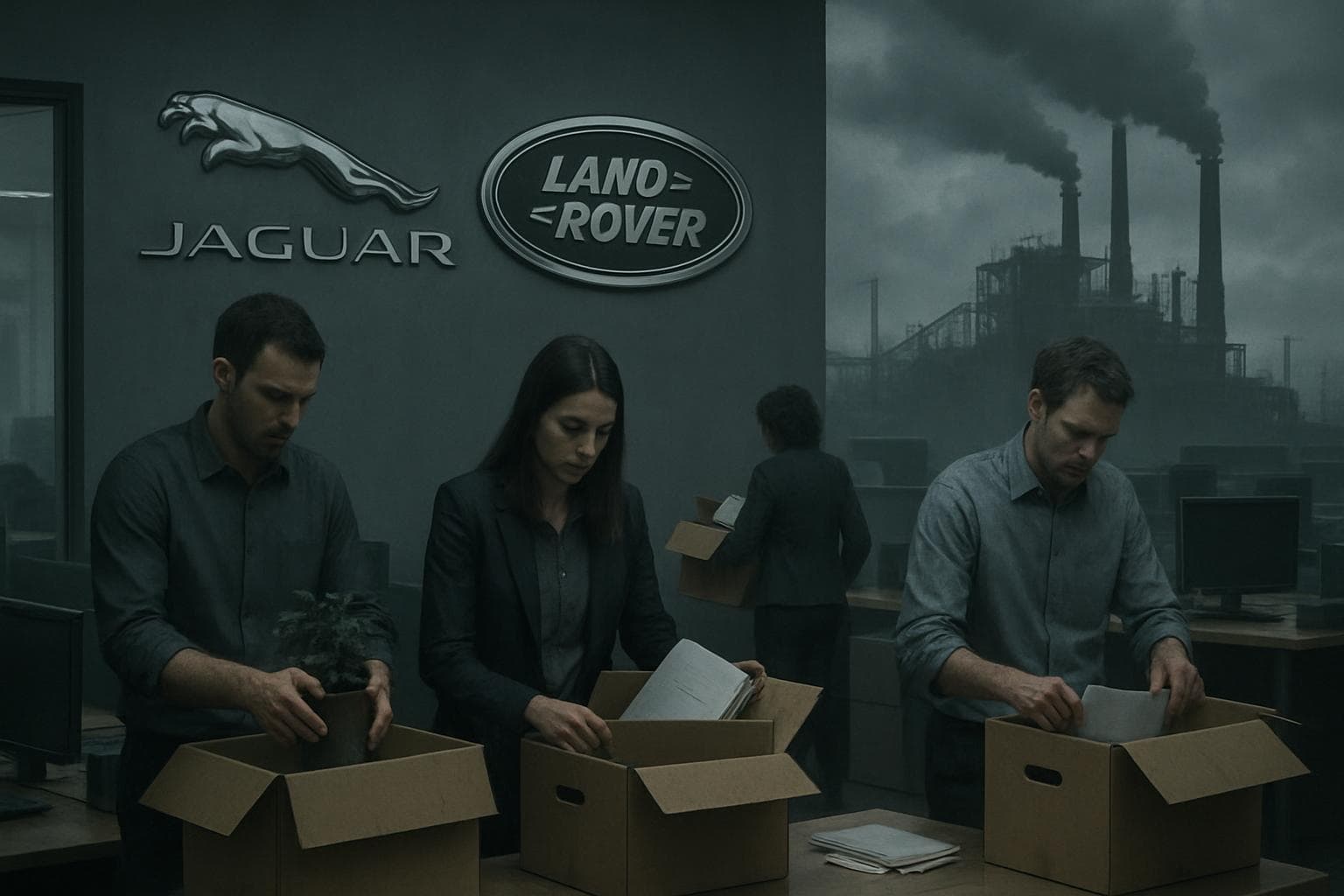
Jaguar Land Rover Faces Job Cuts Amid US Tariff Challenges and Delays in Electric Vehicle Launches
In This Article
HIGHLIGHTS
- Jaguar Land Rover (JLR) plans to cut up to 500 management jobs in the UK due to declining sales and US trade tariffs.
- The UK-US trade deal reduced tariffs on British cars to 10%, but JLR still faces significant challenges.
- JLR has delayed the launch of its new electric Range Rover and Jaguar models to allow for further testing and market readiness.
- The company has reported a 15.1% drop in sales in the three months to June, partly due to paused exports to the US.
- JLR aims to invest £3.5 billion annually in its strategy, despite the current economic pressures.
Jaguar Land Rover (JLR), the UK's largest car manufacturer, has announced plans to cut up to 500 management jobs as it grapples with declining sales and the impact of US trade tariffs. The job cuts, which represent about 1.5% of JLR's UK workforce, are part of a voluntary redundancy scheme aimed at aligning the company's workforce with its current and future business needs.
Impact of US Tariffs on Sales
The decision comes after JLR reported a 15.1% drop in sales for the three months ending in June, a decline attributed in part to a temporary halt in exports to the US. This pause was a response to tariffs imposed by former President Donald Trump, which initially set a 25% duty on foreign-made vehicles. Although a subsequent UK-US trade deal reduced this tariff to 10% for up to 100,000 cars annually, the impact on JLR's profitability remains significant. Professor David Bailey from the Birmingham Business School noted that the tariffs have played a substantial role in the company's decision to reduce its workforce.
Delays in Electric Vehicle Launches
In addition to workforce reductions, JLR has delayed the launch of its new electric Range Rover and Jaguar models. Originally slated for late 2025, these launches have been postponed to allow for further testing and to better align with market demand. The company, owned by India's Tata Motors, has been slower than some competitors in adopting electric technology, but it remains committed to selling electric versions of all its luxury brands by 2030.
Strategic Investments and Future Plans
Despite these challenges, JLR plans to invest £3.5 billion annually to support its strategic goals. The company has reported profits for ten consecutive quarters, reflecting a broader turnaround effort. JLR's chief executive, Adrian Mardell, expressed confidence in the UK-US trade deal's ability to sustain jobs across the automotive industry, highlighting the importance of adapting to global market conditions.
WHAT THIS MIGHT MEAN
Looking ahead, JLR's ability to navigate the complexities of international trade and the transition to electric vehicles will be crucial. The reduced tariffs under the UK-US trade deal offer some relief, but the company must continue to innovate and adapt to changing consumer preferences. The delayed launch of electric models could impact JLR's competitiveness in the growing electric vehicle market, but strategic investments and a focus on quality may help mitigate these risks. As the automotive industry evolves, JLR's commitment to electric technology and its ability to manage workforce changes will be key determinants of its future success.
Related Articles

Tech Giants Pledge to Cover AI Data Center Energy Costs Amid Rising Electricity Concerns

UK-Iran Tensions: Starmer Defends Cautious Approach Amid Trump Criticism

Canada and Australia Forge Strategic Partnership Amid Global Uncertainty
Middle East Conflict Drives UK Energy Prices to New Highs

UK Faces Dilemmas Amid Iran Conflict and China Spying Allegations
UK Reinforces Military Presence in Cyprus Amid Middle East Tensions
Jaguar Land Rover Faces Job Cuts Amid US Tariff Challenges and Delays in Electric Vehicle Launches
In This Article
 Daniel Rivera| Published
 HIGHLIGHTS
- Jaguar Land Rover (JLR) plans to cut up to 500 management jobs in the UK due to declining sales and US trade tariffs.
- The UK-US trade deal reduced tariffs on British cars to 10%, but JLR still faces significant challenges.
- JLR has delayed the launch of its new electric Range Rover and Jaguar models to allow for further testing and market readiness.
- The company has reported a 15.1% drop in sales in the three months to June, partly due to paused exports to the US.
- JLR aims to invest £3.5 billion annually in its strategy, despite the current economic pressures.
Jaguar Land Rover (JLR), the UK's largest car manufacturer, has announced plans to cut up to 500 management jobs as it grapples with declining sales and the impact of US trade tariffs. The job cuts, which represent about 1.5% of JLR's UK workforce, are part of a voluntary redundancy scheme aimed at aligning the company's workforce with its current and future business needs.
Impact of US Tariffs on Sales
The decision comes after JLR reported a 15.1% drop in sales for the three months ending in June, a decline attributed in part to a temporary halt in exports to the US. This pause was a response to tariffs imposed by former President Donald Trump, which initially set a 25% duty on foreign-made vehicles. Although a subsequent UK-US trade deal reduced this tariff to 10% for up to 100,000 cars annually, the impact on JLR's profitability remains significant. Professor David Bailey from the Birmingham Business School noted that the tariffs have played a substantial role in the company's decision to reduce its workforce.
Delays in Electric Vehicle Launches
In addition to workforce reductions, JLR has delayed the launch of its new electric Range Rover and Jaguar models. Originally slated for late 2025, these launches have been postponed to allow for further testing and to better align with market demand. The company, owned by India's Tata Motors, has been slower than some competitors in adopting electric technology, but it remains committed to selling electric versions of all its luxury brands by 2030.
Strategic Investments and Future Plans
Despite these challenges, JLR plans to invest £3.5 billion annually to support its strategic goals. The company has reported profits for ten consecutive quarters, reflecting a broader turnaround effort. JLR's chief executive, Adrian Mardell, expressed confidence in the UK-US trade deal's ability to sustain jobs across the automotive industry, highlighting the importance of adapting to global market conditions.
WHAT THIS MIGHT MEAN
Looking ahead, JLR's ability to navigate the complexities of international trade and the transition to electric vehicles will be crucial. The reduced tariffs under the UK-US trade deal offer some relief, but the company must continue to innovate and adapt to changing consumer preferences. The delayed launch of electric models could impact JLR's competitiveness in the growing electric vehicle market, but strategic investments and a focus on quality may help mitigate these risks. As the automotive industry evolves, JLR's commitment to electric technology and its ability to manage workforce changes will be key determinants of its future success.
Related Articles
Tech Giants Pledge to Cover AI Data Center Energy Costs Amid Rising Electricity Concerns
UK-Iran Tensions: Starmer Defends Cautious Approach Amid Trump Criticism
Canada and Australia Forge Strategic Partnership Amid Global Uncertainty
Middle East Conflict Drives UK Energy Prices to New Highs
UK Faces Dilemmas Amid Iran Conflict and China Spying Allegations
UK Reinforces Military Presence in Cyprus Amid Middle East Tensions