
Japan-China Tensions Escalate Over Taiwan Conflict Remarks
In This Article
HIGHLIGHTS
- Japan's Prime Minister Sanae Takaichi's comments on potential military involvement in a Taiwan conflict have sparked a diplomatic row with China.
- Takaichi suggested that an attack on Taiwan could trigger Japan's self-defence forces if it posed a threat to Japan's survival.
- China's consul general in Osaka, Xue Jian, made inflammatory remarks on social media, escalating tensions between the two nations.
- Japan's 2015 security law allows for collective self-defence, a point emphasized by Takaichi amid rising tensions in the Taiwan Strait.
- Historical grievances and strategic ambiguity over Taiwan continue to strain Japan-China relations.
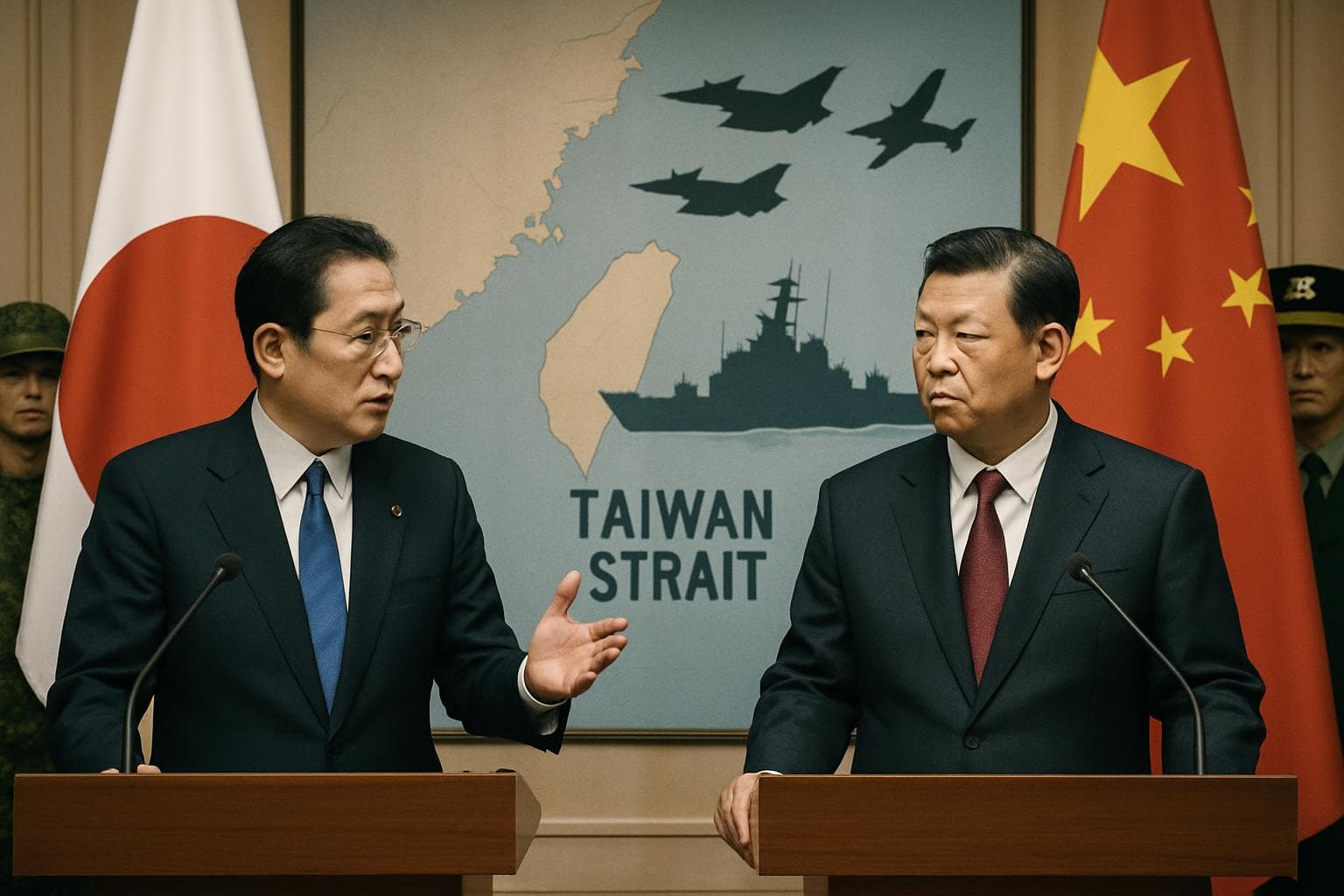
Japan and China are embroiled in a diplomatic confrontation following remarks by Japan's newly appointed Prime Minister, Sanae Takaichi, regarding potential military involvement in a Taiwan conflict. Takaichi's comments, made during a parliamentary session, suggested that Japan could deploy its self-defence forces if a conflict over Taiwan posed an existential threat to Japan. This assertion has provoked a strong reaction from Beijing, highlighting the ongoing strategic ambiguity surrounding Taiwan's sovereignty.
Diplomatic Fallout and Inflammatory Remarks
The situation intensified when Xue Jian, China's consul general in Osaka, posted a controversial comment on social media, interpreted by many as a threat towards Takaichi. The post, which has since been removed, drew condemnation from Tokyo, with Japan's chief cabinet secretary, Minoru Kihara, labeling it "extremely inappropriate." Both nations have lodged formal protests, underscoring the fragile state of Japan-China relations.
Legal Context and Historical Tensions
Takaichi's remarks are grounded in Japan's 2015 security law, which permits collective self-defence under certain conditions. This law, passed during the tenure of Takaichi's mentor, Shinzo Abe, allows Japan to support allies if an armed attack poses a survival-threatening situation. The Taiwan Strait remains a focal point of tension, with China not ruling out the use of force to assert its claim over the self-governing island.
Historical animosity between Japan and China, rooted in past conflicts and wartime grievances, continues to influence their diplomatic interactions. Takaichi's hawkish stance on China and her support for Taiwan further complicate the bilateral relationship.
Strategic Ambiguity and Regional Implications
The strategic ambiguity surrounding Taiwan's status remains a contentious issue in East Asia. Japan's proximity to Taiwan and its alliance with the United States add layers of complexity to the situation. Takaichi's commitment to increasing Japan's defence spending and strengthening ties with the US has raised concerns in Beijing, potentially setting the stage for further diplomatic challenges.
WHAT THIS MIGHT MEAN
The ongoing tensions between Japan and China over Taiwan could have significant regional implications. If diplomatic efforts fail to de-escalate the situation, there is a risk of increased military posturing in the Taiwan Strait. Japan's potential involvement in a Taiwan conflict could strain its relations with China further, impacting economic and security dynamics in East Asia.
Experts suggest that Japan may continue to bolster its defence capabilities and alliances, particularly with the US, to counter perceived threats from China. However, this approach could provoke a stronger response from Beijing, leading to a more volatile geopolitical environment.
The international community will be closely watching how Japan navigates its strategic ambiguity regarding Taiwan, balancing its security interests with the need to maintain stable relations with China.
Related Articles
US Supreme Court Ruling Sparks Trade Uncertainty in Asia and Beyond
China Sets Lowest GDP Growth Target in Decades Amid Economic Challenges

UK Faces Dilemmas Amid Iran Conflict and China Spying Allegations
Trump's New Tariff Strategy Sparks Global Trade Uncertainty
Cuba Faces Widespread Blackout Amid Deepening Fuel Crisis

Google Faces Legal Battle Over AI Chatbot's Alleged Role in Tragic Death
Japan-China Tensions Escalate Over Taiwan Conflict Remarks
In This Article
HIGHLIGHTS
- Japan's Prime Minister Sanae Takaichi's comments on potential military involvement in a Taiwan conflict have sparked a diplomatic row with China.
- Takaichi suggested that an attack on Taiwan could trigger Japan's self-defence forces if it posed a threat to Japan's survival.
- China's consul general in Osaka, Xue Jian, made inflammatory remarks on social media, escalating tensions between the two nations.
- Japan's 2015 security law allows for collective self-defence, a point emphasized by Takaichi amid rising tensions in the Taiwan Strait.
- Historical grievances and strategic ambiguity over Taiwan continue to strain Japan-China relations.
Japan and China are embroiled in a diplomatic confrontation following remarks by Japan's newly appointed Prime Minister, Sanae Takaichi, regarding potential military involvement in a Taiwan conflict. Takaichi's comments, made during a parliamentary session, suggested that Japan could deploy its self-defence forces if a conflict over Taiwan posed an existential threat to Japan. This assertion has provoked a strong reaction from Beijing, highlighting the ongoing strategic ambiguity surrounding Taiwan's sovereignty.
Diplomatic Fallout and Inflammatory Remarks
The situation intensified when Xue Jian, China's consul general in Osaka, posted a controversial comment on social media, interpreted by many as a threat towards Takaichi. The post, which has since been removed, drew condemnation from Tokyo, with Japan's chief cabinet secretary, Minoru Kihara, labeling it "extremely inappropriate." Both nations have lodged formal protests, underscoring the fragile state of Japan-China relations.
Legal Context and Historical Tensions
Takaichi's remarks are grounded in Japan's 2015 security law, which permits collective self-defence under certain conditions. This law, passed during the tenure of Takaichi's mentor, Shinzo Abe, allows Japan to support allies if an armed attack poses a survival-threatening situation. The Taiwan Strait remains a focal point of tension, with China not ruling out the use of force to assert its claim over the self-governing island.
Historical animosity between Japan and China, rooted in past conflicts and wartime grievances, continues to influence their diplomatic interactions. Takaichi's hawkish stance on China and her support for Taiwan further complicate the bilateral relationship.
Strategic Ambiguity and Regional Implications
The strategic ambiguity surrounding Taiwan's status remains a contentious issue in East Asia. Japan's proximity to Taiwan and its alliance with the United States add layers of complexity to the situation. Takaichi's commitment to increasing Japan's defence spending and strengthening ties with the US has raised concerns in Beijing, potentially setting the stage for further diplomatic challenges.
WHAT THIS MIGHT MEAN
The ongoing tensions between Japan and China over Taiwan could have significant regional implications. If diplomatic efforts fail to de-escalate the situation, there is a risk of increased military posturing in the Taiwan Strait. Japan's potential involvement in a Taiwan conflict could strain its relations with China further, impacting economic and security dynamics in East Asia.
Experts suggest that Japan may continue to bolster its defence capabilities and alliances, particularly with the US, to counter perceived threats from China. However, this approach could provoke a stronger response from Beijing, leading to a more volatile geopolitical environment.
The international community will be closely watching how Japan navigates its strategic ambiguity regarding Taiwan, balancing its security interests with the need to maintain stable relations with China.
Related Articles
US Supreme Court Ruling Sparks Trade Uncertainty in Asia and Beyond
China Sets Lowest GDP Growth Target in Decades Amid Economic Challenges
UK Faces Dilemmas Amid Iran Conflict and China Spying Allegations
Trump's New Tariff Strategy Sparks Global Trade Uncertainty
Cuba Faces Widespread Blackout Amid Deepening Fuel Crisis
Google Faces Legal Battle Over AI Chatbot's Alleged Role in Tragic Death