
Japan's Prime Minister Calls Snap Election Amid High Approval Ratings
In This Article
HIGHLIGHTS
- Japan's Prime Minister Sanae Takaichi has called a snap election for 8 February, aiming to leverage her high approval ratings.
- Takaichi, Japan's first female prime minister, seeks a public mandate amid tensions with China over Taiwan security.
- The Liberal Democratic Party (LDP) faces challenges, including a fragile coalition and public concerns over the cost of living.
- Takaichi's government has approved a record defense budget, reflecting strategic concerns about China's military activities.
- The election will test the public's appetite for Takaichi's economic policies, reminiscent of "Abenomics."
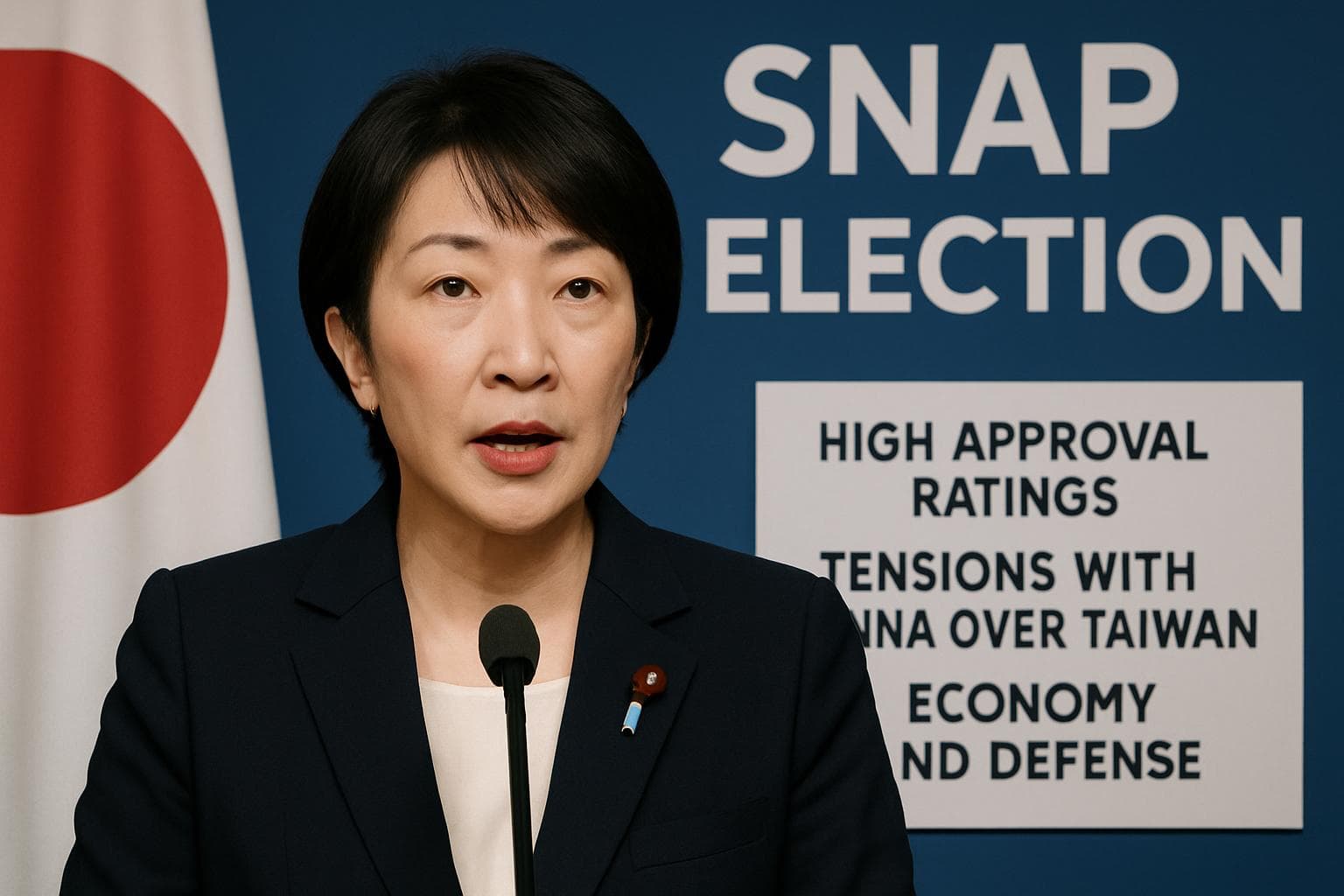
Japan's Prime Minister Sanae Takaichi has announced a snap election set for 8 February, a strategic move to capitalize on her soaring approval ratings since assuming office three months ago. Takaichi, who became Japan's first female prime minister in October, aims to secure a public mandate for her leadership and policies, particularly in the face of growing tensions with China over Taiwan.
Dissolving Parliament for a Fresh Mandate
In a decisive move, Takaichi will dissolve the lower house of the Diet on 23 January. "I am putting my future as prime minister on the line," she stated during a press conference, emphasizing the importance of public trust in her administration. The election, initially scheduled for October 2028, has been brought forward as Takaichi seeks to consolidate her position and address the Liberal Democratic Party's (LDP) recent electoral challenges.
Navigating Diplomatic and Economic Challenges
Takaichi's tenure has been marked by a diplomatic spat with China, following her comments suggesting Japan's potential military involvement if Taiwan's security is threatened. This has strained bilateral relations, with China imposing export bans on dual-use items to Japan's military. Domestically, Takaichi faces scrutiny over rising living costs, a concern for 45% of Japanese citizens according to a recent NHK poll.
Economic Policies and Defense Priorities
A proponent of government-led economic stimulus, Takaichi's policies echo the "Abenomics" approach of her predecessor, Shinzo Abe. Her administration has approved a record defense budget of nine trillion yen, underscoring Japan's strategic concerns about China's military activities. Despite these challenges, Takaichi's personal popularity remains high, bolstered by her firm stance on national security and economic growth.
Coalition Dynamics and Political Landscape
The LDP, which has governed Japan almost continuously since 1955, currently holds a fragile majority in the lower house through a coalition with the Japan Innovation Party. This election will test the coalition's stability and the public's support for Takaichi's leadership. Her ability to navigate these complex political dynamics will be crucial in determining her government's future.
WHAT THIS MIGHT MEAN
The upcoming election presents both opportunities and risks for Prime Minister Takaichi. A strong electoral mandate could empower her to implement her economic and defense policies more effectively. However, failure to secure a decisive victory may weaken her position and exacerbate existing political challenges. The ongoing tensions with China could also impact Japan's economic stability, particularly if diplomatic relations continue to deteriorate. As Japan navigates these uncertain waters, Takaichi's leadership will be pivotal in shaping the country's domestic and international trajectory.
Related Articles

Japan Seizes Chinese Fishing Vessel Amid Rising Diplomatic Tensions

US Supreme Court Ruling Sparks Trade Uncertainty in Asia and Beyond

Trump's New Tariff Strategy Sparks Global Trade Uncertainty
China Sets Lowest GDP Growth Target in Decades Amid Economic Challenges

UK Faces Dilemmas Amid Iran Conflict and China Spying Allegations

Labour MP's Husband Arrested in UK-China Espionage Probe
Japan's Prime Minister Calls Snap Election Amid High Approval Ratings
In This Article
HIGHLIGHTS
- Japan's Prime Minister Sanae Takaichi has called a snap election for 8 February, aiming to leverage her high approval ratings.
- Takaichi, Japan's first female prime minister, seeks a public mandate amid tensions with China over Taiwan security.
- The Liberal Democratic Party (LDP) faces challenges, including a fragile coalition and public concerns over the cost of living.
- Takaichi's government has approved a record defense budget, reflecting strategic concerns about China's military activities.
- The election will test the public's appetite for Takaichi's economic policies, reminiscent of "Abenomics."
Japan's Prime Minister Sanae Takaichi has announced a snap election set for 8 February, a strategic move to capitalize on her soaring approval ratings since assuming office three months ago. Takaichi, who became Japan's first female prime minister in October, aims to secure a public mandate for her leadership and policies, particularly in the face of growing tensions with China over Taiwan.
Dissolving Parliament for a Fresh Mandate
In a decisive move, Takaichi will dissolve the lower house of the Diet on 23 January. "I am putting my future as prime minister on the line," she stated during a press conference, emphasizing the importance of public trust in her administration. The election, initially scheduled for October 2028, has been brought forward as Takaichi seeks to consolidate her position and address the Liberal Democratic Party's (LDP) recent electoral challenges.
Navigating Diplomatic and Economic Challenges
Takaichi's tenure has been marked by a diplomatic spat with China, following her comments suggesting Japan's potential military involvement if Taiwan's security is threatened. This has strained bilateral relations, with China imposing export bans on dual-use items to Japan's military. Domestically, Takaichi faces scrutiny over rising living costs, a concern for 45% of Japanese citizens according to a recent NHK poll.
Economic Policies and Defense Priorities
A proponent of government-led economic stimulus, Takaichi's policies echo the "Abenomics" approach of her predecessor, Shinzo Abe. Her administration has approved a record defense budget of nine trillion yen, underscoring Japan's strategic concerns about China's military activities. Despite these challenges, Takaichi's personal popularity remains high, bolstered by her firm stance on national security and economic growth.
Coalition Dynamics and Political Landscape
The LDP, which has governed Japan almost continuously since 1955, currently holds a fragile majority in the lower house through a coalition with the Japan Innovation Party. This election will test the coalition's stability and the public's support for Takaichi's leadership. Her ability to navigate these complex political dynamics will be crucial in determining her government's future.
WHAT THIS MIGHT MEAN
The upcoming election presents both opportunities and risks for Prime Minister Takaichi. A strong electoral mandate could empower her to implement her economic and defense policies more effectively. However, failure to secure a decisive victory may weaken her position and exacerbate existing political challenges. The ongoing tensions with China could also impact Japan's economic stability, particularly if diplomatic relations continue to deteriorate. As Japan navigates these uncertain waters, Takaichi's leadership will be pivotal in shaping the country's domestic and international trajectory.
Related Articles
Japan Seizes Chinese Fishing Vessel Amid Rising Diplomatic Tensions
US Supreme Court Ruling Sparks Trade Uncertainty in Asia and Beyond
Trump's New Tariff Strategy Sparks Global Trade Uncertainty
China Sets Lowest GDP Growth Target in Decades Amid Economic Challenges
UK Faces Dilemmas Amid Iran Conflict and China Spying Allegations
Labour MP's Husband Arrested in UK-China Espionage Probe