
Judge Cites Misconduct in Trump-Era Case Against James Comey
In This Article
HIGHLIGHTS
- A US judge identified "government misconduct" in the Trump administration's case against former FBI director James Comey, citing investigative missteps.
- Judge William Fitzpatrick ordered the release of grand jury materials to Comey's defense, highlighting concerns over the integrity of the indictment process.
- Comey, charged with lying to Congress in 2020, has pleaded not guilty, arguing the prosecution is politically motivated.
- Lindsey Halligan, the prosecutor in the case, faced criticism for her quick appointment and alleged misstatements to the grand jury.
- The justice department has appealed the judge's order, maintaining the validity of the charges against Comey.
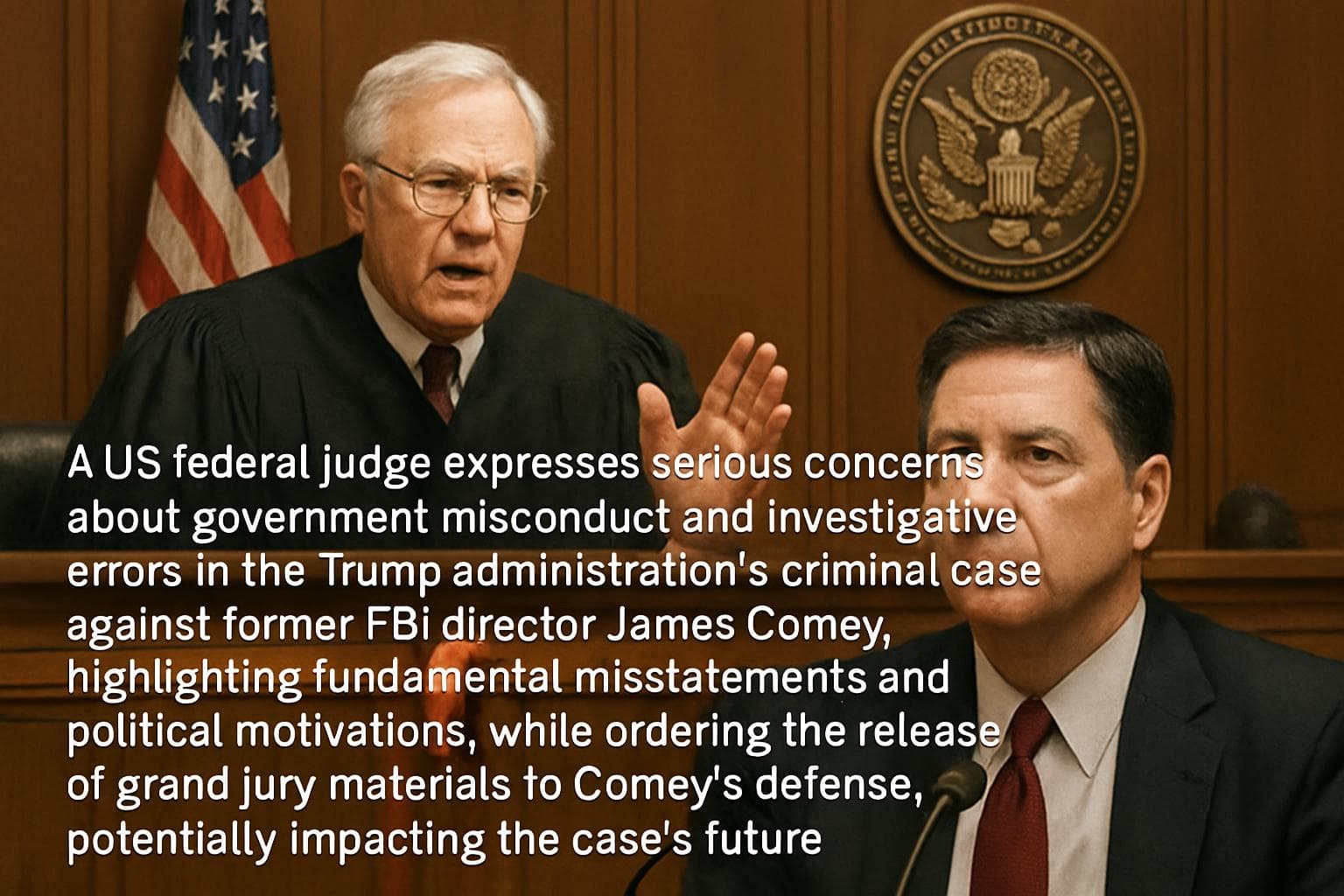
A US federal judge has raised serious concerns about the integrity of the Trump administration's criminal case against former FBI director James Comey, citing "government misconduct" and "investigative missteps." Judge William Fitzpatrick's ruling has prompted the release of grand jury materials to Comey's defense team, a move that could significantly impact the case's trajectory.
Concerns Over Grand Jury Process
Judge Fitzpatrick's 24-page opinion, issued on Monday, highlights a "disturbing pattern" of errors in the prosecution's approach. The judge pointed to "fundamental misstatements of the law" made by prosecutor Lindsey Halligan to the grand jury, which indicted Comey in September. These missteps, according to Fitzpatrick, could undermine the integrity of the grand jury proceedings. The court's decision to release the grand jury materials, including transcripts and audio recordings, is an extraordinary measure aimed at protecting Comey's rights.
Political Underpinnings and Legal Challenges
James Comey, who has long been a target of former President Donald Trump, was charged with making false statements to Congress in 2020. His defense team argues that the charges are part of a politically motivated campaign orchestrated by Trump, who had publicly called for Comey's prosecution. The case was filed shortly after Trump appointed Halligan, a former White House aide with no prior prosecutorial experience, as the lead prosecutor. Her swift appointment and subsequent actions have been challenged by Comey's lawyers, who claim the prosecution is vindictive and should be dismissed.
Justice Department's Response
The justice department has appealed Judge Fitzpatrick's order, maintaining that the charges against Comey are valid and should proceed. The department's stance has been criticized for appearing to "indict first and investigate later," a point underscored by the judge's ruling. The case against Comey is already facing multiple legal challenges, including questions about Halligan's appointment and the prosecution's motivations.
WHAT THIS MIGHT MEAN
The release of grand jury materials could provide Comey's defense team with critical insights into the prosecution's case, potentially leading to a dismissal of charges if significant procedural errors are uncovered. The justice department's appeal of the judge's order suggests a protracted legal battle ahead, with implications for the credibility of federal prosecutions under the Trump administration. Legal experts suggest that if the case is dismissed, it could set a precedent for scrutinizing politically charged prosecutions, impacting future cases involving alleged government misconduct.
Related Articles

Armed Intruder Fatally Shot at Mar-a-Lago by Secret Service

Tech Giants Pledge to Cover AI Data Center Energy Costs Amid Rising Electricity Concerns
Congress Subpoenas Attorney General Bondi in Epstein Investigation

Cuba Faces Widespread Blackout Amid Deepening Fuel Crisis

UK Faces Dilemmas Amid Iran Conflict and China Spying Allegations
Senate Blocks Resolution to Limit Trump's Military Actions in Iran
Judge Cites Misconduct in Trump-Era Case Against James Comey
In This Article
 Sofia Romano| Published
 HIGHLIGHTS
- A US judge identified "government misconduct" in the Trump administration's case against former FBI director James Comey, citing investigative missteps.
- Judge William Fitzpatrick ordered the release of grand jury materials to Comey's defense, highlighting concerns over the integrity of the indictment process.
- Comey, charged with lying to Congress in 2020, has pleaded not guilty, arguing the prosecution is politically motivated.
- Lindsey Halligan, the prosecutor in the case, faced criticism for her quick appointment and alleged misstatements to the grand jury.
- The justice department has appealed the judge's order, maintaining the validity of the charges against Comey.
A US federal judge has raised serious concerns about the integrity of the Trump administration's criminal case against former FBI director James Comey, citing "government misconduct" and "investigative missteps." Judge William Fitzpatrick's ruling has prompted the release of grand jury materials to Comey's defense team, a move that could significantly impact the case's trajectory.
Concerns Over Grand Jury Process
Judge Fitzpatrick's 24-page opinion, issued on Monday, highlights a "disturbing pattern" of errors in the prosecution's approach. The judge pointed to "fundamental misstatements of the law" made by prosecutor Lindsey Halligan to the grand jury, which indicted Comey in September. These missteps, according to Fitzpatrick, could undermine the integrity of the grand jury proceedings. The court's decision to release the grand jury materials, including transcripts and audio recordings, is an extraordinary measure aimed at protecting Comey's rights.
Political Underpinnings and Legal Challenges
James Comey, who has long been a target of former President Donald Trump, was charged with making false statements to Congress in 2020. His defense team argues that the charges are part of a politically motivated campaign orchestrated by Trump, who had publicly called for Comey's prosecution. The case was filed shortly after Trump appointed Halligan, a former White House aide with no prior prosecutorial experience, as the lead prosecutor. Her swift appointment and subsequent actions have been challenged by Comey's lawyers, who claim the prosecution is vindictive and should be dismissed.
Justice Department's Response
The justice department has appealed Judge Fitzpatrick's order, maintaining that the charges against Comey are valid and should proceed. The department's stance has been criticized for appearing to "indict first and investigate later," a point underscored by the judge's ruling. The case against Comey is already facing multiple legal challenges, including questions about Halligan's appointment and the prosecution's motivations.
WHAT THIS MIGHT MEAN
The release of grand jury materials could provide Comey's defense team with critical insights into the prosecution's case, potentially leading to a dismissal of charges if significant procedural errors are uncovered. The justice department's appeal of the judge's order suggests a protracted legal battle ahead, with implications for the credibility of federal prosecutions under the Trump administration. Legal experts suggest that if the case is dismissed, it could set a precedent for scrutinizing politically charged prosecutions, impacting future cases involving alleged government misconduct.
Related Articles
Armed Intruder Fatally Shot at Mar-a-Lago by Secret Service
Tech Giants Pledge to Cover AI Data Center Energy Costs Amid Rising Electricity Concerns
Congress Subpoenas Attorney General Bondi in Epstein Investigation
Cuba Faces Widespread Blackout Amid Deepening Fuel Crisis
UK Faces Dilemmas Amid Iran Conflict and China Spying Allegations
Senate Blocks Resolution to Limit Trump's Military Actions in Iran